
Responsible Gambling in the United Kingdom
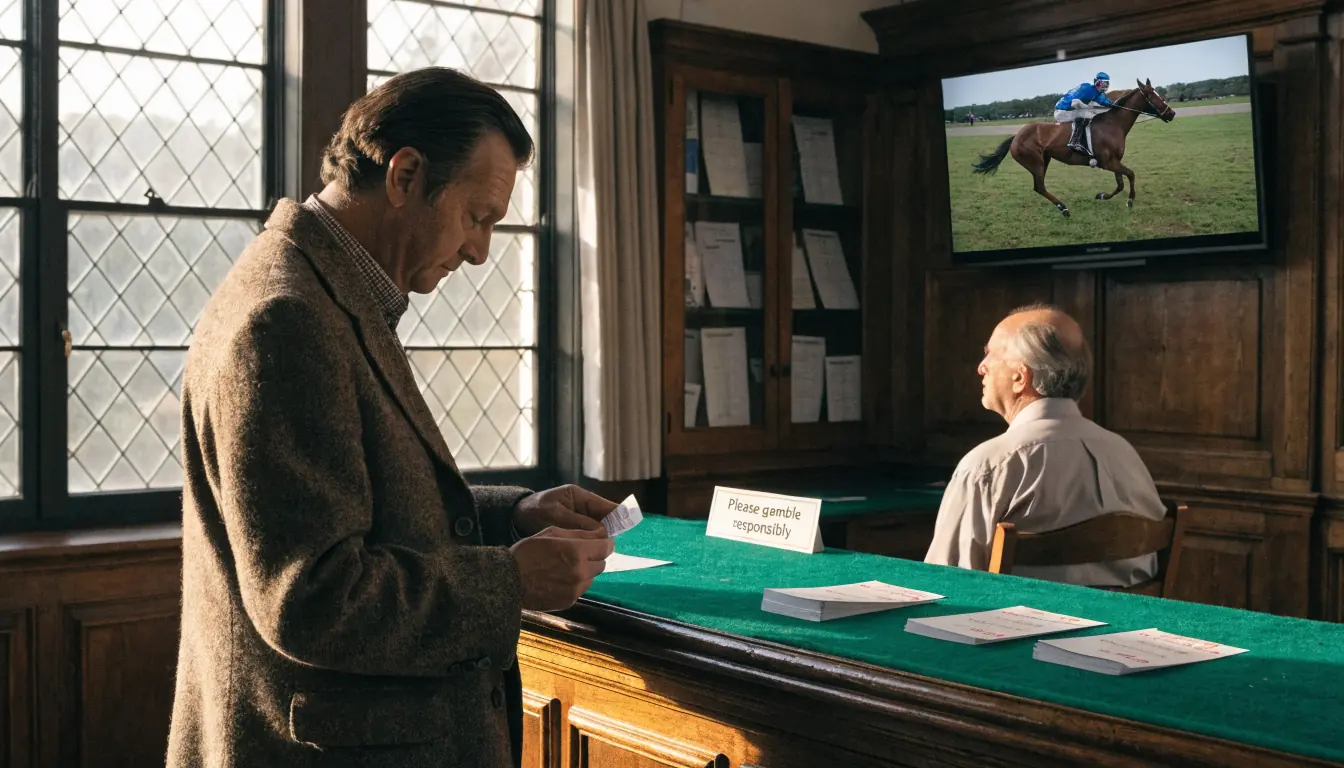
Britain has always had an ambivalent relationship with gambling. The Victorians moralised about it while the gentry bet fortunes at the races; the state spent most of the twentieth century banning it and then, in 1960, legalising it again — largely because prohibition had handed the whole trade to criminals. The current settlement, policed by the Gambling Commission (UKGC), rests on a simple premise: adults may gamble, but the industry must be licensed, watched, and made to pay for the damage it can cause. That last clause is unusual. Few countries require operators to fund research, prevention and treatment of gambling harm as a condition of holding a licence. Britain does.
When Play Stops Being Play
The trouble with gambling problems is that they arrive dressed as ordinary behaviour. A person who bets occasionally and loses occasionally is simply taking part in a legal pastime. The line is crossed somewhere else, and it is worth knowing where.
Observable signs, in oneself or in someone close:
- Setting aside money for bills, rent or food and spending it on gambling instead.
- Chasing losses — returning immediately after a losing session to “win it back”.
- Concealing the extent of play from family, or lying about money.
- Borrowing to gamble. Since UK-licensed operators cannot accept credit card payments — not directly, and not through an e-wallet funded by credit — the need to borrow is itself a signal that the play has outgrown its budget.
- Gambling becoming the main, or only, source of excitement or relief.
- Increasingly long sessions, longer than intended, with irritation when interrupted.
None of these alone settles the matter. Several together usually do. And the most important fact about gambling bears repeating plainly: it is not a way to earn money and never a solution to financial problems. Every game on a licensed site is built so that, over time, the house keeps a share. A person gambling to fix a debt is gambling in the wrong direction.
The Rules That Already Protect the Player
A UKGC licence is not a formality. Operators must offer deposit limits, loss limits, session-time limits, reality checks, timeouts and self-exclusion — and before a first deposit, they are required to prompt every player to set a deposit limit. They must be able to identify signs of harm among their customers and act on them. Since 28 February 2025 they must also run light-touch financial vulnerability checks when net deposits exceed £150 in a rolling 30-day period — a somewhat unglamorous number that nonetheless says something about the state’s priorities: catching people early, at the point where the losses start to bite rather than after ruin.
Credit cards are banned as a funding method across the board. From 9 April 2025, online slots are capped at £2 per spin for younger players and £5 per spin for those aged 25 and over — a legislative admission, rare and candid, that slot machines are engineered to be the most habit-forming product in the sector.
Age matters legally: the general gambling age in the UK is 18, no form of gambling is legal under 16, and parental permission does not override that.
Anyone can verify an operator themselves. The UKGC keeps a public register of current operating and personal licences; matching the operator’s name or licence number against the register, and confirming the listed domain, takes a minute. Taking bets from consumers in England, Wales or Scotland without a UKGC licence is a criminal offence — which is precisely why unlicensed sites work so hard to look licensed.
Self-Exclusion: The Strongest Tool
Self-exclusion is the one intervention that removes the decision from the moment of temptation. Two levels exist in the UK.
At a single operator. Every gambling business must have its own self-exclusion procedure, with a minimum period of six months for remote operators; at casino level, exclusions can range from one day to permanent.
Everywhere at once. GAMSTOP is the national online self-exclusion scheme. One request excludes a player from all UKGC-licensed gambling sites for a chosen period — six months, one year, or five years. Since March 2020, participation in GAMSTOP has been mandatory for all online gambling operators, and operators must connect to the nationwide database of self-excluded users and enforce it. There is no opting out midway. That rigidity is the point.
One note of realism: exclusion works where it is enforced, and licensed operators are audited, monitored and subject to annual reporting, security checks and anti-money-laundering obligations. Unlicensed sites fall outside all of this — a further argument for never using them.
Where to Get Help — Now
For a country that legalised gambling reluctantly, Britain built its safety net with unusual thoroughness. The services below are free of charge, and the helplines run 24 hours a day, 7 days a week.
- National Gambling Helpline — GamCare operates it around the clock on 0808 8020 133 (England and Scotland). In Wales the number is 0808 2819 265. nationalgamblinghelpline.org.uk
- GamCare — counselling, support and structured treatment programmes. gamcare.org.uk
- GambleAware — information, self-assessment and guidance to further help. gambleaware.org
- GAMSTOP — the national online self-exclusion scheme. gamstop.co.uk
- National Gambling Treatment Service — nationalgamblingtreatment.org.uk
- NHS Wales Helplines — addiction and mental health support services. wales.nhs.uk/services/mental-health/addiction-services
A Closing Note
The regulatory system, the limits, the exclusion schemes — all of it exists because enough people were harmed to make Parliament act. The tools work only when picked up. A helpline call costs nothing, GAMSTOP takes minutes, and a deposit limit set before the first bet is the cheapest insurance in the entire industry.
The house always has an edge. The player’s edge is knowing when to leave.