
Casino Without Swedish Licence: UK Regulatory Guide
 Available in GB
Learn how licensing status, self-exclusion limits, and operator checks affect the risks of offshore casinos for UK players.

Table of Contents
- What “Without a UK Licence” Actually Means
- Non-Gamstop Casinos and the Limits of Self-Exclusion
- New Offshore Casinos: Why “New” Changes the Risk Calculation
- A Casino Without a Swedish or UK Licence: Reading the Regulatory Label
- What a Non-UKGC Casino Does Not Promise
- Non-UK Casinos and the Protection Gap
- How to Check an Online Casino Outside UKGC Regulation
- The Real Meaning of “Outside UKGC Regulation”
- Non-Gamstop Casinos for UK Players: Comparing the Featured Operators
- No-Deposit Bonuses at Casinos Not on Gamstop
What “Without a UK Licence” Actually Means
A casino without a UK licence is not defined by its branding, language, currency, or office address. The relevant question is more direct: does the operator accept registrations and wagers from customers in Great Britain while holding a Gambling Commission operating licence?
If the answer is yes and no, respectively, the operator falls into the category commonly described as an online casino without a UK licence. The label covers an operator offering gambling facilities to people in Great Britain without the operating permission required for that market. It does not matter whether the company is incorporated abroad, hosts its website elsewhere, or holds permission from another gambling authority.
That distinction matters because the internet makes geography look decorative. A site may display prices in pounds, provide English-language support, and present itself as designed for British customers. None of those details creates UK regulatory approval. A foreign casino without a UK licence remains foreign in regulatory terms, even when its front page has acquired the familiar colours of the British online market.
For players exploring casino options without a Swedish licence in 2026, this list provides a quick reference point based on licensing, welcome offers, payout timing and minimum deposits. Use these details to identify which operators may fit your preferences.
License: UKGC Operator Licence · Bonus: £200 welcome bonus · Payout speed: Within 48 hours · Min. deposit: £10 32Red holds a UKGC Operator Licence and offers a £200 welcome bonus. Its minimum deposit is £10, with payouts processed within 48 hours.
License: UKGC Operator Licence · Bonus: £100 bonus · Payout speed: Within 24 hours · Min. deposit: £10 ProgressPlay Limited operates under a UKGC Operator Licence and provides a £100 bonus. It accepts minimum deposits of £10 and states that payouts are made within 24 hours.
License: UKGC Operator Licence · Bonus: £100 bonus · Payout speed: Within 24 hours · Min. deposit: £10 Genesis Global Limited is listed with a UKGC Operator Licence and offers a £100 bonus. The minimum deposit is £10, while payouts are processed within 24 hours.
License: UKGC Operator Licence · Bonus: £100 bonus · Payout speed: Within 24 hours · Min. deposit: £10 LeoVegas holds a UKGC Operator Licence and features a £100 bonus. Players can deposit from £10, with payouts processed within 24 hours.
License: UKGC Operator Licence · Bonus: £20 bonus · Payout speed: Within 48 hours · Min. deposit: £10 Silverbond Enterprises operates under a UKGC Operator Licence and offers a £20 bonus. Its minimum deposit is £10, and payouts are processed within 48 hours.
License: UKGC Operator Licence · Bonus: £50 bonus · Payout speed: Within 48 hours · Min. deposit: £10 Platinum Gaming Limited holds a UKGC Operator Licence and provides a £50 bonus. The minimum deposit is £10, with payouts processed within 48 hours.
“UK-friendly” is a commercial description
The phrase “UK-friendly” is looser still. It generally describes an operator that accepts GBP deposits from British customers. It is a commercial convenience, not a legal category. The phrase says something about the payment interface and intended audience; it says nothing by itself about approval from the UK Gambling Commission.
That is where promotional language quietly performs a useful trick. “UK-friendly” sounds hospitable, almost official, while leaving the central question unanswered. A casino can be willing to accept British customers without being UKGC-licensed. It can also be described as international, offshore, or non-UK licensed without those labels resolving whether it is authorised to provide gambling facilities in Great Britain.
The legal vocabulary is less decorative. Operators taking bets from customers in Great Britain must hold a Gambling Commission licence, regardless of where they are incorporated, hosted, or regulated. The same principle applies whether the product is slots, roulette, live casino, sports betting, or another form of licensed gambling. The location of the server does not move the customer outside British licensing rules. Nor does a corporate address abroad.
What another licence does—and does not—mean
An MGA, Curaçao, or Anjouan licence may indicate that an operator has some form of overseas authorisation. It does not substitute for a Gambling Commission licence. The two ideas should not be merged simply because both use the word “licence”.

This is the point at which lists of the “best casino without UK licence” can become misleading. A ranking may compare bonuses, currencies, games, or an operator’s stated jurisdiction, but none of those comparisons turns an offshore licence into UK approval. A non-UK licensed casino may have a regulatory relationship elsewhere; British customers are not thereby placed under UK regulatory supervision.
The same caution applies to a new casino without a UK licence. “New” describes the age or operating history of a brand, not its legal status. A recently launched operator may be offshore, UKGC-licensed, or operating without the relevant permission; the word alone settles nothing. Licensing and novelty are separate questions, even when advertising places them in the same bright package.
The operator’s exposure is not the player’s offence
British gambling law places the licensing obligation on the operator providing the facilities. An operator that provides gambling facilities without a licence faces up to 51 weeks’ imprisonment and an unlimited fine; in Scotland, the stated imprisonment period is six months. That is a consequence directed at the unlicensed provider, not a declaration that a player has committed a criminal offence merely by using the site.
No traced sanction has fallen on a player who merely used an unlicensed site. That does not make an offshore account equivalent to a UKGC-regulated account, and it does not erase the practical uncertainty attached to an operator outside the British framework. It does, however, prevent a common category error: confusing the company’s licensing breach with the customer’s act of placing a wager.
The distinction is worth keeping plain. The operator may be the party required to hold the licence. The player may still face questions about payments, account administration, or the reliability of the business, but those are not the same as being prosecuted simply for having used an unlicensed website.
UK-friendly
An operator that accepts GBP deposits from British customers, used as a commercial description rather than a legal regulatory category.
A precise working definition
For the purposes of this subject, “without a UK licence” means that an online gambling operator accepts customers and wagers from Great Britain without holding a Gambling Commission operating licence. “UK-friendly” means that the operator presents services such as GBP deposits to British customers. “MGA-licensed”, “Curaçao-licensed”, or “Anjouan-licensed” identifies an overseas regulatory position, where one exists; it does not describe UKGC approval.
The wording may seem fussy. Gambling regulation is often built from such fussiness. A pound sign is not a licence, an English interface is not supervision, and an overseas badge is not a British permit. That is the vocabulary needed before assessing exclusion systems, newer offshore brands, payments, or promotional terms. Without it, every casino begins to look more local than it is.
Non-Gamstop Casinos and the Limits of Self-Exclusion
A non-Gamstop casino is a casino that does not participate in Gamstop, the self-exclusion service used by people in Great Britain. The phrase describes the operator’s position in relation to that scheme. It does not mean that the casino is connected to Gamstop, approved by it, or able to alter a player’s exclusion.
That distinction matters because two separate records are being confused in casual advertising. Gamstop records a person’s decision to exclude themselves from participating online gambling businesses. A casino’s licence, meanwhile, concerns the operator and its permission to provide gambling facilities. One is a player-status mechanism; the other is a regulatory status. Same subject area. Different machinery.
What a Gamstop exclusion does
Gamstop exclusion periods are six months, one year, five years, or five years with auto-renewal. The selected period is not a cooling-off button designed to be reversed when a difficult evening has passed. It is a commitment made precisely because immediate choice has become unreliable.

If the player does not request removal, an exclusion may continue for up to seven further years after the minimum period. That continuation rule is easy to miss when the scheme is discussed as if it were merely a temporary account setting. It is closer to a locked door with a defined review point than to a preference that can be switched off in a profile menu.
The longer arrangements deserve particular care. A five-year exclusion with auto-renewal does not simply end because the original minimum period has elapsed. Its structure is intended to prevent an automatic return to gambling. The administrative detail is rather less dramatic than the personal decision behind it, but it has greater practical force.
What “not on Gamstop” does not mean
Searching for an online casino not on Gamstop can produce several descriptions: non-Gamstop casino, casino sites not on Gamstop, or a casino outside the scheme. These labels are commercial shorthand, not evidence of a shared relationship with Gamstop.
A casino outside Gamstop cannot be described as a place where a Gamstop exclusion is suspended, paused, or cancelled. Nor does it follow that the operator has access to Gamstop records. The absence of participation is the whole point of the phrase. It is not a back door into the database.
The same caution applies to labels such as “UK-friendly”. A site may present itself as suitable for British customers while being outside Gamstop. That marketing language says nothing, by itself, about the player’s exclusion status or the operator’s relationship with the scheme. A friendly adjective remains an adjective. It does not become a control system by appearing beside a deposit button.
- Check the specific name of the licensing authority
- Verify the operator on the regulator’s official register
- Confirm if deposit limits and session timers are mandatory
- Assume “UK-friendly” implies UKGC approval
- Treat an overseas licence as a substitute for a British permit
- Conclude a site is safe just because it has a modern design
A player’s status and a casino’s status
The most important separation is between the person and the website.
A player can be subject to a current Gamstop exclusion. That status does not change because an offshore casino is described as non-Gamstop. Equally, a casino can be outside Gamstop whether or not a particular visitor has ever registered with the service. The two facts do not merge at the checkout page.
This is why searches for the “best non-Gamstop casinos” can be misleading when the word best is treated as a safety judgement. It may refer to a bonus, a familiar brand, a game selection, or a payment option. None of those descriptions establishes that Gamstop protections apply. A non-Gamstop casino bonus is a promotion; it is not evidence that self-exclusion has been respected or that a person has become eligible to gamble again.
The wording “MGA casino not on Gamstop” creates a similar trap. An MGA-licensed operator may be described as outside Gamstop, but the licence and the self-exclusion scheme remain separate questions. One cannot be used as proof of participation in the other. The same applies to references to Curaçao casinos not on Gamstop: the jurisdiction named in the marketing material does not turn the operator into a Gamstop participant.
Why continuation rules matter
Self-exclusion works partly through friction. It creates distance between an impulse and an account. If the minimum period could simply be abandoned whenever the urge returned, the protection would be reduced to a decorative notice.

The possibility of continuation after the selected minimum period reflects that logic. A person who has chosen exclusion may remain excluded beyond the initial period unless removal is requested. That does not make the arrangement permanent, but it does mean that an old registration should not be assumed to have expired merely because time has passed.
This is also why a search for casino sites not on Gamstop should never be treated as a neutral account-management exercise for someone with an active exclusion. The phrase identifies a site outside the scheme; it does not provide a decision about whether gambling is appropriate, permitted, or safe for that person. It certainly does not release the player from the terms of the exclusion.
The boundary around the term
“Non-Gamstop” is therefore a narrow description. It tells readers that the operator is not participating in Gamstop. It does not establish UK regulatory supervision, connect the casino to the exclusion database, or confirm that a player’s status has changed.
That boundary is worth preserving even when promotional language is loud. A welcome offer can be measured by its terms. Self-exclusion is measured by whether access has been deliberately restricted. They belong to different moral and administrative categories.
A bonus may attract attention. An exclusion is meant to stop it.
New Offshore Casinos: Why “New” Changes the Risk Calculation
A new offshore casino is not simply an older non-Gamstop casino with a different colour scheme. It is a brand with little public history, and that changes the question from “what does this operator offer?” to “what has this operator demonstrated?”
Can be judged against observable history, domain age, and long-term player feedback.
Possess polished interfaces but lack a proven record of handling withdrawals or disputes.
That distinction matters for UK players considering new non-Gamstop casinos. A recently launched site may display polished software, familiar payment logos and an attractive welcome page. None of those details establishes a record of paying withdrawals, handling complaints or maintaining stable ownership. Design is cheap. History is not.
Why operating history matters
An established offshore casino can at least be judged against observable behaviour: how long its domain has remained active, whether its terms have changed, how complaints have been handled and whether players report recurring payment problems. A new brand has fewer such traces. The absence of bad reports is therefore weak evidence. It may mean the casino is reliable; it may simply mean that hardly anyone has tested it yet.
This is the awkward arithmetic of novelty. A new operator has not necessarily done anything wrong. It has merely had less time to prove that it can do the ordinary, unglamorous work of gambling administration: verify accounts, process withdrawals, settle disputes and keep its conditions intelligible after the launch promotion has faded.
A new name also creates uncertainty around corporate continuity. The people behind the site, the company receiving funds and the licence displayed in the footer may not remain unchanged. A domain can survive a change of ownership, while the reputation attached to it quietly disappears. The logo remains. The accountability may not.
Offshore does not mean one uniform category
The phrase “offshore casino” covers operators with different regulatory arrangements. The reviewed comparison places the regulatory tiers in this order: MGA above Curaçao above Anjouan. That ranking does not turn an offshore operator into a UKGC-licensed casino, nor does it remove the importance of the operator’s own history. It simply indicates that the regulatory environment is not identical across brands.

For a new non-Gamstop casino, the stated licence should therefore be treated as one part of the assessment, not as a substitute for operating evidence. A licence label may identify a jurisdiction; it cannot, by itself, show how a young business behaves when a withdrawal is delayed or an account is queried.
The reviewed material also names Freshbet as having the highest aggregate match rate among the Curaçao operators in that set. That is a comparison within one reviewed group, not a general verdict on every new offshore casino. A ranking can organise information. It cannot manufacture longevity.
What “new” should prompt
New offshore casinos for UK players deserve closer attention to the details that mature brands have already had to expose. The key issue is not whether a site looks modern, but whether its public information is coherent. The operator name should be consistent across the terms, payment pages and regulatory statement. Bonus conditions should not be treated as evidence of financial strength. A generous promotion proves only that a promotion has been written.
The same caution applies to non-Gamstop casinos for UK players. The absence of Gamstop participation and the age of the casino are separate facts. One concerns the operator’s relationship with a self-exclusion scheme; the other concerns how much history exists to examine. Neither fact should be used to imply that the other has been solved.
A new brand may also have fewer independent references, fewer documented complaints and less evidence of how it handles responsible-gambling disputes. That lack of information is itself part of the risk calculation. Not proof of misconduct. Not proof of safety.
Essential Distinction
Novelty in software and design does not equate to a proven track record of regulatory reliability.
When the operating record is thin, promotional brightness should carry less weight, not more. The sensible comparison is between what can be verified and what is merely announced. For new non-Gamstop casinos in 2026, that is the central distinction: novelty may bring fresh software and offers, but it also removes the evidence that makes confidence rational. Fresh paint, old uncertainty.
A Casino Without a Swedish or UK Licence: Reading the Regulatory Label
The phrase “casino without a Swedish licence” describes one missing national authorisation. It does not, by itself, say whether the operator is approved elsewhere, whether it accepts British customers, or whether it has any connection with UK regulation. That distinction matters because Swedish and British licensing systems are separate legal arrangements, administered by different authorities and built for different national markets.
A casino may therefore be without approval from the Swedish Gambling Authority while holding another licence. That other licence does not become Swedish supervision by implication. Nor does it become British supervision merely because the site displays sterling, accepts registrations from Great Britain, or describes itself as “UK-friendly”. Marketing travels easily. Regulatory authority does not.
For a customer in Great Britain, the decisive question is not whether a casino has a Swedish licence. It is whether the operator holds a Gambling Commission licence for the relevant remote gambling activity. Any operator taking bets from customers in Great Britain must hold that licence, regardless of where the business is incorporated, where its servers are hosted, or which overseas authority regulates it.

Swedish absence is not British approval
A casino without a Swedish licence can occupy several different regulatory positions. It might be licensed in another jurisdiction, or it might not hold a recognised gambling licence at all. The label alone leaves that question unanswered.
The same caution applies to the expression “casino without a UK licence”. In market language, this often refers to an offshore casino or a casino without UKGC approval. The more exact wording is “not UKGC-licensed”: it identifies the missing approval without suggesting that an alternative licence fills the same legal role.
An MGA-licensed, Curaçao-licensed, or Anjouan-licensed casino may be regulated under that jurisdiction’s framework. None of those licences is a substitute for a Gambling Commission licence when the operator accepts customers in Great Britain. A badge can identify the issuer. It cannot redraw the border around the law.
The hierarchy behind the badge
Alternative licences are not identical in their stated safeguards. The regulatory tier used for comparison places the Malta Gaming Authority above Curaçao, and Curaçao above Anjouan. That hierarchy is a way of distinguishing regulatory frameworks, not a claim that any of them provides UKGC supervision.
An MGA-licensed casino is required to offer deposit limits, reality checks, and session timers as baseline tools. A Curaçao-licensed casino may offer any, all, or none of those features. The difference is practical: the badge may indicate a framework, but the framework does not necessarily demand the same player controls.
This is why a casino can be licensed and still remain outside UKGC regulation. “Licensed” is incomplete unless the licensing authority is named. “Internationally regulated” is broader still, and therefore less informative. The useful label is the full one: Swedish, MGA, Curaçao, Anjouan, or UKGC-licensed.
Regulatory Hierarchy
In the reviewed comparisons, the Malta Gaming Authority (MGA) is positioned above Curaçao, which is positioned above Anjouan.
For British customers, an overseas licence should be read as a description of the operator’s external regulatory position, not as permission granted by the Gambling Commission. A casino without a Swedish licence may be perfectly clear about that absence; a casino without a UKGC licence must be judged against the separate British requirement. Different missing licences. Different consequences.
What a Non-UKGC Casino Does Not Promise
A non-UKGC casino may look polished, accept British customers, display an overseas regulatory badge and present its offers in pounds. None of those details amounts to UKGC supervision. The badge identifies the operator’s stated licensing position; it does not import the Gambling Commission’s standards into an offshore business.
That distinction matters because advertising is often more confident than regulation. A casino can describe itself as safe, secure, responsible or UK-friendly without those words creating the protections attached to a UKGC-licensed operator. “Friendly” is a commercial description, not a legal category. It may mean that the site accepts GBP deposits or has content aimed at British customers. It does not mean that the operator is bound by the UKGC’s framework.
Marketing language is not a safeguard
A non-UKGC licensed casino does not promise access to the UKGC complaints route. It does not promise that a dispute will be assessed under British regulatory rules, or that an overseas licence will be treated as an equivalent substitute. The operator may have a complaints process of its own, but that is a contractual and administrative route, not UK regulatory oversight.
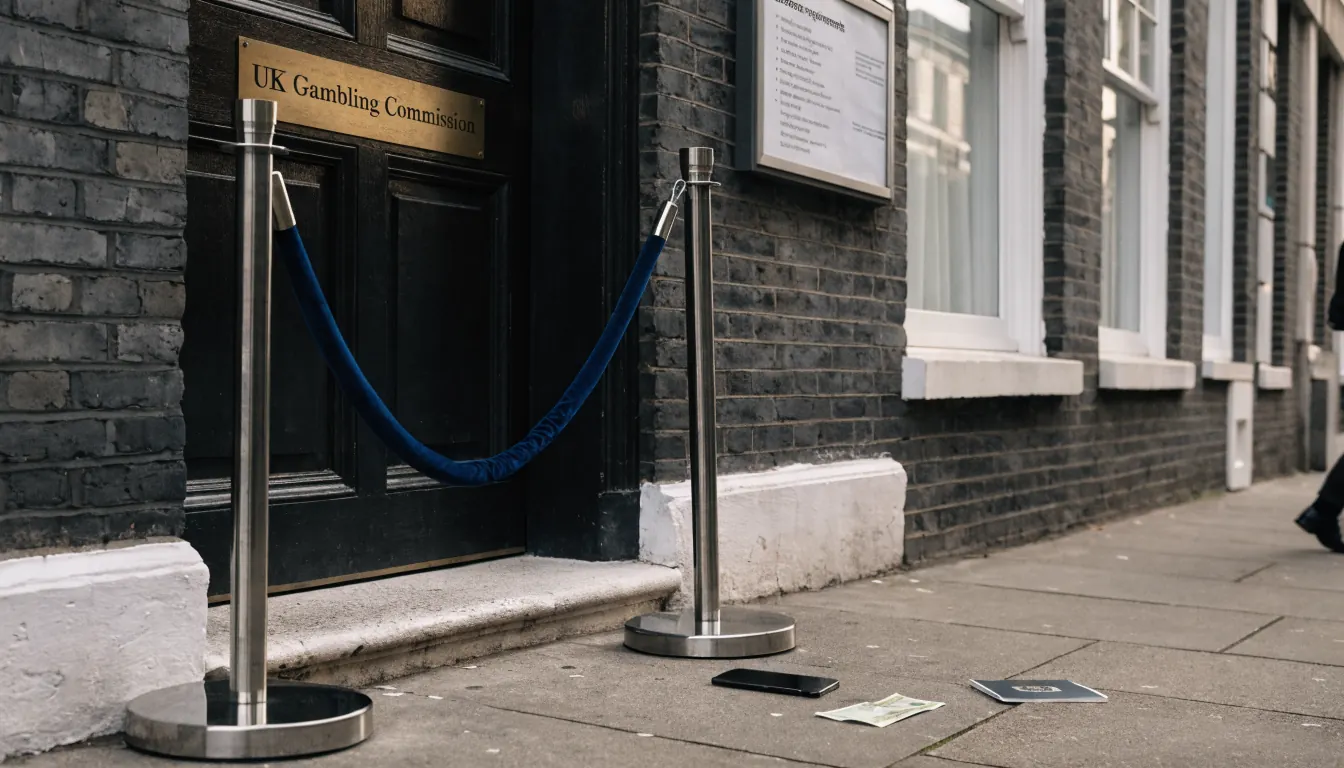
The same caution applies to responsible-gambling claims. A site may advertise deposit controls, reality checks or session timers. The important question is not whether the words appear on a banner, but whether the relevant licence requires the tool and how the operator implements it. Under MGA licensing, deposit limits, reality checks and session timers are required as a baseline. Curaçao-licensed casinos may offer any, all or none of those measures. A familiar icon, therefore, can conceal a very different obligation.
That difference is easy to miss because the modern casino interface has become remarkably uniform. The same game tiles, payment logos and responsible-play language can sit above entirely different regulatory duties. The costume is international. The accountability is not.
Technical standards should not be assumed
A non-UKGC casino cannot be assumed to follow UKGC-specific operating requirements merely because it accepts registrations from Great Britain. British rules and offshore terms are not interchangeable. Claims about game speed, withdrawals, account checks or promotional controls need to be tied to the operator’s actual terms and licence, rather than inferred from the fact that the site is available in English.
The same principle applies to payment methods. A UKGC-licensed casino or betting operator does not accept cryptocurrency for deposits or withdrawals. If an offshore casino advertises crypto payments, that feature is not evidence of a British regulatory exception; it is evidence that the site is operating outside that particular UKGC position. A payment option can be convenient and still say something important about the regulatory distance involved.
Nor does a casino’s willingness to accept a player establish that every advertised protection follows automatically. Account access is not approval. A welcome message is not supervision. A licence logo is not a promise that the UKGC would have permitted the same model.
Important Note
Attention An overseas regulatory badge identifies a jurisdiction but does not import UKGC standards or consumer protections.
The practical consequence is simple, if rather less glamorous than a bonus banner: claims must be separated from enforceable duties. An offshore badge may identify a jurisdiction. It cannot supply the protections that only UKGC regulation provides.
Non-UK Casinos and the Protection Gap
The important difference between a non-UK casino and a UKGC-licensed operator is not the colour of its logo or the currency shown at the cashier. It is the layer of protection built into the licence behind the website. Once that layer is absent or weaker, familiar safety features can become optional extras rather than basic conditions of operation.
Among the offshore licensing systems considered here, the regulatory hierarchy places the Malta Gaming Authority (MGA) above Curaçao, and Curaçao above Anjouan. That ranking is not a claim that every casino within one jurisdiction behaves identically. It describes the strength of the baseline imposed by the licence.
An MGA-licensed casino must provide three safeguards as a minimum:
- deposit limits;
- reality checks;
- session timers.
These tools are deliberately mundane. A deposit limit restricts how much can be added. A reality check interrupts the uninterrupted drift of a long session. A session timer makes elapsed play visible instead of allowing time to disappear behind the next spin. None is glamorous. That is rather the point.
A Curaçao-licensed casino occupies a more variable position. It may offer deposit limits, reality checks, and session timers; it may offer all of them, some of them, or none. The presence of a Curaçao licence therefore does not establish that these protections are available. They have to be checked as separate features, not inferred from the regulatory badge.
Anjouan sits lower in this particular hierarchy. Anjouan-licensed casinos are not required to provide any of the three safeguards. A site may still display responsible-gambling information or add voluntary controls, but the licence itself does not create a baseline obligation for deposit limits, reality checks, or session timers.
| Licence | Deposit limits | Reality checks | Session timers |
|---|---|---|---|
| MGA | Required | Required | Required |
| Curaçao | May be offered | May be offered | May be offered |
| Anjouan | Not required | Not required | Not required |
This is the protection gap in practical form: a player may encounter the same game interface while operating under very different assumptions about interruption and control. The design can look polished; the safeguards may not be comparable. A non-UKGC casino can therefore appear familiar while leaving more of the burden on the individual.
The distinction matters especially where play is prolonged or spending becomes difficult to observe. A timer cannot decide for anyone, and a deposit limit is not a cure for gambling harm. Yet removing even these modest points of friction leaves fewer formal barriers between intention and expenditure.
The licence is only the starting label. The safeguards are the substance.
How to Check an Online Casino Outside UKGC Regulation
A licence badge is a claim, not proof. For online casinos outside UKGC regulation, verification starts by separating three things that marketing often places in the same decorative frame: the operator’s stated jurisdiction, the licence it says it holds, and permission to serve customers in Great Britain.
Verification Steps
- Identify the legal entity and jurisdiction in the terms
- Trace the licence through the official regulator’s register
- Verify if the operator is listed on the Gambling Commission register
- Check for mandatory tools like deposit limits or session timers
1. Identify the stated jurisdiction
The first check is the legal entity named in the casino’s terms, footer, or licensing page. Its country of incorporation may differ from the location of its servers, payment providers, or customer-support team. None of those locations changes the British licensing requirement.
An operator accepting bets from customers in Great Britain must hold a Gambling Commission licence, regardless of where it is incorporated, hosted, or regulated. This is the important boundary. An overseas address explains where the business says it operates; it does not establish UK approval.
2. Read the licence precisely
The licence name should be specific. MGA-licensed, Curaçao-licensed, and Anjouan-licensed describe different regulatory arrangements, but none is a substitute for a Gambling Commission licence.
A genuine overseas licence should be traceable through the relevant regulator’s register or verification system. The operator name, licence holder, status, and authorised domain should correspond. A logo without matching records is merely an assertion wearing official colours.
The same discipline applies to claims such as “UK-friendly”. Accepting sterling deposits or displaying prices in pounds may describe a commercial choice, not regulatory permission. The phrase is useful for payments and presentation; it is not evidence of UKGC approval.
3. Check the safer-gambling tools
The final check concerns what the casino is actually required to provide. Deposit limits, reality checks, and session timers are a baseline requirement for MGA-licensed casinos. Curaçao-licensed operators may offer any, all, or none of these tools, while Anjouan-licensed operators are not required to offer them.
That difference matters more than a polished responsible-gambling page. The relevant question is not whether a button appears in the account menu, but whether the stated regulator requires it and whether the casino explains how it works.
A profile-specific overview reported that all ten operators it reviewed were absent from the Gambling Commission public register. That finding belongs to the reviewed set, not to every offshore casino. The register remains the proper reference point for checking UKGC status. Five minutes with the record is less glamorous than a badge, but considerably more informative.
The Real Meaning of “Outside UKGC Regulation”
“Outside UKGC regulation” describes an operator that is not authorised by the United Kingdom Gambling Commission to provide online gambling services in Great Britain. It is a regulatory description, not a statement about where the company’s office sits, where its website is hosted, or which overseas authority has issued a licence.
That distinction matters because online businesses are fond of geography when it suits them. A company may be incorporated abroad, run its servers elsewhere, and display a licence from an international regulator. None of those facts changes the British requirement. An operator taking bets from customers in Great Britain must hold a Gambling Commission licence, regardless of where it is incorporated, hosted, or regulated.
The phrase therefore concerns the relationship between the operator and the UKGC, not the operator’s entire legal existence. “Outside UKGC regulation” does not necessarily mean that no regulator is involved. It may mean that the business operates under a Malta Gaming Authority, Curaçao, or Anjouan licence instead. Those are separate regulatory arrangements, issued by separate authorities, under separate rules.
They are not substitutes for a Gambling Commission licence.
Does an overseas licence mean the casino is safe?
An overseas licence indicates regulatory oversight in another jurisdiction, but it does not guarantee the same protections provided by the UKGC.
Is a “UK-friendly” casino licensed in the UK?
No, “UK-friendly” is a commercial term regarding currency and audience, not a legal confirmation of UKGC licensing.
Can I use crypto at a non-UKGC casino?
Yes, many offshore casinos accept cryptocurrency, a feature typically not permitted under UKGC-regulated operations.
This is where the label can become misleading. “Internationally licensed” may sound reassuring, while “UK-friendly” may merely mean that the site accepts British customers and GBP deposits. Neither expression establishes UKGC approval. A foreign licence can identify the framework claimed by the operator, but it cannot turn an offshore casino into a UKGC-licensed casino by implication.
The British rule is stubbornly simple: the customer’s location matters. If gambling facilities are offered to consumers in Great Britain, overseas incorporation, foreign hosting, and an overseas licence do not remove the UK licensing requirement. Geography explains the corporate structure. It does not rewrite the law.
Non-Gamstop Casinos for UK Players: Comparing the Featured Operators
The featured operators illustrate why “best” is a slippery label in the non-Gamstop market. A bonus may be generous on paper while the regulatory position remains entirely separate from UK approval. The details therefore belong in two columns: commercial terms and licensing status.
| Operator | Licence | Advertised casino offer |
|---|---|---|
| MyStake | Curaçao GCB | 150% welcome bonus up to €1,000, with 30× bonus wagering |
MyStake is the only operator covered in this comparison for which the available review identifies both a specific Curaçao GCB licence and a quantified casino welcome offer. Those facts describe the operator’s stated terms; they do not turn the brand into a UKGC-licensed casino or place it under Gambling Commission supervision.
The same distinction matters when the phrase “non-Gamstop casino” is used. It describes the operator’s position outside the Gamstop network, not a special UK regulatory category and not a connection to the self-exclusion scheme. A Curaçao-licensed label answers one question—where the operator says its authorisation comes from. It does not answer whether the protections associated with UKGC regulation apply.
The bonus itself also requires its own arithmetic. A 150% match up to €1,000 sounds substantial, but the stated 30× wagering condition is part of the offer, not decorative small print. The value of the promotion therefore depends on completing that condition under the operator’s terms. Currency adds another small complication: the headline limit is in euros, while the intended audience may think in pounds. Marketing rarely objects to such ambiguity.
For UK players comparing offshore brands, MyStake is consequently a concrete example rather than proof of a universal standard. The licence, bonus percentage, maximum amount, and wagering requirement are specific to the reviewed offer and may change. The regulatory label remains the more important fact: Curaçao-licensed, not UKGC-licensed.
No-Deposit Bonuses at Casinos Not on Gamstop
No-deposit promotions are not the same thing as welcome bonuses. A welcome offer normally requires a deposit before any bonus balance, spins, or wagering conditions become relevant. A no-deposit offer removes that first payment, but it does not remove the operator’s terms. The small print simply arrives before the money does.
The reviewed examples contain two distinct forms of no-deposit promotion:
- MyStake: a specialist casino review reports 50 no-deposit free spins, with a stated cashout cap of £50–£100.
- Donbet: a specialist casino review reports 15 additional no-deposit free spins alongside a wider package containing a 150% welcome bonus up to £750 and 50 free spins.
The Donbet package illustrates why promotional labels deserve careful reading. The 15 spins are the no-deposit element; the 150% match and the other 50 free spins belong to the broader welcome offer. Treating the whole package as “free” would make the wording do rather more work than the promotion itself.
The distinction matters particularly at casinos not on Gamstop. A free spin is a marketing condition, not evidence of UKGC approval, Gamstop participation, or UK regulatory protection. It may also have separate requirements concerning eligible games, winnings, withdrawals, or account verification. Those conditions are not interchangeable with the headline offer.
MyStake’s stated cashout range is itself a reminder to check the exact terms attached to the account and promotion. Donbet’s 15 no-deposit spins should likewise be kept separate from its deposit-linked bonus and its additional free spins. Different pieces of one welcome page can carry different activation rules.
No deposit does not mean no conditions. It means no initial deposit is required for that particular promotional component. The distinction is modest, precise, and easily buried beneath a generous-looking number of spins.
Is it illegal for a British player to gamble at a casino without a UK licence?
No, merely using an unlicensed casino has not resulted in traced sanctions against a player. The licensing offence and its potential imprisonment and unlimited fine apply to the operator providing the gambling facilities.
Can I use cryptocurrency at UKGC-licensed casino sites?
No, UKGC-licensed casino and betting operators do not accept cryptocurrency for deposits or withdrawals.
Can I use a credit card to deposit at a UK gambling site?
The provided information does not establish whether credit-card deposits are accepted at UK gambling sites.
Created by the ”Hub Casinouk Gb” editorial team.