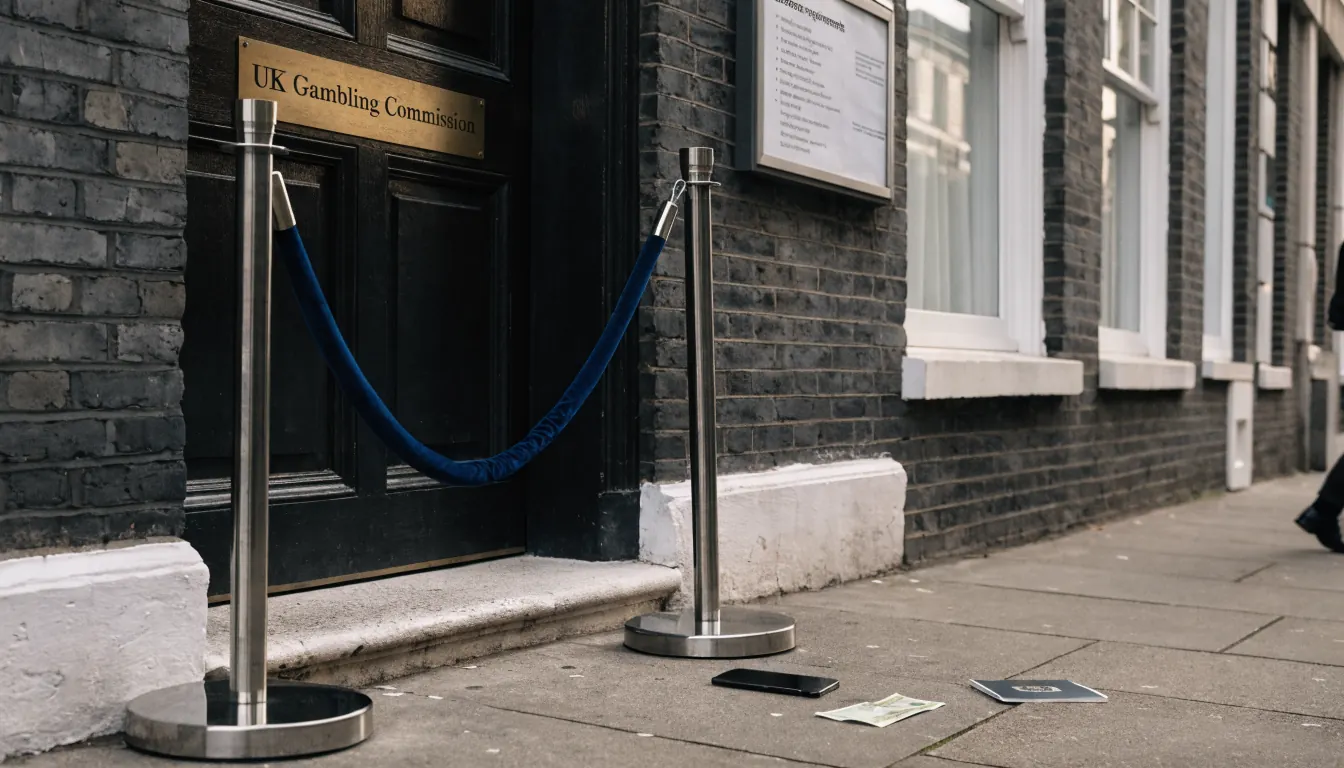
Trusted Casinos Not on GamStop UK: What to Know
 Available in GB
Explore licensing, safer-play measures, payment options and the practical trade-offs of casinos outside the UK system.

Table of Contents
- What Non-GamStop Casinos Are — and Why They Sit Outside the UK System
- Trusted Online Casinos for Real-Money Play: The Practical Trade-Off
- The Most Trusted Online Casino Sites and How Their Standards Differ
- Trusted Casino Sites: What a Credible Site Should Show
- The Most Trusted Casino Is Not Always the Most Convenient
- Trusted Non-GamStop Casinos, Slots and Bingo: The Missing Safeguards
- Crypto Casinos and the UK Market: Speed Without the UKGC Safety Net
- Trusted Online Casinos for UK Players and High Rollers
- How Trusted Casino Reviews Should Be Read
- Licensed Trusted Casinos: Licence Terms, Safer Play and the 2026 Context
What Non-GamStop Casinos Are — and Why They Sit Outside the UK System
Non-GamStop casinos are online gambling sites licensed outside the jurisdiction of the UK Gambling Commission (UKGC). Because they do not operate under a UKGC licence, they are not required to connect to GamStop, the United Kingdom’s national self-exclusion database.
That distinction is the starting point for understanding websites described as trusted non-GamStop casinos UK players may encounter. The phrase does not mean that a casino has been approved by the UKGC, nor that it belongs to a special category of UK casinos. It describes a site outside the British licensing system, often serving customers from several countries under an overseas regulatory framework.
The geography can be misleading. A website may be written in English, display prices in pounds and accept registrations from people in Britain, yet still have no UKGC licence. Its language and audience do not determine its legal status. The licence does.
How the UK system works
The UKGC is the statutory regulator for commercial gambling in Great Britain. Operators providing online gambling services to consumers in England, Wales or Scotland must hold a UKGC licence, regardless of where their company is based. A remote operating licence is required for online gambling activities in Great Britain.
This page highlights trusted casino options associated with the UK market for readers exploring casinos not on GamStop in 2026. Use the key details below to identify the features that may matter most when reviewing each option.
License: UKGC Operator Licence · Bonus: £200 welcome bonus · Payout speed: Within 48 hours · Min. deposit: £10 32Red is listed with a UKGC Operator Licence and offers a £200 welcome bonus. It has a £10 minimum deposit and payouts within 48 hours.
License: UKGC Operator Licence · Bonus: £100 bonus · Payout speed: Within 24 hours · Min. deposit: £10 ProgressPlay Limited is listed with a UKGC Operator Licence and provides a £100 bonus. Its minimum deposit is £10, with payouts within 24 hours.
License: UKGC Operator Licence · Bonus: £100 bonus · Payout speed: Within 24 hours · Min. deposit: £10 Genesis Global Limited is listed with a UKGC Operator Licence and offers a £100 bonus. It accepts deposits from £10, with payouts within 24 hours.
License: UKGC Operator Licence · Bonus: £100 bonus · Payout speed: Within 24 hours · Min. deposit: £10 LeoVegas is listed with a UKGC Operator Licence and offers a £100 bonus. The minimum deposit is £10, and payouts are made within 24 hours.
License: UKGC Operator Licence · Bonus: £20 bonus · Payout speed: Within 48 hours · Min. deposit: £10 Silverbond Enterprises is listed with a UKGC Operator Licence and offers a £20 bonus. It has a £10 minimum deposit and payouts within 48 hours.
License: UKGC Operator Licence · Bonus: £50 bonus · Payout speed: Within 48 hours · Min. deposit: £10 Platinum Gaming Limited is listed with a UKGC Operator Licence and offers a £50 bonus. Its minimum deposit is £10, with payouts within 48 hours.
UKGC-licensed operators must also follow the licence conditions and codes of practice, including LCCP condition 3.5.5, which requires integration with GamStop. The result is a connected system: a player who activates self-exclusion through GamStop is blocked from all UKGC-licensed casinos for the selected period.
GamStop offers self-exclusion for six months, one year or five years. The chosen period cannot be reversed before it expires. This is deliberately more rigid than closing an account or changing a marketing preference. The system is designed to create distance between a person and gambling services, not merely to hide a particular brand from view.
That is why a site outside the UKGC framework can appear accessible when British licensed casinos are not. A GamStop restriction blocks access to UKGC-licensed operators, but it does not extend to offshore gambling sites. Non-GamStop casinos are outside the database’s reach by structure, not because they have received an exemption from GamStop.
Offshore does not mean illegal for the player
For UK residents, playing at a non-GamStop casino is not itself illegal. UK law does not criminalise players for using offshore gambling sites. The legal position of the operator is a different matter: a business must hold a UKGC licence to advertise or take bets from consumers in England, Wales or Scotland, and operating without one is a criminal offence.
This creates an awkward separation between the person clicking to play and the company offering the service. The player may not be committing a criminal offence, while the operator may still be acting outside the requirements governing gambling businesses in Great Britain. Offshore access is therefore not the same thing as UK authorisation.

Nor may non-GamStop operators actively market their services to British consumers. A casino appearing in front of a UK audience, accepting a registration from a UK resident or using familiar British payment language should not be mistaken for permission to promote gambling in Britain. Accessibility is not approval. The internet has always been fond of confusing the two.
Why “trusted” needs qualification
The word trusted is particularly slippery in this area. It may refer to a site’s reputation, the clarity of its terms, the reliability of withdrawals or the existence of an overseas licence. It cannot, by itself, mean that the casino offers the protections attached to a UKGC-licensed site.
Non-GamStop casinos are not subject to the UKGC framework for GamStop connection, responsible-gambling measures, advertising standards, segregated player funds and compliance audits. They are also not required to provide access to approved alternative dispute resolution services. Offshore casinos therefore do not provide the UKGC consumer-protection framework, including mandatory ADR protection.
Some sites described as non-GamStop casinos may operate under an overseas licence. Others may claim to be licensed without holding any legitimate licence whatsoever. The label alone proves neither proposition. A site can be available to UK players and still offer no meaningful regulatory supervision.
The difference matters most when something goes wrong. Under the UKGC system, licensing is tied to formal assessments and continuing obligations. The Commission assesses identity and ownership, finances, integrity, competence and criminality. An offshore site is not automatically fraudulent, but its distance from that system leaves fewer UK-specific protections standing between a dispute and an unanswered email.
The self-exclusion question
Searches for trusted casinos not on GamStop UK 2026 often reflect a practical fact: people who have self-excluded may still be able to reach offshore websites. But the technical possibility deserves a plain description. Accessing a non-GamStop casino bypasses the GamStop self-exclusion tool.
Attention Accessing non-GamStop casinos bypasses the national self-exclusion tool, potentially removing a protective barrier designed to control gambling behavior.
For someone who chose exclusion because gambling had become difficult to control, that bypass may turn a protective barrier into a gap. Non-GamStop casinos may not offer comparable responsible-gambling tools, and they are not required to connect to the same national scheme. The absence of a block is therefore not evidence of greater freedom in any healthy sense. It may simply mean that the system designed to enforce a pause stops at the border of the licence.
This is also why terms such as trusted Bitcoin casinos, trusted Ethereum casinos or trusted online casinos UK should not blur the central issue. A payment method, a familiar interface or a polished brand does not bring an offshore operator into the UKGC system. The decisive question remains whether the operator holds the appropriate British licence and follows its conditions.
Non-GamStop casinos occupy a legally accessible but less protected space for UK players. They should not be presented as UKGC-regulated operators, and they should not be treated as a substitute for GamStop. The distinction is not cosmetic. It is the boundary between a national licensing framework and a service operating beyond it.

Trusted Online Casinos for Real-Money Play: The Practical Trade-Off
For a UK player using a non-GamStop casino, the practical question is less dramatic than the advertising suggests: can money enter the account, can it leave again, and what stands between the two events? A trusted online casino is therefore not defined by a bright welcome banner. It is defined by the ordinary machinery of real-money play — deposits, verification, game access, withdrawal rules and the small print that decides whether a balance is actually usable.
The attraction is clear. Non-GamStop casinos may accept Bitcoin, Ethereum, Litecoin and other cryptocurrencies alongside e-wallets such as Skrill and Neteller. Some also list credit cards and voucher payment methods. That range can look like convenience, particularly where a player prefers not to use a bank transfer or wants a payment method already familiar from other online services.
Yet payment choice is not the same as payment reliability. A casino online trusted by its customers should explain which methods are available for deposits, which are available for withdrawals, whether the same method must be used in both directions, and whether identity checks can delay a payout. A logo displayed beside the cashier proves very little. The cashier’s actual terms matter more.
Deposits: low entry, uneven exposure
A specialist industry review gives a reported range of £5 to £20 for minimum deposits at non-GamStop casinos. That is an observation from one source, not a universal market rule. It does, however, illustrate why a low entry point can be appealing: the account may be tested without immediately committing a large amount.
The opposite end of the scale requires greater care. A specialist industry review reports that some non-GamStop casinos permit single deposits of £5,000 or more. A high ceiling may be presented as a mark of seriousness, but it is simply a capacity. It says nothing about the quality of customer support, the speed of withdrawals or the clarity of bonus conditions.
This is where the language of “trusted online casino real money UK” becomes slightly misleading. Real-money play is not made safer by a larger cashier. A small minimum deposit can still lead to repeated deposits, while a high maximum can turn a payment facility into a serious financial exposure. The number on the button is not a safeguarding policy.
Payment Methods Comparison
Non-GamStop sites often provide a wider range of payment options compared to UKGC-licensed operators.
- Cryptocurrencies: Bitcoin, Ethereum, Litecoin
- E-wallets: Skrill, Neteller
- Other: Credit cards and various voucher methods
Credit cards deserve a separate note. UKGC-licensed operators have been prohibited from accepting credit cards for online gambling since 14 April 2020. A non-GamStop site may nevertheless list credit cards among its available methods because it is outside that UKGC framework. The difference is not merely technical. It shows how the same payment instrument can sit in a different regulatory environment, with different expectations around affordability and player protection.
Withdrawals reveal the operating model
Depositing is usually the easy part. Withdrawal is where an online trusted casino has to demonstrate that its promises survive contact with administration.
E-wallet withdrawals are typically processed within 24–48 hours, while cryptocurrency transactions are generally near-instant. Card and bank transfer withdrawals typically take one to five business days. These are reported processing patterns, not guarantees applying to every operator. A casino’s own terms may add verification, manual review or a pending period before the stated processing time begins.
A credible cashier should therefore distinguish between “processing time” and the time required for funds to reach the account. It should also identify any withdrawal fee, minimum withdrawal, document requirement or method restriction. Vague wording leaves the player to discover the rules after the request has been made — an old administrative trick, though the screen is newer.
Withdrawal caps create another trade-off. A specialist industry review reports weekly or monthly limits ranging from £5,000 to £50,000. Those figures should be treated as source-specific examples rather than a standard applied across the market. The important point is structural: a casino can accept a substantial deposit while releasing winnings under a much slower schedule. The ability to stake is immediate; the ability to recover funds may be conditional.
Game choice and bonus friction
Non-GamStop casinos may offer access to more than 4,000 games, including titles unavailable at UKGC sites, according to a specialist industry review. A broad lobby can include slots, table games, live casino and other formats, but quantity is not an independent measure of trust. A large catalogue may simply reflect a wide network of suppliers.

Bonuses add another layer of practical complexity. A specialist industry review reports welcome packages ranging from 200% to 700%, with wagering requirements commonly stated at 40 to 45 times the deposit plus bonus. This is a single-source market observation, not a universal norm. The headline percentage is less important than the attached conditions: eligible games, maximum bet limits, excluded payment methods, expiry wording and withdrawal restrictions.
A sticky bonus is removed from the balance when real funds are withdrawn before wagering is completed. A non-sticky bonus permits withdrawal of the player’s deposit, but the bonus is forfeited. The distinction can determine whether a displayed balance is genuinely available or partly conditional. A trusted casino online should make that distinction visible before the deposit, not bury it beneath a promotional button.
The practical trade-off is therefore plain. Offshore sites may provide more payment routes, wider game access, flexible deposit structures and faster-looking transaction options. They do so without the UKGC consumer-protection framework, including GamStop integration and mandatory alternative dispute resolution protection. A convenient cashier can be useful. It is not a substitute for protection.
The Most Trusted Online Casino Sites and How Their Standards Differ
The phrase “most trusted online casino sites” suggests a league table, but offshore gambling rarely offers anything so tidy. A site may display a recognised licence yet provide vague ownership details, slow replies or narrow withdrawal terms. Another may have a polished interface and a generous game catalogue while leaving the player with little practical protection when a dispute begins.
Trust, therefore, is comparative. The stronger non-GamStop casinos are not necessarily those with the loudest bonuses. They are the ones whose licensing, ownership, payments and safeguards remain intelligible after the promotional language has been stripped away.
Essential Distinction
Offshore casinos provide more payment routes and game access but lack the UKGC consumer-protection framework.
Licensing is the first dividing line
Curaçao licences are common among non-GamStop casinos. They generally provide less player protection than licences issued by the Malta Gaming Authority or the Gibraltar Regulatory Authority. That does not make every Curaçao-licensed operator dishonest, but it changes the weight that should be given to the licence badge. A logo is not a substitute for knowing which legal entity holds it, what activities the licence covers and where complaints can be taken.
MGA and Gibraltar licensing usually signals a more developed compliance environment than a basic Curaçao arrangement. Even so, neither turns an offshore casino into a UKGC-licensed site. Non-GamStop casinos are not subject to UKGC regulation, are not required to connect to GamStop and are not bound by the UKGC framework for responsible gambling, advertising standards, segregated player funds or compliance audits.
That distinction matters particularly for people who have self-excluded. An offshore site can remain technically accessible because it sits outside the UK system. In practical terms, the absence of GamStop is not an extra convenience; it is the removal of a barrier designed to interrupt gambling.
Transparency beats decoration
A credible operator should make its corporate identity, licence details, terms and payment rules easy to locate. Stronger sites tend to explain who accepts deposits, who processes withdrawals and which entity handles complaints. Weaker ones hide behind a brand name, use several legal entities without explanation or provide a licence number that cannot be matched to the operator.
The difference is visible in the small print. A serious site states how identity checks work, when documents may be requested, which bonus restrictions apply and what happens if a withdrawal is cancelled. A weak site relies on broad discretion: “unusual activity”, “security concerns” or “management approval” may appear without meaningful definition. Such wording gives the operator room to rewrite the bargain after money has been deposited.

The same test applies to game supply. A specialist industry review has reported that some non-GamStop casinos advertise access to over 4,000 games, including titles unavailable at UKGC sites. Variety can be attractive, but a large lobby proves little about operational quality. A smaller catalogue from identifiable providers may be more reassuring than an enormous list with unclear software ownership and no information about testing.
Payments reveal the operating model
Payment performance is often more revealing than a casino’s homepage. A stronger site explains accepted methods, verification requirements and processing stages before the first withdrawal is requested. It distinguishes pending, approved and completed transactions rather than treating every delay as a mysterious banking event.
A weaker operator may accept deposits smoothly while making withdrawals conditional on shifting requirements. The central comparison is not how many payment logos appear in the cashier. It is whether the rules remain stable when funds move in the opposite direction.
This is also where offshore convenience can become misleading. Non-GamStop casinos are not required to provide access to approved alternative dispute resolution services. They may offer support channels, but an informal chat function is not equivalent to an independent route for resolving a complaint. Nor do offshore casinos provide the UKGC consumer-protection framework, including mandatory ADR protection.
Safeguards distinguish trust from mere access
The best trusted online casino sites UK players may encounter offshore are those that voluntarily provide visible limits, self-exclusion options, reality checks and clear marketing controls. These measures do not recreate UKGC oversight, but their presence indicates that the operator understands trust as more than uninterrupted access.
The weaker sites often treat friction as a defect. They may not offer tools such as Gamban or Gamblock, may make account closure obscure and may continue promotional contact without clear control over marketing types and communication channels. From January 2025, online gambling businesses must provide opt-in choices for specific marketing types and preferred communication channels; an operator that treats consent as decorative is offering a useful warning about its wider habits.
- Verify the legal company name and domain
- Check the specific terms of the licence
- Read the fine print on withdrawal rules
- Relying solely on a decorative logo
- Accepting unverified brand claims
- Ignoring bonus wagering requirements
The regulatory contrast is becoming sharper. One specialist industry source reported that financial vulnerability checks initially applied to players depositing more than £500 per month from August 2024, with the threshold scheduled to fall to £150 per month by February 2025. The same source states that UKGC operators must conduct a financial risk assessment at a £150 net-deposit threshold over a rolling 30-day period. Offshore casinos are not bound by those UKGC requirements.
In short, the top trusted online casino is not simply the site with the most games, the cleanest design or the most generous headline. It is the operator whose identity, licence, payment rules and limits can be examined without guesswork. Offshore trust is conditional. The protection gap remains.
Trusted Casino Sites: What a Credible Site Should Show
A trusted casino site should make its identity visible before money enters the account. The first place to look is the footer, terms page or licensing section. A credible operator should state its legal company name, licence number, regulator and the domains covered by that licence. A badge alone proves very little; a picture can be copied, while a licence record can be checked.
For a UK-facing site, the distinction is especially important. UKGC-licensed sites appear on the UK Gambling Commission’s public register, where the operator name or licence number can be matched with the listed domain. A non-GamStop casino is not UKGC-regulated, so it cannot present itself as a UKGC-licensed operator. Some sites described as non-GamStop casinos have no legitimate licence at all. That is not an adventurous variation of regulation. It is the absence of regulation.

The licence is only the beginning
The regulator named on the page matters because licences do not offer identical protection. Curaçao licences are common among non-GamStop casinos and generally provide less player protection than licences issued by the Malta Gaming Authority or Gibraltar authorities. The name should therefore be treated as evidence to investigate, not as a decorative seal of approval.
The site should also identify the legal entity behind the brand. A company name hidden in a privacy policy, missing from the terms, or replaced by a vague statement about an “international group” leaves the account holder with little useful information if a dispute arises. The same applies when the licence number leads nowhere, belongs to another company, or is not connected with the domain being used.
Bonus wording must survive close reading
The most attractive part of a casino homepage is often the least informative. A welcome offer should state the bonus percentage, any free-spin allocation, eligible games, maximum bet limits, expiry conditions and wagering requirements in one accessible set of terms. Promotional language that says “huge rewards” while hiding the conditions is not clarity; it is a small legal fog machine.
A single industry review reports non-GamStop welcome bonuses of up to 200% and 50–300 free spins. Another offshore-focused review describes packages ranging from 200% to 700%, with wagering requirements of 40 to 45 times the deposit plus bonus. These figures are reports about particular offers, not a market standard. The wording on the actual casino page remains decisive.
The bonus type also changes the practical risk:
- A sticky bonus is removed from the balance when real funds are withdrawn before wagering is completed.
- A non-sticky bonus permits withdrawal of the deposit, but the bonus is forfeited.
Terms should explain whether winnings are restricted while a bonus is active and whether a withdrawal cancels all associated funds. If those rules appear only after a deposit, the arrangement is poorly disclosed.
Withdrawal rules reveal the operating model
A credible site should publish its withdrawal policy before registration. It should explain verification documents, processing stages, minimum withdrawal conditions, fees, maximum bet limits linked to bonuses and any withdrawal cap. Vague promises about “fast payouts” are weaker evidence than a precise, readable policy.
The payment page should also match the legal information. A brand that changes company names between its terms, cashier and licence notice creates an avoidable question: who actually holds the money?
Finally, the responsible-gambling pages deserve attention. Offshore casinos are not bound by UKGC requirements for GamStop connection, advertising standards, segregated player funds or compliance audits, and they are not required to provide approved alternative dispute resolution services. A polished interface cannot replace those protections.
Regulatory Gap
Non-GamStop casinos are not bound by UKGC requirements for GamStop connection, advertising standards, or mandatory alternative dispute resolution (ADR) protection.
The test is simple: identity, licence, bonus terms and withdrawals should all tell the same story. If they do not, trust has already become a marketing claim.
The Most Trusted Casino Is Not Always the Most Convenient
Convenience is an attractive but unreliable measure of trust. A casino can advertise a generous welcome package, accept more payment methods and permit larger balances while offering less protection than a UKGC-licensed site. The larger the promise, the more carefully its conditions deserve to be read.
A specialist industry review attributes some non-GamStop offers to bonuses of up to 200% and 50–300 free spins. That is a report about offers identified by that type of source, not a market-wide standard. The same caution applies to minimum deposits: a specialist industry review places examples at £5 to £20, but a low entry point says nothing about how withdrawals are handled.
The familiar bargain is simple. More access, fewer guardrails.
Why bigger limits can mislead
Higher deposit limits may appeal to experienced players, particularly when a site presents itself as a serious destination for high-stakes play. Yet a larger limit is not evidence of stronger financial controls. A specialist industry review reports weekly or monthly withdrawal caps ranging from £5,000 to £50,000 across examples of non-GamStop casinos. Such figures describe capacity, not reliability. A generous ceiling is useful only if the operator pays valid winnings under clear terms and has a credible process for resolving disputes.
Payment choice creates a similar illusion. Credit cards, e-wallets and cryptocurrency can make funding an account feel effortless, but convenience at the deposit stage does not establish protection at the withdrawal stage. Offshore sites are not bound by the UKGC framework, including mandatory alternative dispute resolution, GamStop integration, compliance audits and the same responsible-gambling requirements imposed on UKGC-licensed sites.
That distinction matters especially when a player has previously self-excluded. Using a non-GamStop casino bypasses the exclusion tool and may undermine the reason it was chosen. A polished interface cannot repair that contradiction.
A better test of trust
The most trusted online casino is therefore not necessarily the one with the best-looking bonus or the broadest payment menu. A more defensible assessment asks whether the operator:
- clearly identifies its licence and ownership;
- publishes withdrawal rules before funds are deposited;
- explains bonus restrictions without hiding them in dense wording;
- provides meaningful responsible-gambling tools;
- offers an accountable route for complaints.
Any claim of trust should also be tested against the legal position. Operators serving consumers in Great Britain must hold a UKGC licence, and those without one cannot lawfully advertise or take bets from consumers there. Some sites described as non-GamStop casinos may also have no legitimate licence at all. Convenience is not proof. Sometimes it is the warning sign.
Trusted Non-GamStop Casinos, Slots and Bingo: The Missing Safeguards
The attraction of a trusted non-GamStop casino is easy to understand. A site may appear to offer access to slots, bingo rooms and casino games after a GamStop exclusion has closed the UKGC-licensed market. For someone who chose self-exclusion because gambling had become difficult to control, that apparent freedom is not a neutral convenience. It removes a barrier deliberately put there for protection.
GamStop blocks a self-excluded UK resident from UKGC-licensed operators for the selected period, and that exclusion cannot be reversed before it ends. The restriction does not extend to offshore gambling sites. Playing at a non-GamStop casino is not illegal for UK players, and UK law does not criminalise the player for doing so. Legality, however, is a narrow measure of safety. It says little about whether a person should be able to continue gambling when they had previously asked the system to stop them.
Summary of Risks
- GamStop restrictions do not apply to offshore gambling sites.
- High availability of games and payment methods does not equal safety.
- Offshore operators operate outside the UKGC consumer-protection framework.
Slots and bingo outside the safety net
Searches for trusted non-GamStop slots UK or a trusted bingo casino UK often reflect a wish for familiar entertainment rather than an interest in regulation. Slots can be presented as a quick return to routine; bingo as a softer, more social form of play. The atmosphere changes. The vulnerability may not.
Non-GamStop casinos are not bound by UKGC requirements for GamStop connection, responsible-gambling measures, advertising standards, segregated player funds or compliance audits. They are also not required to provide access to approved alternative dispute resolution services. Some may not offer tools such as Gamban or BetBlocker. A polished interface therefore proves very little. Trust cannot be created by bright graphics, a large game lobby or the word “licensed” placed in a footer.
The same caution applies to labels such as best trusted non-GamStop casino, top trusted non-GamStop casino or new trusted non-GamStop casino UK. “Trusted” may describe a reviewer’s impression, not a UKGC consumer-protection status. A new site may be new only to the market, not safer within it.
There is an awkward social fact here. GamStop was designed to make a private decision enforceable across the UK-licensed system. Going elsewhere does not break UK criminal law; it bypasses the decision’s practical boundary. For people who self-excluded for gambling-related reasons, that bypass may turn a search for slots or bingo into a route around their own safeguard.
The missing protection is the point. The games may remain attractive, but the restraint has gone.
Crypto Casinos and the UK Market: Speed Without the UKGC Safety Net
Cryptocurrency changes the payment rail, not the legal character of a casino. A non-GamStop casino may accept Bitcoin, Ethereum, Litecoin and other cryptocurrencies, but a digital wallet does not turn an offshore operator into a UKGC-licensed site. The coin travels differently; the regulatory obligations do not magically travel with it.
Why crypto casinos attract attention
The practical attraction is speed. Cryptocurrency transactions are generally near-instant, while e-wallet withdrawals are typically processed within 24–48 hours. That difference can matter to players who regard a casino balance less as entertainment money than as a small financial account waiting to be moved elsewhere.
Yet speed is not the same as reliability. A fast blockchain transfer says little about whether the casino will approve a withdrawal, request identity documents, apply a wagering condition, or interpret its terms generously. Payment technology can remove one delay while leaving the more consequential decision entirely in the operator’s hands.
That is why claims about the most trusted crypto casinos should be treated as claims about the whole business, not merely its coin list. A site accepting Bitcoin may still provide weaker protection than one operating under a stronger licensing framework. Curaçao licences are common among non-GamStop casinos and generally provide less player protection than licences issued by the Malta Gaming Authority or Gibraltar authorities.
Legal Status
Operating a gambling business in Great Britain without a UKGC licence is a criminal offence.
The UK-facing problem
A casino can present itself as a trusted UK casino, display sterling, and accept a familiar cryptocurrency without becoming part of the British regulatory system. Offshore operators are not subject to UKGC requirements for GamStop connection, responsible-gambling measures, advertising standards, segregated player funds or compliance audits. They are also not required to provide access to approved alternative dispute resolution services.
The gap matters particularly where crypto transfers feel final. A near-instant transaction leaves little emotional distance between depositing and playing, while a mistaken address or an unresolved withdrawal dispute may be difficult to remedy. No UKGC consumer-protection framework stands behind the transaction.
This does not make every crypto casino dishonest, nor does a Bitcoin option prove that one is safe. It makes the word “trusted” conditional. The relevant evidence lies in the operator’s licence, ownership information, terms and handling of withdrawals—not in the presence of Ethereum beside the deposit button.
For UK players, the most trusted Bitcoin casinos and the best trusted crypto casinos UK lists should therefore be read as payment comparisons, not official endorsements. A quick transfer is useful. It is not a safety certificate.
Trusted Online Casinos for UK Players and High Rollers
A casino built for ordinary UK players and one designed for high rollers may share the same games, but they do not create the same financial experience. The difference appears first at the cashier. A profile review of non-GamStop casinos places minimum deposits between £5 and £20, making low-cost entry possible. That figure says little about trust, however. A small opening deposit can sit beside weak withdrawal controls, unclear terms or no meaningful protection.

High-roller facilities reverse the emphasis. A profile review reports that some non-GamStop casinos permit single deposits of £5,000 or more. Such capacity may appeal to players who value fewer interruptions and larger balances, but it also increases the cost of an error. A disputed withdrawal, misunderstood bonus condition or delayed identity check becomes more than an inconvenience when the account carries substantial funds.
Withdrawal ceilings matter just as much as deposit limits. According to a profile review, weekly or monthly caps range from £5,000 to £50,000. The upper figure may sound generous until a large balance is divided across several payment periods. A casino can therefore appear accommodating at the point of deposit while remaining restrictive at the point where winnings leave the account. That is not necessarily unlawful; it is simply a condition that belongs in the decision, not in the small print after the money arrives.
For a typical player, the most trusted online casino for UK players is not automatically the one advertising the largest balance limits. A modest deposit range, clearly stated withdrawal rules and a payment structure that matches the intended stake may be more relevant. High rollers, by contrast, need to examine whether the published ceiling, verification process and bonus terms are compatible with larger exposure. “VIP” is often a social label before it becomes a protection standard.
This is where claims about top trusted online casinos UK or trusted new online casinos become slippery. Newness can describe a recent launch, not an established payment history. A new user bonus can increase the apparent value of an account while attaching wagering requirements or maximum bet limits that shape how funds may be used. The larger the deposit, the less sensible it is to treat promotional language as evidence of reliability.
Offshore capacity can look like freedom: broader limits, fewer interruptions, larger balances. It can also mean that the UKGC consumer-protection framework is absent. Scale magnifies both sides. More room to play is not the same as more room for recourse.
Is playing at a non-GamStop casino illegal?
For UK residents, playing at an offshore site is not itself a criminal offence, though the operator may be acting illegally without a UKGC licence.
Why are non-GamStop casinos accessible?
They are outside the reach of the national self-exclusion database because they operate under overseas regulatory frameworks.
How Trusted Casino Reviews Should Be Read
A trusted casino review is not a ranking with adjectives attached. It is a record of what was checked, what was observed, and what remains uncertain. That distinction matters particularly in a trusted casino review UK readers may use to judge a non-GamStop site, where promotional language can travel faster than accountability.
Look for Evidence, Not Applause
The stronger trusted casino review platforms identify the operator, its licence, and the domain covered by the assessment. A licence badge copied into a footer proves very little by itself. Curaçao licences are common among non-GamStop casinos and generally provide less player protection than licences issued by the Malta Gaming Authority or Gibraltar authorities. A careful review explains that difference instead of treating every badge as equivalent.
Withdrawal evidence deserves similar attention. A review that discusses only deposits, welcome offers or trusted casino free spins is describing acquisition, not the complete playing experience. Useful coverage records whether withdrawal rules are clear, whether identity checks are explained, and whether the stated processing time matches the method. Card and bank-transfer withdrawals typically take one to five business days; a review should present that as a practical reference, not a promise that every transaction will follow the same path.
Game and Bingo Reviews Need Context
Trusted casino game reviews UK players can use should identify the provider and distinguish return information from entertainment claims. A slot review that says a game is “hot” or “generous” without explaining its published characteristics is closer to sales copy than analysis. The same applies to trusted bingo casino reviews UK: the review should separate the game catalogue from the operator’s terms and withdrawal record.
New trusted casino coverage requires restraint. A new trusted casino UK listing may have attractive introductory offers, but limited operating history means fewer independent observations. Ratings should therefore show whether they reflect verified performance or simply the absence of complaints.
The best review is not the loudest. It leaves an audit trail. That is less exciting—and considerably more useful.

Licensed Trusted Casinos: Licence Terms, Safer Play and the 2026 Context
A casino described as licensed needs more than a badge in its footer. In Great Britain, online gambling operators must hold a remote operating licence from the UK Gambling Commission (UKGC), regardless of where the business is based. The UKGC issues operating, personal and premises licences, and keeps a public register of current licences.
That register is the useful part. A claimed licence should correspond to the operator’s legal name, licence number and listed domain. A logo alone proves very little. The Commission assesses ownership, finances, integrity, competence and criminality before granting permission, while operating without a UKGC licence is a criminal offence when taking bets from consumers in England, Wales or Scotland.
What a UKGC licence changes
A UKGC-licensed casino is not merely displaying a trusted casino licence. It operates within conditions covering safer gambling, advertising, compliance and player protection. The connection with GamStop is mandatory under LCCP condition 3.5.5. That matters because self-exclusion is meant to create a barrier, not a decorative account setting.
The same framework also limits the speed and presentation of online slots. UKGC rules prohibit turbo and slam-stop features, autoplay, celebrations for returns less than or equal to the stake, and spin speeds faster than five seconds. These restrictions are unglamorous by design. Friction is sometimes the safety feature.
A low-wagering casino can still require careful reading: the phrase says nothing by itself about eligibility, game contributions, withdrawal conditions or the treatment of a bonus. Licence status and bonus value are separate questions.
The 2026 context
A specialist industry review reports that Remote Gaming Duty is set to rise from 21% to 40% on 1 April 2026. That change concerns operators, but it forms part of the commercial background against which offers and operating costs may be presented.
Offshore sites do not provide the UKGC consumer-protection framework, including GamStop integration and mandatory alternative dispute resolution protection. They may call themselves a licensed trusted casino, yet the relevant licence can belong to another jurisdiction with different obligations. A trusted live casino UK players can identify in 2026 therefore depends first on verifiable licensing, not on branding, game variety or the confidence of its claims.
Why play at an online casino not on GamStop in the UK?
Some players choose these sites because they remain accessible when a GamStop self-exclusion blocks UKGC-licensed casinos. They may also offer larger bonuses, cryptocurrency payments and games that are not available at UKGC sites.
What are non-GamStop casinos and how do they differ from UKGC-licensed casinos?
Non-GamStop casinos operate under licences outside the UKGC system and are not connected to GamStop. Unlike UKGC-licensed operators, they do not provide the UKGC consumer-protection framework, including mandatory GamStop integration and approved alternative dispute resolution.
What is the fastest withdrawal method at new UK casino sites?
Cryptocurrency withdrawals are generally near-instant, while e-wallet withdrawals are typically processed within 24–48 hours. Card and bank transfer withdrawals usually take one to five business days.
What are the advantages of Non-GamStop Casinos?
They may offer larger welcome packages, access to more than 4,000 games, cryptocurrency payments and lower minimum deposits. However, these features come without the protections provided by the UKGC framework.
What is a UK gambling licence?
A UK gambling licence is authorisation from the UK Gambling Commission for operators providing online gambling to consumers in England, Wales or Scotland. It requires compliance with UKGC licensing conditions, including connection to GamStop.
What should I do if I have problems with a non-GamStop casino?
Check whether the casino holds a legitimate overseas licence and follow the operator’s complaints procedure. Non-GamStop casinos are not required to provide access to approved UK alternative dispute resolution services, so UK-specific protections may not be available.
How Can I Withdraw Winnings from a Casino Not on GamStop?
Request the withdrawal through an available cryptocurrency, e-wallet, card or bank-transfer method. Cryptocurrency transactions are generally near-instant, e-wallet withdrawals typically take 24–48 hours, and card or bank transfers usually take one to five business days.
Written by the editors at Hub Casinouk Gb.