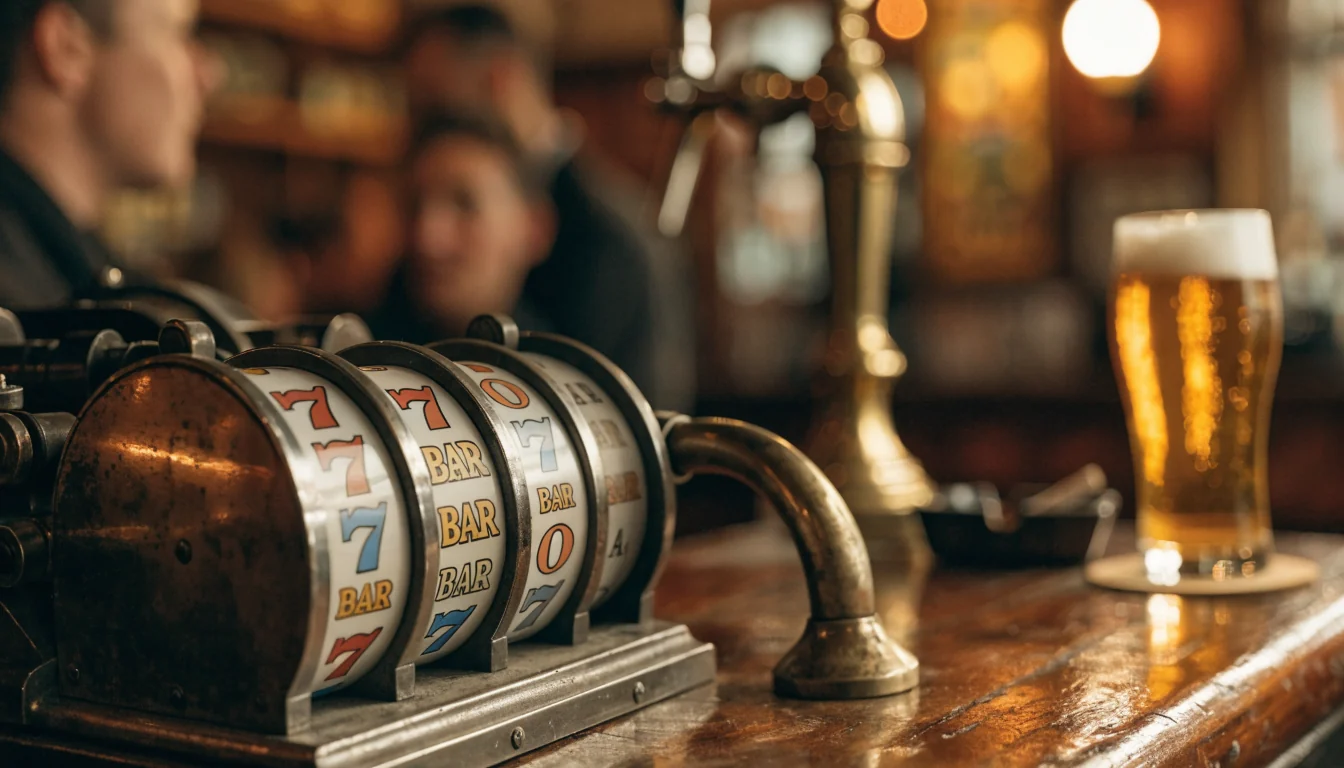
Best RTP Casino Slots UK: How the Numbers Work
 Available in GB
Understand how random spins become RTP figures, why volatility matters, and where high-RTP slots fit within the UK gambling system.

Table of Contents
- How UK Online Slots Turn Random Spins into RTP Figures
- The Highest-RTP Online Slots: What the Numbers Actually Say
- Which Slot Games Offer the Highest RTP?
- The 99% RTP Question: Why the Headline Needs Care
- High RTP and Low Volatility Are Different Things
- Slots with RTP Above 98% and a Calmer Payout Profile
- Online Slots Above 97% RTP with Lower Volatility
- Where High-RTP Slots Sit Safely in the UK Gambling System
- High-RTP Slots for Real Money: From Demo Spin to Cash Play
- Jackpots, Branding, and the Other Reasons RTP Is Not the Whole Story
How UK Online Slots Turn Random Spins into RTP Figures
An online slot looks simple because its visible vocabulary is small: reels, symbols, paylines, a stake, and perhaps a bonus round waiting behind a particular combination. Underneath that surface, each spin is governed by a random number generator (RNG). The machine does not consult the previous spin, remember a near miss, or alter its output because a player has just increased the stake. Its mathematics is less theatrical than the screen suggests.
The RNG decides the outcome
Online slot machines use RNG technology to produce unpredictable outcomes. The RNG supplies the random event from which the displayed result is derived. The reels then show symbols corresponding to that result, making the internal process legible as a row of images rather than a stream of numbers.
This is known as output randomness. The output cannot change depending on a particular scenario. A previous losing spin does not make a win more likely, and a recent win does not create a rule requiring a loss next. The machine is not building a dramatic narrative, despite the fondness of game designers for suspenseful pauses and symbols that land one position short.
Use this shortlist to review UK-licensed operators with the practical details that matter when exploring high-RTP casino slots in 2026. Check the listed bonus, payout timing and minimum deposit alongside your own slot preferences.
License: UKGC Operator Licence · Bonus: £200 welcome bonus · Payout speed: Within 48 hours · Min. deposit: £10 32Red holds a UKGC Operator Licence and offers a £200 welcome bonus. Its minimum deposit is £10, with payouts stated as being available within 48 hours.
License: UKGC Operator Licence · Bonus: £100 bonus · Payout speed: Within 24 hours · Min. deposit: £10 ProgressPlay Limited is a UKGC-licensed operator offering a £100 bonus. It has a £10 minimum deposit and states that payouts are processed within 24 hours.
License: UKGC Operator Licence · Bonus: £100 bonus · Payout speed: Within 24 hours · Min. deposit: £10 Genesis Global Limited is listed with a UKGC Operator Licence and a £100 bonus. Players can deposit from £10, while payouts are stated as being available within 24 hours.
License: UKGC Operator Licence · Bonus: £100 bonus · Payout speed: Within 24 hours · Min. deposit: £10 LeoVegas is a UKGC-licensed operator with a £100 bonus. It sets a £10 minimum deposit and lists payout timing as within 24 hours.
License: UKGC Operator Licence · Bonus: £20 bonus · Payout speed: Within 48 hours · Min. deposit: £10 Silverbond Enterprises is listed with a UKGC Operator Licence and offers a £20 bonus. Its minimum deposit is £10, with payouts stated as being available within 48 hours.
License: UKGC Operator Licence · Bonus: £50 bonus · Payout speed: Within 48 hours · Min. deposit: £10 Platinum Gaming Limited holds a UKGC Operator Licence and offers a £50 bonus. Players can deposit from £10, and payouts are stated as being available within 48 hours.
That distinction matters when people talk about “due” spins. A slot has no memory in the human sense. Its visible history may be recorded in a session, but that history does not give the next result a personal relationship with what came before.
Reels turn numbers into symbols
Slot games typically display three to five reels. Each reel contains symbols that may form winning combinations or trigger bonus rounds. The player sees the reels stop; the underlying system has already determined the relevant output through the RNG.
The symbols are therefore the readable layer of the machine. A matching arrangement can award a prize, while another arrangement does nothing. Some symbols may also activate a bonus feature rather than paying through an ordinary combination. The presentation varies from game to game, but the basic arrangement remains recognisable: random output translated into a visual pattern.
A spin is not made more meaningful because its symbols appear close to a winning line. Near misses are part of the display, not evidence that the machine was persuaded to offer a concession. The eye supplies the drama. The RNG supplies the result.
Paylines and stake alter the play, not the certainty
Players can select their desired stake and the number of active paylines. These choices determine how much is committed to a spin and which possible combinations are included in the wager. A greater number of active paylines can make more symbol arrangements relevant to the result, while the chosen stake changes the money attached to the play.

Neither choice turns randomness into control. Selecting more lines does not make a particular outcome inevitable, and choosing a larger stake does not instruct the RNG to become generous. The relationship between the setting and the result is defined by the game’s rules, not by an informal bargain with the machine.
This is where casual descriptions of “best RTP slots” can become muddled. RTP belongs to the slot’s mathematical design, while stake and paylines describe how a particular spin is configured. They are connected, but they are not interchangeable. A player can change the amount wagered without changing the advertised theoretical return percentage.
What RTP actually measures
RTP means return to player. It is a theoretical figure describing the proportion of wagered money that a slot is designed to return over a very long period and across many plays. An RTP of 97% theoretically returns £97 for every £100 spent on the slot.
That statement describes aggregate mathematics, not a personal transaction. It does not mean that a single player receives £97 after spending £100, nor that the return is distributed evenly across a session. One spin may produce no prize; another may produce a larger payment. Random outcomes are uneven by nature, while the RTP figure is an abstract result of the game’s rules over extensive play.
The distinction is particularly important when comparing high RTP slots. “High” refers to the theoretical return built into the game, not to a promise that every sequence of spins will feel profitable. RTP is a long-run yardstick. It is not a balance forecast.
RTP Definition Theoretical long-run return percentage
RNG Role Determines unpredictable outcomes
Volatility Role Determines payout distribution
Why a spin cannot be read as a promise
Because online slot outcomes are random, RTP examples remain theoretical rather than guaranteed returns. The figure does not predict when a prize will appear, how often a bonus round will activate, or what an individual session will produce. Those details belong to the random distribution of outcomes and the specific rules of the game.
This also explains why a short run can look entirely unlike its published RTP. A small number of spins is not the same mathematical environment as the very long period used to express the figure. The machine has not necessarily malfunctioned when results vary sharply from the advertised percentage; variation is part of random output.
There is a social habit of treating percentages as if they were contracts. RTP resists that habit. It offers a way to compare the theoretical structure of slots, but it cannot turn chance into a schedule.
Reading the mechanics before comparing slots
For anyone assessing the best RTP casino slots in the UK in 2026, the useful starting point is therefore mechanical rather than promotional. The RNG determines unpredictable output. Reels and symbols display that output. Paylines and stake settings define the structure of the wager. RTP summarises the game’s theoretical return across extensive play.
Those elements answer different questions. What happened? The RNG determined it. What appeared? Reels and symbols displayed it. What was covered by the wager? The active paylines and chosen stake defined that. What does the percentage mean? RTP describes the long-run mathematical return, not an individual result.
Once those distinctions are kept intact, “high RTP slots” becomes a more precise description. It identifies a theoretical feature of the game, while leaving the actual outcome where it has always been: with the random spin.

The Highest-RTP Online Slots: What the Numbers Actually Say
The phrase “highest-RTP online slots” sounds like a league table. In practice, it is a question about a theoretical percentage attached to a particular game configuration. The figure can be useful, but only when read as a long-run statistical measure rather than as a promise attached to the next spin.
RTP means return to player. An online slot displaying 97% RTP is designed, in theory, to return £97 for every £100 wagered across a very large number of plays. A slot listed at 95% RTP carries the same logic: over a very long period and many plays, its theoretical return is £95 for every £100 wagered in total.
The wording matters. “In total” belongs to the mathematics, not to one evening’s session.
What a high RTP figure measures
High RTP online slots are assessed by their expected return across repeated play. The percentage does not describe the result of an individual spin, a short run, or a particular player’s balance. It describes the relationship between all wagers and all theoretical payouts over an extensive sample.
That makes RTP a comparison tool. If two online slot games are otherwise being considered on the same basis, the higher published percentage indicates the greater theoretical return over the long term. It does not identify which game will produce a winning spin first, nor does it settle how often payouts will appear.
This is why claims about the best online slots with the highest RTP need a little grammatical suspicion. “Best” is not contained in the number. RTP can say something about mathematical return; it cannot, by itself, describe the game’s atmosphere, rules, presentation, or the pattern in which prizes arrive. A single percentage is an austere thing to ask to carry all that cultural luggage.
- Check the stated RTP for the specific game configuration
- Verify the operator’s UKGC licence status
- Use RTP as a long-run statistical comparison tool
- Treat RTP as a guarantee for an individual session
- Assume high RTP equals high volatility or vice versa
- Use branded themes as a proxy for mathematical value
Random outcomes remain random
Online slot machines use random number generators to produce unpredictable outcomes. The result of one spin does not become more likely because earlier spins lost, and it does not become less likely because a recent spin paid. The machine has no memory of a player’s account, patience, or mounting irritation.
That randomness is central to interpreting online slots with the highest RTP. A high theoretical return does not make individual outcomes predictable. It also does not turn a run of play into a contract in which the difference between money wagered and money returned must soon be repaired.
The same point applies to examples used in explanations. The £97 associated with a 97% RTP slot is not a scheduled repayment from £100 placed into the machine. It is a theoretical relationship calculated over extensive play. Actual results can differ, because individual outcomes are random.
Why long-run language cannot be removed
The distinction between a percentage and a promise is easy to miss because RTP is displayed as a neat, confident number. It looks more personal than it is. A player sees a figure beside a game; the mathematics sees a mass of wagers and outcomes spread across a very long period.
For that reason, a slot with a high published RTP can still produce losses during a particular session. It can also produce a payout greater than the amount staked during another session. Neither event disproves the stated figure. Short-term results are capable of wandering away from the theoretical return; randomness is precisely what permits that wandering.
The useful reading is therefore restrained: a higher RTP may indicate a stronger long-run theoretical return, but it cannot guarantee that any individual player will receive that return. “Higher” is not the same as “certain”.

How the number should be checked
RTP figures are meaningful only when connected to the actual online slot being played. The relevant question is not simply whether a title is described as high RTP online, but whether the published figure belongs to that game and its available configuration. The percentage should be treated as game information, not as a general property of every slot found at an online casino.
Random number generation provides the mechanism for unpredictable outcomes, while RTP provides the theoretical return figure. They answer different questions. The RNG concerns how outcomes are produced; RTP concerns the long-run mathematical relationship between wagers and returns. One does not replace the other.
The UK regulatory setting adds an important layer of scrutiny. UK regulators require independent auditing of random number generators. That does not transform RTP into a guarantee, and it does not make a random spin foreseeable. It means that the system responsible for producing outcomes is subject to independent testing rather than being left entirely to the operator’s own assurances.
Reading “highest” without overreading it
Lists of the highest RTP slots online can be useful when they present percentages accurately and explain their limits. They become misleading when the number is treated as a forecast for a single player. A high RTP slot remains a random game; the return figure belongs to the long run, not to a particular deposit or sequence of spins.
The sensible comparison is therefore narrow. Look at the stated RTP, understand that 97% describes a theoretical £97 per £100 over extensive play, and remember that 95% describes £95 under the same long-run logic. Those figures can distinguish mathematical expectations. They cannot promise a personal result.
Describes the theoretical proportion of wagered money returned over a very long period.
Describes whether payouts arrive in frequent small amounts or infrequent large wins.
The technology that produces unpredictable, random outcomes for every spin.
That is what the numbers actually say. Not more.
Which Slot Games Offer the Highest RTP?
The best RTP slot games are identified by their theoretical return percentage, not by the colour of the cabinet, the celebrity attached to the title, or the drama of its bonus screen. RTP is a statistical measure applied to a game over a very long period and many plays. An RTP of 95%, for instance, means that the slot returns £95 for every £100 wagered in total across that extended sample. It does not describe what happens to one session, one evening, or one particularly hopeful balance.
That distinction matters when comparing the highest RTP slot games online. A title with a higher published return may look attractive on paper, but the figure says nothing by itself about whether the game is entertaining, visually elaborate, or generous with bonus features. Mathematics is indifferent to the theme. Ancient treasure, branded television characters and glittering fantasy kingdoms all meet the same unromantic arithmetic.
What counts as a high-RTP game?
A slot game with high RTP is one whose theoretical return is higher than that of another title being compared. The percentage should therefore be read as a property of the game, not as a promise attached to a particular spin. Random outcomes can produce a win, a loss, or a bonus trigger without bringing the long-term calculation forward in any meaningful way.
The structure of the game still matters to how that figure is presented. Slot games typically use three to five reels, with symbols that can award prizes or activate bonus rounds. Those visible elements create the story players experience, while RTP remains hidden underneath: a long-run statistical estimate rather than a visible prize meter.

A sensible slot games RTP list should therefore record the stated return percentage and avoid treating every other feature as evidence of value. A title may offer colourful symbols and an elaborate bonus round while carrying a lower RTP than a simpler-looking rival. More spectacle does not repair the mathematics. It merely gives the mathematics a costume.
Why themes can mislead comparisons
Branded slots are often based on popular culture, including Hollywood films and famous video games. Their appeal is easy to understand: recognition does some of the work before the reels move. The player already knows the characters, the setting or the music. Yet branded slots often have low RTP and fewer extra features than other slots.
That does not make every branded title a poor choice in every sense. It separates entertainment value from theoretical return. A familiar theme may be worth more to one player than an unfamiliar design with a stronger percentage. But calling a game one of the best RTP slot games requires the return figure to lead the comparison, rather than allowing branding to smuggle in a different definition of “best”.
For UK readers comparing slot games with high RTP, the practical shortlist is consequently a mathematical one: check the stated RTP, treat it as theoretical, and keep the theme in its proper place. It may explain why a game is memorable. It does not explain why its return is higher.
The 99% RTP Question: Why the Headline Needs Care
A slot advertised with 99% RTP sounds wonderfully definite. It appears to answer the practical question at once: which game gives the most back? In reality, the figure describes a long-run theoretical return, not a result promised to any individual player or session.
Important
Attention: A 99% RTP is a theoretical design feature and does not guarantee that a £100 session will return £99.
The available comparison point is 97% RTP. In theory, that figure returns £97 for every £100 wagered across a very long period and many plays. A 99% figure would represent a higher theoretical return under the same logic. It would not mean that a £100 session reliably produces £99 back, nor that losses are limited to a particular amount. Random outcomes remain random. The arithmetic is patient; the spinning reels are not.
That is why naming a definitive catalogue of 99% RTP slots would require verified game-specific evidence. Without it, attaching the label to Age of Gods, Jackpot Giant, Mega Moolah, or Pokerstars’ Vegas Infinite would be guesswork rather than comparison. Their names alone establish no 99% return.
The sensible reading of the headline is therefore narrower: a qualifying RTP figure may describe the mathematical design of a slot, but it cannot identify what will happen on the next spin. The same theoretical percentage can coexist with very different experiences from one player to another, simply because individual results are shaped by chance.
A 99% label is information, not a promise. That distinction is small in print and rather larger in a bankroll.
High RTP and Low Volatility Are Different Things
RTP and volatility answer different questions about a slot. RTP describes the theoretical share of stakes returned over a very long period. Volatility describes the shape of that return: whether prizes tend to arrive in smaller, more frequent amounts or through less frequent, larger wins.

The distinction matters because a high RTP does not promise a steady playing experience. A slot can theoretically return £97 for every £100 wagered while individual sessions produce results that vary sharply. The £97 is an aggregate expectation, not a personal refund. Online outcomes are random, so no single sequence of spins has to resemble the stated percentage.
Volatility adds the missing human detail. Two slots can carry the same RTP while treating players very differently in practice. One may produce frequent smaller payouts; another may leave longer gaps between wins and concentrate more of its potential in occasional larger prizes. The mathematics may regard both as compatible with the same theoretical return. The person watching the balance does not experience them as interchangeable.
A survey cited by popularscience.co.uk reported that more than 60% of slot-machine players preferred frequent smaller payouts to larger, less frequent ones. That finding does not establish a universal preference, but it explains why searches for low-volatility, high-RTP slots have a social logic as well as a mathematical one. A calmer pattern can feel more intelligible, even when it does not alter the randomness of the next spin.
Reading the two measures together
| Measure | What it indicates | What it does not establish |
|---|---|---|
| RTP | Theoretical long-run return | A guaranteed result for one player or session |
| Volatility | How payouts may be distributed over play | The total return that will eventually occur |
This is the essential difference between casino slot RTP and volatility. RTP is about proportion; volatility is about distribution. Neither measure predicts the next outcome, and neither turns a random game into a controlled stream of income.
A list of high-RTP, low-volatility slots therefore needs both labels, not just a prominent percentage. Without volatility information, “high RTP” says little about how often prizes may appear. Without RTP information, “low volatility” says little about the theoretical return. The two figures belong together, but they are not synonyms.
Slots with RTP Above 98% and a Calmer Payout Profile
A slot advertised with RTP above 98% may look like the mathematical ideal: a little less retained by the game, a little more theoretically returned to players. That description is incomplete, however. RTP and volatility answer different questions. The first concerns the long-run share of wagers theoretically returned; the second concerns how that return is distributed across spins.
Playing Safely
- Verify the casino holds a valid UKGC licence
- Check the specific RTP for your chosen game configuration
- Confirm the game’s volatility profile matches your preference
- Set your deposit limits before playing
A calmer payout profile would suggest more frequent, smaller wins rather than long stretches interrupted by occasional large prizes. That pattern may feel more manageable, but it does not follow automatically from a high RTP figure. A game can carry an attractive theoretical return while concentrating much of it in infrequent payouts. The percentage does not reveal the route taken.
The distinction matters particularly when searching for slots with RTP of 98% or higher. The available evidence does not provide a verified catalogue of named games that combines that threshold with low volatility or low variance. It would therefore be misleading to present a list as though the two labels were interchangeable. No such shortcut.
Reading the overlap honestly
A claim above 98% describes a theoretical calculation over a very long sequence of random outcomes. It is not a forecast for a session, and it cannot guarantee that any particular player will receive a comparable return. The cited 97% example illustrates the principle: over a sufficiently long period, the theoretical return is £97 for every £100 wagered. A figure above 98% changes the percentage, not the uncertainty of individual spins.
Volatility adds the missing shape. Lower variance is associated with a steadier distribution of results, while higher variance places more weight on less frequent outcomes. Yet a label such as “low volatility” still needs to be checked against the game’s published information; it should not be inferred from RTP alone.
There is a human reason this distinction survives the arithmetic. A survey reported by popularscience.co.uk found that more than 60% of slot players preferred frequent smaller payouts to larger infrequent ones. That finding describes a reported preference, not a rule of gambling behaviour and not proof that a particular high-RTP slot pays calmly.
For an RTP-over-98% title, the responsible reading is therefore narrow: the percentage describes theoretical return, while the payout profile must be established separately. A high number is not a temperament.
Online Slots Above 97% RTP with Lower Volatility
A slot advertised with RTP above 97% may look attractive because the percentage is easy to compare. In theoretical terms, a 97% RTP means that the game returns £97 for every £100 wagered across a very long period and many plays. That figure describes the mathematical expectation, not the result of a particular session.
Summary
- RTP is a long-run mathematical average, not a short-term promise.
- Volatility determines the rhythm of wins, while RTP determines the theoretical return.
- UKGC licensing and independent RNG audits are essential for player protection.
- Branded themes and jackpots offer entertainment but do not change the underlying math.
The phrase “lower volatility” adds a different kind of information. It suggests a calmer pattern of payouts, but it does not establish how often wins occur, how large they are, or whether a specific game will suit a particular bankroll. RTP and volatility answer separate questions. One concerns the long-run proportion returned; the other concerns the shape of the journey towards it.
That distinction matters when comparing online slots with RTP over 97% and lower volatility. A game can carry a high theoretical return while producing uneven short-term results. Conversely, a lower-volatility design may offer more frequent smaller wins without changing the underlying randomness of each spin. Neither description turns an uncertain outcome into a predictable one.
The same caution applies to claims involving RTP above 98%. A higher percentage does not automatically mean a gentler experience, and a lower-volatility label does not guarantee that losses will be prevented. These are descriptions of different characteristics, not a combined promise of steady profit.
Reading the two labels together
A sensible comparison keeps the claims separate:
- RTP above 97%: a theoretical long-run return percentage.
- Lower volatility: an indication of payout variation, not a fixed schedule.
- Actual spins: random outcomes, with no guaranteed return for an individual player.
This leaves room for a useful distinction between mathematical appeal and lived experience. The percentage may draw attention; volatility shapes how dramatic the ride feels. Neither can predict the next spin. That is the unromantic part.
Where High-RTP Slots Sit Safely in the UK Gambling System
A high theoretical return is only one part of the setting in which a British player encounters a slot. The other part is the operator standing behind the screen: licensed, audited and subject to rules that treat gambling as a regulated commercial activity rather than a private arrangement between a machine and a hopeful stranger.
Online casinos operating in Britain must hold a licence from the UK Gambling Commission (UKGC). This requirement applies regardless of where the operator is based. The Gambling Act 2005 is the primary legislation governing gambling in Great Britain, while the Gambling (Licensing and Advertising) Act introduced stricter requirements for operators seeking permission to provide and promote gambling services.
That distinction matters when comparing places to play high-RTP slots. A polished website, an impressive game library or a prominent return figure does not establish legal status. The relevant question is whether the operator is licensed for remote gambling by the UKGC. The Commission maintains a public register of current operating and personal licences, and a casino licence can be checked by matching the operator’s name or licence number with the register and confirming that the listed domain is the one being used.

What the licence is meant to protect
Licensing is not a decorative badge placed beside a logo. Licensed operators must follow consumer-protection requirements and disclose their payment-processing practices. They must also provide controls that allow players to set deposit limits, take breaks or self-exclude. All remote operators must belong to GAMSTOP, the national online self-exclusion scheme.
The rules continue at the point where money enters the account. Operators must prompt players to set a deposit limit before the first deposit. They must not accept payment for gambling by credit card, including credit-card funding routed through a money-service business or an electronic wallet. An e-wallet may be used only where its provider can demonstrably prevent credit cards from funding online gambling through that wallet.
The same framework requires operators to maintain know-your-customer and anti-money-laundering procedures, responsible-gambling processes, data-protection rules, terms of use and complaint-handling arrangements. Players must be able to stop playing at any time and retain the remaining deposit and winnings earned from that deposit. Protection, in other words, reaches beyond the slot’s stated return.
Why independent testing matters
The number printed in a game’s information panel is not independently meaningful merely because it is printed there. UK regulators require independent auditing of random number generators. That audit concerns the mechanism producing unpredictable outcomes, not a promise that a particular session will resemble the advertised theoretical return.
Does high RTP mean I will win more often?
No, RTP measures the theoretical return over a very long period, not the frequency or timing of individual wins.
Can I trust the RTP figure shown in a game?
In the UK, RNGs are subject to independent auditing to ensure the mathematical outcomes match the intended design.
What is the difference between RTP and volatility?
RTP is about the total proportion of money returned, while volatility describes how those returns are distributed (small frequent wins vs. large rare ones).
This is where searches for safe low-volatility, high-RTP slots meet the regulatory system. A licence does not transform a volatile game into a calm one, nor does an audit turn RTP into a personal forecast. It places the operator and the game within a system where the underlying random process is subject to external scrutiny.
The difference between licensed venues can still be practical. A casino comparison may reveal differences in game libraries, deposit options and refund options, according to a profile review; those details should be checked in the operator’s own terms rather than inferred from a return percentage. UK online casinos may also offer blackjack, roulette, live-dealer games, scratchcards and poker rooms alongside slots. The wider menu says little about a particular machine, but it says something about the commercial environment surrounding it.
The sensible order is therefore plain: establish UKGC status, confirm the domain in the public register, inspect the responsible-gambling controls and only then examine RTP or volatility. Regulation cannot make gambling risk-free. It can, however, make the operator accountable.
High-RTP Slots for Real Money: From Demo Spin to Cash Play
A demo spin and a cash spin may look identical on screen: reels turn, symbols settle, and the game reports either a win or a loss. The important difference is not visual. In demo mode, no wager is placed and no money is at risk. Real-money play adds a financial consequence to the same random process.
That distinction matters when a slot advertises a high theoretical return. RTP does not become a promise merely because the stake is real. An RTP of 97% means that, over a very long period and across many plays, the slot theoretically returns £97 for every £100 wagered. It does not mean that a particular player receives £97 after spending £100, or that a short session will resemble the published percentage.

Randomness is rather indifferent to the size of the wallet. A real-money spin does not “owe” a return because earlier spins lost, and a favourable result does not establish a pattern for the next one. The percentage describes the designed long-run relationship between total stakes and total theoretical returns, not an individual outcome.
This is why claims about 99% RTP slots for real money require careful reading. The figure, where stated, remains a mathematical expectation rather than a cash-back rate. Demo play can show the rules, symbols, and bonus structure without financial exposure; it cannot turn theoretical RTP into a personal forecast. Cash play changes the stakes, not the underlying meaning of the percentage.
The sensible comparison is therefore between the published RTP and the conditions attached to the specific game, rather than between a demo result and a real-money result. A spectacular practice-session balance proves nothing. Neither does a poor one.
Numbers remain theoretical. Money does not.
Jackpots, Branding, and the Other Reasons RTP Is Not the Whole Story
RTP is a useful figure, but it is a thin description of a much thicker product. It says something about theoretical return across a very long sequence of spins. It does not say why a particular title attracts attention, why its symbols look familiar, or why a player may choose a dramatic jackpot over a quieter mathematical proposition. The search for the highest RTP slots can therefore become rather like choosing a book by its paper quality. A measurable feature matters, but it is not the whole object.
Progressive Jackpot
A prize pool that increases continuously as players contribute to it through their spins, often reaching very large amounts.
The pull of a progressive jackpot
Progressive jackpot slots sell a possibility that ordinary RTP language cannot easily contain: a prize that grows while the game remains in circulation. A profile of this type of machine describes progressive jackpots as increasing as players around the world spin the reels, with prizes potentially reaching thousands of pounds. That growth gives the game a public, almost theatrical quality. Every spin appears to participate in a larger event.
The mathematics is less romantic. The probability of winning the progressive jackpot is extremely low. The prize may be enormous compared with ordinary wins, but the chance of receiving it is correspondingly remote. RTP does not remove that tension. A high theoretical return, where one is stated, cannot turn a rare jackpot event into a likely outcome.
PopularScience.co.uk has reported that progressive jackpots may be triggered at random, including an account of a jackpot being triggered once in a month after reaching a specified amount. That is a report about the source’s described example, not a general timetable for the market. Randomness is the point: the growing prize creates anticipation precisely because no player can schedule the moment at which it appears.
One survey cited by PopularScience.co.uk found that 33% of gamblers preferred progressive jackpot slots. That preference is not irrational merely because the jackpot is unlikely. It reflects a taste for scale, suspense and the story attached to a possible win. The attraction is partly financial and partly cultural. A flat-top jackpot offers a fixed top prize; a progressive jackpot offers a moving target, and moving targets make better legends.
Why branding changes the choice
Branded slots operate on a different emotional register. They may be based on Hollywood films, famous video games or other recognisable popular culture. The familiar name does work before the reels begin. A film world, character or game universe can make the machine feel less like an anonymous gambling product and more like a small licensed piece of entertainment.

That recognition may come with a less attractive mathematical profile. Branded slots often have low RTP and fewer extra features than other slots. The trade-off is plain enough: part of the product’s value lies in the theme, not solely in its payout architecture. The player is not necessarily comparing abstract return figures. The comparison may be between a title that promises a familiar atmosphere and one that offers a more generous theoretical percentage but no cultural hook.
PopularScience.co.uk cited a survey in which 18.9% of gamblers preferred branded slots with themes. The figure describes that survey, not a permanent measure of British taste. Still, it captures an important fact about gambling design: visual identity can compete successfully with mathematics. A person may remember a soundtrack, character or fictional world more readily than a decimal RTP. Advertising departments have understood this for years.
The commercial logic is hardly mysterious. A recognisable brand supplies instant meaning, while a plain slot must manufacture meaning from symbols, animations and bonus language. That convenience has a price. The name on the screen may be more memorable than the return percentage, but memory is not value.
What the numbers leave outside the frame
The best RTP online slots, including titles described as having the highest return figures, answer only one question: what theoretical return is attached to the game under its stated configuration? They do not settle whether a player values a progressive jackpot, a branded theme, or the simpler rhythm of a non-branded design. Nor do they explain the social life of these machines, where shared cultural references and stories of sudden wins can matter as much as formal specifications.
This is why comparisons of online slots RTP in the UK should keep the percentage in its proper place. It can help distinguish one mathematical proposition from another. It cannot measure suspense, recognition or the pleasure of seeing a familiar fictional world reassembled as reels and symbols. Those qualities are not corrections to RTP; they are the reasons RTP was never a complete description of the game.
A slot is therefore both a calculation and a piece of theatre. One supplies the return figure. The other supplies the audience.
Which type of slot has the highest RTP?
RTP varies by game, but branded slots are often associated with lower RTP. Compare the published RTP figures, remembering that they represent theoretical long-term returns rather than guaranteed results.
Can I win real money playing progressive slots?
Yes, progressive slots can award real-money jackpots, with prizes increasing as players around the world spin the reels. However, the probability of winning the jackpot is extremely low, and progressive jackpots are triggered at random.
Can I use a credit card to deposit at a UK gambling site?
The provided information does not establish whether credit-card deposits are permitted at UK gambling sites.
Prepared by the Hub Casinouk Gb editorial staff.