
Best Mobile Casinos That Accept Phone Credit UK
 Available in GB
See how mobile billing connects to casino cashiers, where charges and failed payments arise, and why the withdrawal route may differ.

Table of Contents
- How Pay by Phone Deposits Work in UK Casinos
- Why Phone Credit Became a Casino Payment Method
- Mobile Casinos and the Games Behind the Deposit Button
- Phone Credit Deposits: Limits, Charges and Failed Payments
- What a Casino Using Phone Credit Looks Like in Practice
- Playing Slots with Phone Credit in the UK
- The Phone Credit Casino: Convenience with a Short Fuse
- Pay by Phone Credit in UK Casinos: The Rules at the Counter
- No-Deposit Claims, Online Slots and the Missing Free Lunch
- Depositing with Phone Credit When Withdrawal Still Needs a Bank
How Pay by Phone Deposits Work in UK Casinos
Pay by Mobile deposits follow a short route, although the visible cashier page can make the process look more direct than it is. The casino does not normally connect straight to the mobile network. Instead, a payment intermediary handles the billing request and works with the network operator that holds the customer’s mobile account.
That distinction matters. A casino may display Pay by Mobile beside cards and e-wallets, but the money is not travelling through the casino’s own payment infrastructure in the same way. The intermediary passes the request between the casino, the mobile network and the customer’s handset. Once the request has been approved and verified, the casino balance is credited through the phone bill or available mobile credit.
It is a small payment system sitting inside the larger one. Very British in its way: administrative, indirect, and rather fond of a confirmation message.
The route from cashier to casino balance
The process begins in the casino cashier. The player selects Pay by Mobile from the available deposit methods, then enters the amount to be added. The page may ask for the mobile provider and the phone number connected to the account. The provider selection is not decorative. It tells the billing system which network should receive and process the request.
This page highlights UK mobile casino options for players looking to pay with phone credit in 2026. Use the overview to focus on licensing, welcome offers, payout times and minimum deposits when assessing each option.
License: UKGC Operator Licence · Bonus: £200 welcome bonus · Payout speed: Within 48 hours · Min. deposit: £10 32Red holds a UKGC Operator Licence and offers a £200 welcome bonus. Its minimum deposit is £10, with payouts stated as arriving within 48 hours.
License: UKGC Operator Licence · Bonus: £100 bonus · Payout speed: Within 24 hours · Min. deposit: £10 ProgressPlay Limited is listed with a UKGC Operator Licence and a £100 bonus. It has a £10 minimum deposit and payouts within 24 hours.
License: UKGC Operator Licence · Bonus: £100 bonus · Payout speed: Within 24 hours · Min. deposit: £10 Genesis Global Limited is a UKGC-licensed operator offering a £100 bonus. The minimum deposit is £10, and payouts are stated as being available within 24 hours.
License: UKGC Operator Licence · Bonus: £100 bonus · Payout speed: Within 24 hours · Min. deposit: £10 LeoVegas holds a UKGC Operator Licence and includes a £100 bonus. Players can deposit from £10, with payouts stated as arriving within 24 hours.
License: UKGC Operator Licence · Bonus: £20 bonus · Payout speed: Within 48 hours · Min. deposit: £10 Silverbond Enterprises is covered by a UKGC Operator Licence and offers a £20 bonus. Its minimum deposit is £10, while payouts are stated as arriving within 48 hours.
License: UKGC Operator Licence · Bonus: £50 bonus · Payout speed: Within 48 hours · Min. deposit: £10 Platinum Gaming Limited holds a UKGC Operator Licence and offers a £50 bonus. The minimum deposit is £10, with payouts stated as arriving within 48 hours.
Pay by Mobile deposits work with both monthly-billed contracts and pay-as-you-go SIM plans. A contract customer is charged on the next mobile phone bill. A pay-as-you-go customer has the amount deducted from the available mobile balance. In both cases, the casino receives a payment instruction through a third-party billing system rather than taking the money directly from the network.
The basic sequence is therefore:
- Open the casino cashier.
- Choose Pay by Mobile.
- Select the mobile provider.
- Enter the deposit amount and mobile number.
- Approve the request or respond to the verification prompt.
- Wait for the payment intermediary to confirm the transaction.
- See the funds added to the casino balance.
The wording and layout vary between operators, but the underlying route remains recognisable. The phone account is the source of funds; the intermediary is the bridge; the casino balance is the destination.
Why the mobile number is part of the payment
The mobile number links the cashier request to a particular network account. It is not simply another contact detail copied into a form. The billing system uses it to identify where the charge should be sent and which network should authorise it.
The number is encrypted using secure connection technology throughout the transaction. That protects the information while it moves between the relevant systems. The casino still needs accurate details, however. An incorrect number can prevent the billing request from reaching the intended account or stop the verification stage from completing.
The selected provider must also match the number. A request sent with the wrong network information cannot sensibly be approved by the correct mobile account. Payment pages therefore tend to ask for both details before the transaction is passed onwards.
This is one reason mobile casinos using phone credit are not merely ordinary casino websites viewed on a smaller screen. The payment option depends on an active relationship between the casino cashier, a billing intermediary and a mobile operator. A responsive design alone does not create that relationship.

SMS and in-app confirmation
After the number and provider have been entered, the billing system may send an SMS prompt or display an approval request in an app. A typical Pay by Mobile deposit is confirmed by SMS. The one-time code is unique to that transaction, expires after a few minutes and cannot be reused.
The code serves a practical purpose: it verifies physical possession of the phone connected to the mobile number. Entering the number into a cashier is not enough. The confirmation step shows that the handset associated with the account is available to approve the charge.
Some payment flows use an in-app confirmation instead. The principle is the same. The request must be actively approved before the funds move through the carrier billing system. This creates a pause between entering payment details and charging the mobile account, rather than treating the form submission itself as final consent.
A rejected, incomplete or unconfirmed prompt interrupts the route. Until verification is complete, the casino should not treat the deposit as settled. The payment intermediary remains the point at which the request is checked and passed back to the operator.
Deposit Sequence
Open the casino cashier and select Pay by Mobile from the available methods.
Enter the deposit amount and your mobile phone number.
Select your mobile network provider to ensure the billing request is routed correctly.
Approve the request via an SMS prompt or an in-app confirmation code.
When the casino balance updates
Once the mobile billing request has been approved, the payment intermediary confirms it to the casino. Pay-by-mobile deposits are typically credited to the casino balance in less than a minute. The balance update is the visible end of the process: the phone account has supplied the payment, and the casino account now shows the deposited funds.
That does not mean the casino and mobile network have formed a direct financial connection. The intermediary has completed the hand-off between them. The casino receives confirmation of an accepted deposit, while the mobile customer sees the charge applied to the relevant billing arrangement: the next monthly bill for a contract account or the mobile balance for a prepaid account.
For people comparing mobile casinos that pay by phone credit, the important feature is therefore not the size of the cashier button or the fact that the site works in a browser. It is whether the operator offers a functioning Pay by Mobile route supported by a compatible network and billing intermediary. The mechanism is specific, conditional and visible in the sequence of provider selection, number entry, approval and verification.
Once that sequence is complete, the casino balance is funded. The phone account has done its quiet accounting work.

Why Phone Credit Became a Casino Payment Method
Paying with phone credit gives gambling a different financial shape. The money does not begin in a bank account, a card wallet or a separate gambling purse. It begins as part of the mobile relationship: a monthly account with a network operator, or a prepaid balance already sitting on a SIM. The casino receives the deposit through that billing arrangement, while the player sees the charge in a place normally associated with calls, data and messages.
That distinction explains the appeal of a mobile casino pay with phone credit option in the UK. It is not simply a smaller version of card payment. It moves the transaction into an existing household payment system, one that many people already understand and use without opening another financial account.
Two kinds of mobile credit
A contract customer does not spend from a visible prepaid pot. The deposit is added to the next monthly mobile phone bill. The casino balance receives the funds, but the cost remains attached to the bill issued by the network operator. In practical terms, gambling becomes one line within a broader communications account.
For a pay-as-you-go customer, the route is more immediate in a different sense. The amount is deducted from the available mobile credit. If the balance is not there, the phone account cannot provide it. There is no later bill waiting to absorb the charge; the prepaid balance is the boundary.
The same payment label therefore describes two different experiences:
| Mobile arrangement | Where the deposit cost appears |
|---|---|
| Monthly-billed contract | On the next mobile phone bill |
| Pay-as-you-go plan | Deducted from the available prepaid balance |
This is why “phone credit” can sound more harmless than it is. On a prepaid plan, the deduction is visible because the balance falls. On a contract, the cost may be less psychologically immediate because it arrives with other monthly charges. The casino account changes first; the household budget catches up according to the mobile plan.
A payment method built around an existing bill
Carrier billing developed from a familiar commercial instinct: if a customer already trusts a network operator to collect money, that operator can become the payment bridge for digital purchases. A phone number then does more than identify a subscriber. It connects a service to a billing relationship.
For casinos, that arrangement offers access to customers who may not want to use a bank card. For players, it avoids entering card details into a gambling cashier and keeps the transaction within an account already tied to the handset. The arrangement is particularly suited to a mobile casino because the device, the number and the payment channel are already in the same small rectangle of glass.
The deposit amount is added to your next mobile phone bill.
The amount is immediately deducted from your available prepaid mobile balance.
There is a social change hidden in that convenience. Gambling no longer needs to look like a distinct financial event. It can resemble a digital purchase attached to a phone account, even though the underlying activity remains gambling and carries the same possibility of loss. The interface becomes ordinary. The risk does not.
Why cards are not the default alternative
The UK setting also matters. UK casinos cannot accept credit cards under the UK Gambling Commission ban that came into force in 2020. That rule removed borrowed card credit from casino deposits and made other funding routes more significant.
Pay by Mobile does not recreate a credit-card facility in the technical sense. A contract customer is charged through the next mobile bill, while a pay-as-you-go customer spends an existing balance. Yet the monthly-billed version still postpones the moment when the household pays. The distinction is important, but so is the resemblance: the casino receives money before the customer settles the mobile account.
That is one reason payment-page safeguards matter. A method can be familiar, fast and embedded in daily life without being financially weightless. The UK regulatory approach treats gambling as a licensed activity rather than an ordinary digital purchase. Online operators serving consumers in Great Britain must hold a UK Gambling Commission licence, and the legal gambling age is 18. Gambling is available only to people aged 18 and over who are based in the country.

The phone bill does not change those conditions. It merely changes where the deposit is collected.
What reaches the casino account
The money appears in two places at different stages of the arrangement. First, the casino credits the player’s gambling balance. Pay By Mobile deposits are credited to the casino balance immediately. Separately, the charge is recorded against the mobile account: added to the next bill for a contract customer or removed from prepaid credit for a pay-as-you-go customer.
That separation is the practical meaning of the method. The network operator handles the billing relationship; the casino account displays the playable balance. The phone company is not turning mobile credit into cash in the player’s hands. It is allowing a digital service to bill through the mobile connection, after which the casino records the deposit.
A player may therefore see casino funds available while the corresponding cost is still waiting on a monthly statement. Or the casino balance may rise while the prepaid phone balance falls at once. Different timing, same economic fact.
Not a free balance.
Phone credit became a casino payment method because it made funding feel close, familiar and administratively simple. It also made the boundary between communications spending and gambling spending less visible. In the UK, that boundary is kept in place by age rules, licensing requirements and the ban on credit-card deposits. The payment route may run through a phone, but the legal character of the transaction remains unchanged.
Once the mobile billing request is approved, funds are typically credited to the casino balance in less than a minute.
Mobile Casinos and the Games Behind the Deposit Button
A mobile casino is more than a cashier compressed onto a small screen. The payment option matters because it determines how quickly a player can move from a phone balance to the games themselves. With Pay by Mobile, the deposited money is added to the casino account through a monthly phone bill or a prepaid mobile balance. Once credited, it becomes casino funds rather than some special form of “phone money”. The distinction is easy to miss, but it explains why the deposit method does not change the rules, graphics or mathematics of the slots.
For UK players, the arrangement is available only to people aged 18 or over who are based in the country. That boundary sits quietly behind the bright buttons and animated reels. Mobile design makes gambling look informal; the legal position does not.
What the deposit opens
Pay by Mobile does not create a separate catalogue of games. It funds the casino balance, and that balance can then be used for the slots offered by the operator. A casino accepting phone-credit deposits may therefore place the same titles behind its mobile cashier as behind other supported payment methods. The practical difference is the route by which the money arrived, not the nature of the play that follows.
That is why a player comparing mobile casinos should look beyond the deposit button. The useful questions concern the available games, the way they function on a smaller screen and whether the casino balance updates correctly after the deposit. A method can be technically convenient while leading to a thin or unappealing selection of slots. A colourful cashier cannot repair that.
Several familiar titles illustrate the point:
- 9 Masks of Fire — a slot that can be accessed with casino funds after a successful Pay by Mobile deposit, where the operator includes it in its game library.
- Big Bass Splash — another example of a mobile slot whose availability depends on the casino’s catalogue rather than on the phone-credit method itself.
- Fishin’ Frenzy — a recognisable title that shows how a deposit method can lead into established online slot content rather than a separate mobile-only product.
- Gold Blitz — a further example of the same principle: Pay by Mobile supplies the balance, while the casino determines whether the game appears.
The list is deliberately less glamorous than the usual “best casino” language. A payment method is not a game review, and a game title is not evidence that one operator is superior to another.
The mobile screen as a gambling space
These games are designed to be played on a handset, but the phone is doing more than displaying reels. It becomes the place where payment, account balance and gambling activity meet. The separation between ordinary mobile use and casino use is therefore unusually thin: the same device may hold the prepaid credit, receive account notifications and display the game.
That proximity has a social consequence. Paying from a monthly bill can make the deposit feel like a small service charge, while a pay-as-you-go balance makes the reduction visible in the remaining credit. Yet once the money reaches the casino account, the visual experience is much the same. The screen shows a balance, a stake control and a game. The original source of the funds has largely disappeared from view.
This is where the language of “mobile casinos pay with phone credit” can mislead if taken too literally. The casino is not accepting loose change from the handset. It is receiving a credited casino balance routed through mobile billing. The games do not know whether that balance came from a contract account or a prepaid SIM.
Attention Be aware that some casinos may apply fees ranging from 15% to 33% or more on phone credit deposits.
Choosing games without confusing access with value
A slot being available after a Pay by Mobile deposit says nothing by itself about whether it suits a particular player. Availability is a matter of access. Game preference is a matter of theme, pace and tolerance for losing money. Those are separate judgements, and the deposit method cannot settle them.
The four named games are useful examples because they keep the focus on the player’s destination. 9 Masks of Fire, Big Bass Splash, Fishin’ Frenzy and Gold Blitz represent the sort of titles that may sit behind a mobile casino’s deposit button. They do not prove that every operator carries every game, nor that a particular title is the best choice. The catalogue still belongs to the casino.
A responsible mobile experience also depends on keeping the casino balance mentally separate from the phone account. The first is gambling money; the second is money intended for communication and mobile services. When the two are connected by one device, the distinction can become uncomfortably tidy. A balance appears. A game opens. The bill waits elsewhere.
That is the peculiar achievement of the mobile casino: it makes access frictionless without making the underlying risk disappear. The deposit funds the games immediately, but it does not make the games safer, more favourable or more valuable. It merely gets them onto the screen.
Phone Credit Deposits: Limits, Charges and Failed Payments
A phone credit deposit casino is governed by two separate boundaries: the casino’s own payment rules and the limits built into the mobile billing route. The amount shown in the cashier is therefore not necessarily the amount that can be charged. Carrier billing is less like an open bank account than a narrow service lane with barriers already installed.

Transaction and monthly limits
The available evidence is not perfectly consistent about the single-deposit ceiling. One account describes the usual Pay by Mobile limit as around £30, while another gives the typical maximum as £30 per day. Those statements should not be silently merged: one presents a general transaction limit, the other frames the same figure as a daily maximum. The UK market rule supplied for this payment method is more precise: Pay by Mobile deposits are limited to £30 per transaction.
That distinction matters when a casino phone credit deposit is attempted more than once. A request above the permitted ceiling should not be treated as a larger permitted payment merely because the cashier accepts a higher figure at first. Mobile network spending limits are built into the payment system and are designed to block transactions above the applicable threshold. Technology.org reports this hardcoded protection; it should therefore be understood as a described system feature, not as proof that every operator applies an identical wider set of limits.
A separate monthly boundary may also apply. The stated UK framework gives £240 as the typical monthly Pay by Mobile transaction limit. Operators must display phone-billing deposit limits at the point of transaction, rather than hiding them exclusively in the terms and conditions. That placement is important. A limit discovered only after a failed payment is technically visible, perhaps, but not meaningfully disclosed.
Pay-by-mobile deposits may also carry built-in deposit limits selected through safer-gambling controls. The payment route does not override those controls. If the casino account limit is lower than the mobile network’s allowance, the lower restriction governs the attempted deposit.
Verification Process
After entering your details, the billing system verifies physical possession of the phone through a unique, one-time SMS code or an in-app approval request.
Charges beyond the deposit amount
The amount credited to the casino balance and the amount ultimately charged to a bill or prepaid balance are not necessarily identical. A phone credit deposit casino may apply a fee, and the available evidence describes possible charges ranging from 15% to 33% or more, depending on the casino. This range comes from a specialist payment review, so it should be read as a reported possibility rather than a universal UK tariff. The cashier should state the amount to be charged before approval; a deposit that looks modest on the screen can have a rather less modest price once the billing charge is included.
For contract customers, the charge appears on the next mobile bill. For pay-as-you-go customers, it is deducted from available credit. The financial effect differs, but the principle is the same: this is not a free balance transfer. It is a charge routed through a mobile account.
That is also why the phrase “pay by phone credit casino no deposit” can be misleading when it is used to describe the payment method itself. Pay by Mobile does not make a deposit costless. It changes where the money is taken from. A promotion may use no-deposit language, but the payment route remains a chargeable funding method unless the cashier expressly says otherwise.
Failed payments
A failed casino phone credit deposit does not create a partial charge. If the mobile network, billing intermediary or casino rejects the request, the transaction should fail rather than leave a fragment of the amount collected. The absence of a partial charge is a useful dividing line between a completed deposit and an abandoned attempt.
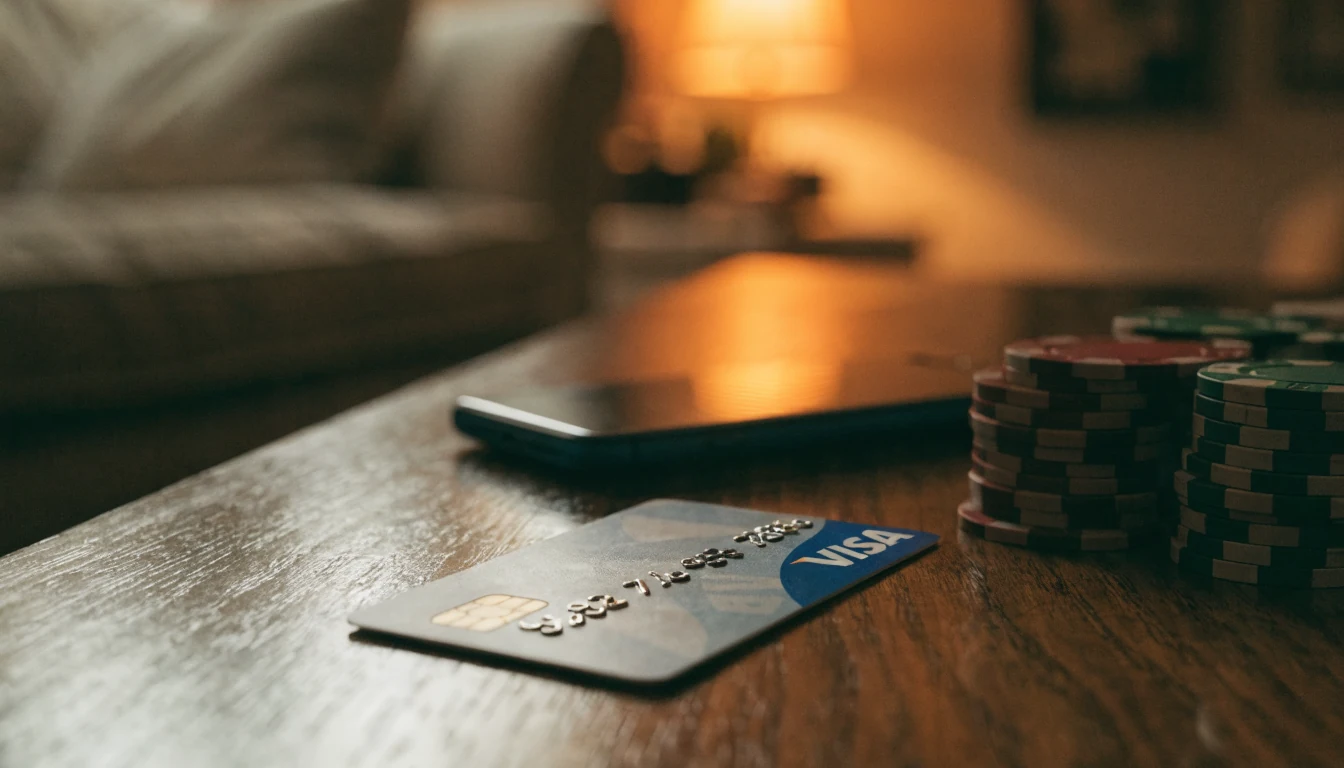
Failure can still be inconvenient. The requested amount may exceed the transaction or account limit, the mobile balance may be insufficient, or the billing route may not approve the request. The payment page should be checked for its displayed limit and any responsible-gambling reminder before another attempt is made. Repeatedly pressing a button at a locked door has never improved the lock.
UK casinos also cannot accept credit-card deposits under the UK Gambling Commission ban introduced in 2020. A mobile-billed deposit is not a way around that rule: it is charged to a phone bill or deducted from prepaid mobile credit, not placed on a credit card. The distinction belongs to the funding source, not to the size of the casino balance.
What a Casino Using Phone Credit Looks Like in Practice
A working mobile casino using phone credit makes the payment option visible at the cashier, not merely in a general list of mobile features. The process should read as a short, traceable sequence:
- Open the casino cashier and select Pay by Mobile.
- Enter the required deposit amount.
- Choose or confirm the mobile network.
- Enter the mobile number when requested.
- Approve the payment request or respond to the SMS prompt.
- Complete verification through a one-time SMS code or an in-app confirmation.
- Wait for the casino balance to refresh.
That sequence matters because a casino can be perfectly adapted to a small screen and still offer no route to pay using phone credit. A responsive website is not the same thing as a carrier-billing option. The cashier tells the truth.
The signals of a functioning payment option
The first useful signal is a clearly labelled Pay by Mobile method beside the other available deposit choices. The wording should not leave the payment route mysterious. Once selected, the cashier should show the relevant network choice and provide a field for the amount and mobile number.
The confirmation stage is equally important. A legitimate flow does not simply display a success message after the button is pressed. It asks for approval through an SMS prompt or another verification step. An SMS code is tied to that transaction, while an in-app confirmation may appear inside the payment or casino interface. Either method confirms control of the mobile account involved.
Summary
- Pay by Mobile is a deposit-only method and cannot be used for withdrawals.
- Deposits are limited to £30 per transaction in the UK.
- The process involves a third-party billing intermediary between the casino and the network.
- Verification is required via SMS or app to confirm handset possession.
A confirmation text message is another visible administrative trace. It gives the transaction a record outside the casino page, which is useful when a balance does not update immediately or when the mobile account holder later checks the charge. Small bureaucracy, but useful bureaucracy.
When the balance changes
Pay-by-mobile deposits are typically credited to the casino balance in less than a minute after verification is complete. The cashier may show a success notice first, followed by the updated balance; in other cases, the balance changes while the payment window closes.
If the screen remains unchanged, the relevant distinction is between a pending request and a completed deposit. The payment history should show whether the transaction was accepted, and the confirmation message should correspond to the same request. A casino using phone credit should therefore provide more than a decorative deposit button: it should leave a visible trail from selection to approval to credited funds.
That is what separates mobile slots using phone credit from slots displayed on a mobile webpage. The game may fit the screen. The payment route must fit the facts.
Playing Slots with Phone Credit in the UK
Once a Pay by Mobile deposit reaches the casino balance, its purpose is straightforward: it funds online play. The balance can be used for eligible slot games displayed by the operator, including familiar titles such as 9 Masks of Fire, Big Bass Splash, Fishin’ Frenzy and Gold Blitz. These names describe games available in the wider online-slot environment; they do not establish a ranking of the best casinos or guarantee that every operator offering phone-credit deposits carries every title.

That distinction matters. A payment method is not a games catalogue. A casino may support Pay by Mobile while offering a different selection of slots, depending on its software suppliers and operating arrangements. The cashier determines how money enters the account; the lobby determines which games can be played. Confusing the two is how a payment option acquires marketing powers it never possessed.
What phone-credit funding changes
For players searching for phone credit slots in the UK, the practical attraction is the separation between the casino balance and a traditional bank-card deposit. The money is added through a mobile phone bill or a prepaid mobile balance, then becomes available for slot play in the casino account. The slot itself does not know whether the balance came from a debit card, an e-wallet or Pay by Mobile. It simply applies the account’s available funds to the selected game.
This makes phone-credit slot sites relevant to players who want to play slots with phone credit rather than use a bank payment at the deposit stage. It does not create a special class of slot, a different game mechanic or an altered outcome. A phone-credit deposit changes the funding route, not the mathematics or presentation of the title.
Access remains subject to the UK framework. Online gambling is available only to people aged 18 or over who are based in the UK. Age and location are therefore not decorative details on a payment page; they define whether the activity is available at all.
Can I withdraw winnings via phone credit?
No, Pay by Mobile is a deposit-only method. Withdrawals must be made through other systems like bank transfers or e-wallets.
How much can I deposit at once?
In the UK, Pay by Mobile deposits are limited to £30 per transaction.
Does it work for all mobile plans?
Yes, it works for both monthly-billed contract customers and pay-as-you-go SIM plans.
The boundary after play
Pay by Mobile is a deposit method, not a complete money-transfer system. It can put funds into the casino account for slot play, but it cannot be used to withdraw winnings. Any successful result therefore creates a separate administrative stage rather than returning money to the mobile bill or prepaid balance.
That is the small contradiction at the centre of phone-credit slots: entry is attached to the phone, while the exit is not. The method opens the games, then stops at the cashier’s other side.
The Phone Credit Casino: Convenience with a Short Fuse
A mobile casino phone credit deposit has an appealing bluntness. There is no separate wallet to fund and no card form waiting to be completed. The amount moves from an existing mobile balance or is added to the next monthly phone bill, then appears in the casino account in less than a minute. The casino balance changes first; the financial consequence follows through the mobile account.
That sequence explains the method’s popularity. A phone is already personal, already present, and already tied to a payment relationship. Turning it into a small casino funding route requires less ceremony than introducing another financial service. It also makes the boundary between entertainment and household spending uncomfortably clear. A contract customer may see the charge among ordinary communications costs. A pay-as-you-go customer sees the available credit shrink.
A limit that does not negotiate
The useful restraint is built into the payment channel itself. Mobile-network spending limits are hardcoded into the system and block transactions above the applicable threshold, according to technology.org’s account of the process. This is not a virtue of a particular cashier design or a promise made in decorative responsible-gambling copy. It is a technical gate.
That gate gives the phone credit casino a short fuse. Funding can be quick, but the available route is deliberately narrow. When the mobile account reaches its permitted boundary, convenience stops without a dramatic warning from the casino. The payment method simply cannot carry the request further.
For a monthly-billed customer, that friction arrives later, when the bill is read rather than when the casino balance is funded. For a prepaid customer, it arrives at once because the deduction is taken from the balance already available. The same deposit therefore has different emotional timing: deferred discomfort on a contract, immediate subtraction on prepaid credit.
This is why mobile phone credit casino payments are best understood as a controlled convenience rather than a general-purpose banking substitute. They are quick enough for a modest deposit and bounded enough to resist becoming an open-ended channel. The phone does the accounting. Briefly.
Pay by Phone Credit in UK Casinos: The Rules at the Counter
A UK payment page is not merely a place to type an amount and hope the machinery is feeling cooperative. For a casino accepting Pay by Mobile, the counter carries specific safeguards alongside the deposit button. The payment method may feel like a charge against a phone account, but the page remains part of a regulated gambling service.
The most visible boundary is the transaction ceiling. UK casinos must limit a Pay by Mobile deposit to £30 per transaction. This is not a suggestion tucked away in terms and conditions. The operator must display the applicable phone-billing limit at the point where the deposit is requested, before the payment is approved.
Sources describe the broader limit in two different ways: one version calls £30 the usual deposit limit, while another describes £30 per day as the typical maximum. Those statements should not be quietly blended into a single market rule. The firm UK requirement is the £30 per-transaction ceiling; any daily interpretation depends on the applicable payment arrangement and operator display.
The payment page must also carry responsible-gambling information. A deposit-limit reminder should appear beside the transaction controls, with responsible-gambling messaging and a signpost to GamCare. The arrangement is deliberately unromantic: the invitation to fund an account sits next to a reminder that funding can be restricted.

Higher phone-billing activity brings another checkpoint. When Pay by Mobile deposits exceed £500 within a rolling 30-day period, the operator must conduct an affordability assessment. That threshold is not an invitation to divide payments into smaller pieces. It is the point at which the pattern of spending requires closer scrutiny.
This makes a mobile casino using phone credit more than a technically compatible cashier. The limit must be visible, the warning must be present, and elevated activity must trigger an affordability review. Convenience, under British regulation, is allowed a counter and a clipboard.
No-Deposit Claims, Online Slots and the Missing Free Lunch
The phrase “no deposit” sits awkwardly beside Pay by Mobile. A promotion may describe free spins, bonus funds or an offer that does not require an initial payment, but that wording is not proof that a particular UK casino provides such a deal. Promotional terms decide what exists, who qualifies and whether any playthrough conditions apply. Marketing, as ever, prefers a bright sign over a complete sentence.
Pay by Mobile has a narrower job. It places money in a casino account by charging a contract customer’s phone bill or deducting funds from a mobile balance. That is a deposit. It does not turn a promotional claim into cash, and it does not make an online casino a no-deposit casino merely because its cashier accepts mobile billing.
The distinction matters for online slots. A player may find slots that can be funded through Pay by Mobile once money has been credited to the casino account. The payment method supports the deposit; it is not itself a free-play entitlement. A no-deposit offer, where one is actually available, would be a separate promotional arrangement governed by its own terms.
There is another hard boundary: Pay by Mobile cannot be used to withdraw winnings. Even if slot play began with phone credit, the payment route does not become a cash-out route. Promotional language may make the entrance look effortless. The exit remains a different matter.
So the sensible reading is precise: online slots can be played after a Pay by Mobile deposit, while “no deposit” describes a possible offer rather than an established feature of the payment method. No free lunch.
Depositing with Phone Credit When Withdrawal Still Needs a Bank
A deposit with phone credit casino users make through Pay by Mobile does not create a matching withdrawal route. The opening payment is tied to the mobile account: a contract customer sees the charge on the next phone bill, while a pay-as-you-go customer loses the amount from the available balance. The casino balance receives the funds, but the mobile network is not turned into a wallet for winnings.
That distinction matters when a mobile casino advertises Pay by Mobile beside its cashier options. The method can fund play; it cannot carry money back out. A withdrawal therefore moves into a different financial system, most often a bank transfer or an e-wallet. Bank transfer gives a direct route to a bank account. A profile-focused review identifies its processing time as potentially slightly longer, though that is a source-specific observation rather than a universal promise about every operator.

KYC is the gate between a winning balance and a withdrawal request. UKGC-licensed casinos must complete identity checks before a customer can make a first withdrawal. The account holder may therefore need to provide the information requested by the operator, even when the original deposit required only a mobile number and confirmation. Convenience at the cashier does not erase the casino’s obligation to establish who is receiving the money.
This makes Pay by Mobile a deposit-only method, not a complete banking solution. It suits the narrow act of placing funds through a phone bill or prepaid balance, while the return journey belongs to a bank card, bank transfer or e-wallet. The arrangement is slightly lopsided by design. Money enters through the handset and leaves through an account that can identify its owner.
How do pay-by-mobile casino deposits work?
You select Pay by Mobile in the casino cashier, choose your network, enter the amount and mobile number, and approve the request by SMS or in-app confirmation. The deposit is then charged to your monthly phone bill or deducted from your prepaid balance and credited to the casino account, typically in less than a minute.
How does Pay by Phone billing work at online casinos?
A third-party billing intermediary passes the payment request between the casino and the mobile network. Contract customers are charged on their next phone bill, while pay-as-you-go customers pay from their available mobile credit.
What is UK casino Pay by Mobile?
It is a casino deposit method that lets UK players fund an account through their mobile phone bill or prepaid balance. Deposits normally require a compatible network, a mobile number, and confirmation by SMS or in-app approval.
Which are the best casino payment methods?
Pay by Mobile is useful for quick deposits, but it cannot be used to withdraw winnings. Bank transfer and e-wallets are more suitable for withdrawals, while Apple Pay, Google Pay, bank transfer, and PayPal are mobile-friendly alternatives offered by some casinos.
Published by the Hub Casinouk Gb team.