
Casinos That Accept Google Pay UK
 Available in GB
Understand why availability can vary by casino, account, device, selected card and the payment options shown in the live cashier.

Table of Contents
- What Google Pay Availability Really Means at UK Online Casinos
- Google Pay Casino Deposits and the Payment Methods Beside Them
- Depositing with Google Pay: Cards, Limits and Verification
- Google Pay on Mobile Casino Slots
- Playing Real-Money Slots After a Google Pay Deposit
- Deposits, Withdrawals and the Limits of Google Pay Casinos
- Bonuses Attached to Google Pay Casino Payments
- Can Google Pay Be Used for a Small UK Casino Deposit?
- When Google Pay Is Unavailable: Sensible UK Alternatives
- Google Pay and Non-GamStop Casinos: A Different Regulatory Route
What Google Pay Availability Really Means at UK Online Casinos
Google Pay availability at British online casinos is less absolute than a payment badge might suggest. A casino may display Google Pay on one device, omit it on another, or make it visible only after a player has logged in and opened the cashier. That is why the phrase “casinos that accept Google Pay UK 2026” should be treated as a question about a particular operator, account and device—not as a permanent industry-wide category.
Google Pay is a digital wallet connected to eligible payment cards and supported through compatible devices and banking arrangements. The casino does not simply accept “Google Pay” in isolation. It accepts a transaction routed through Google’s wallet, provided the selected card, account, platform and merchant arrangement all meet its requirements. A payment method can therefore exist in principle while remaining unavailable at the point where a deposit is being made.
The distinction matters. A search result may describe the best Google Pay casinos in the UK, while the live cashier presents a narrower reality. Operators choose which payment channels to offer, and a payment method may be absent because that operator has not enabled it, has changed its processing arrangements, or presents different options across its website and mobile interface. A specialist industry review has noted this operator-level choice, but it should not be mistaken for a universal rule about every British casino.
This page provides a quick reference for evaluating UK casinos that accept Google Pay in 2026. Use the key account, bonus, licensing and payout details to identify which options may suit your preferences.
License: UKGC Operator Licence · Bonus: £200 welcome bonus · Payout speed: Within 48 hours · Min. deposit: £10 32Red holds a UKGC Operator Licence and offers a £200 welcome bonus. It has a minimum deposit of £10, with payouts stated as being made within 48 hours.
License: UKGC Operator Licence · Bonus: £100 bonus · Payout speed: Within 24 hours · Min. deposit: £10 ProgressPlay Limited is licensed by the UKGC and offers a £100 bonus. The minimum deposit is £10, and payouts are stated as being made within 24 hours.
License: UKGC Operator Licence · Bonus: £100 bonus · Payout speed: Within 24 hours · Min. deposit: £10 Genesis Global Limited operates under a UKGC Operator Licence and offers a £100 bonus. It has a £10 minimum deposit and stated payouts within 24 hours.
License: UKGC Operator Licence · Bonus: £100 bonus · Payout speed: Within 24 hours · Min. deposit: £10 LeoVegas is covered by a UKGC Operator Licence and offers a £100 bonus. Its minimum deposit is £10, with payouts stated as being made within 24 hours.
License: UKGC Operator Licence · Bonus: £20 bonus · Payout speed: Within 48 hours · Min. deposit: £10 Silverbond Enterprises holds a UKGC Operator Licence and offers a £20 bonus. The minimum deposit is £10, while stated payouts are made within 48 hours.
License: UKGC Operator Licence · Bonus: £50 bonus · Payout speed: Within 48 hours · Min. deposit: £10 Platinum Gaming Limited is licensed by the UKGC and offers a £50 bonus. It has a £10 minimum deposit, with payouts stated as being made within 48 hours.
Why one casino shows Google Pay and another does not
The Gambling Commission licenses operators and enforces rules covering advertising, game integrity and financial transactions. It does not require every licensed online casino to provide every payment method. Regulation establishes the framework in which the casino operates; commercial and technical decisions determine which buttons appear in the cashier.
That leaves room for substantial variation. One operator may support Google Pay deposits, another may prioritise cards or an e-wallet, and a third may show only the channels available to a particular customer. Fees, withdrawal requirements and payment availability vary by operator. The word “all” is doing too much work in searches for all Google Pay casinos UK: no static list can prove that every site will offer the wallet to every player at every moment.
The same caution applies to phrases such as the best casinos with Google Pay or the best new Google Pay casinos. “Best” is not a payment feature. It may refer to the quality of the cashier, the range of games, the clarity of terms or simply the prominence of the Google Pay logo. Without verified, current operator information, a ranking would turn an uncertain feature into a confident advertisement. Dry, but useful.
Device and account differences
Device compatibility can change what appears on the payment page. Android casinos with Google Pay UK may expose the wallet through a supported Android browser or app environment, while a desktop session may offer a different interface. The reverse can also happen if the casino’s mobile cashier has not been configured to display the relevant option. An icon appearing on a device is not proof that the transaction will be approved; it is only evidence that the route has been presented.

The wallet itself may also depend on the card linked to it, the issuing bank and the account’s current status. A card that can be used in Google Pay for ordinary retail purchases is not automatically guaranteed to work for a gambling deposit. The merchant, payment service provider and operator still control whether the transaction is accepted. This is why “are Google Pay casinos still available UK” has no single answer detached from the particular cashier being used.
A casino can also require a player to sign in before showing deposit methods. Location, account checks and internal risk controls may influence the options displayed. These are not details that a general promotional page can reliably settle. The live cashier is the relevant test, followed by the operator’s payment terms.
Availability is not the same as convenience
Most payment options provide instant deposits, but a successful deposit does not erase the conditions attached to the account. Payment methods have different minimum and maximum transaction limits, and those limits may be set by the operator or payment provider. A Google Pay symbol therefore says nothing by itself about the amount that can be deposited, any applicable fee, or whether the route can later be used for a withdrawal.
The wider payment landscape explains why cards remain popular: debit and credit cards are familiar and widely accepted. In Great Britain, however, credit card gambling transactions are prohibited for UKGC-licensed operators, so familiarity does not make every card type suitable for casino funding. E-wallets may process deposits and withdrawals faster than traditional card methods, with transactions often appearing within hours, according to a specialist industry review. Speed is only one part of the decision; eligibility and withdrawal conditions matter just as much.
Direct and familiar, typically requiring £10 to £20 minimums.
Instant deposits and withdrawals, often clearing within 24 hours.
PIN-based deposits offering spending control without sharing personal data.
Conventional and deliberate, but typically taking three to five business days.
For a British player comparing the best Google Pay casino site or a Google Pay casino bonus, the sensible starting point is therefore not the slogan but the cashier. The operator must be licensed for online gambling in Great Britain, the payment method must be visible under the relevant account, and the terms must explain fees, limits and withdrawal requirements. Promotional language can identify a possibility. It cannot guarantee availability.
Google Pay is a route, not a verdict.
Google Pay Casino Deposits and the Payment Methods Beside Them
Google Pay sits within a much larger payment landscape. A casino may display it beside Visa or Mastercard debit cards, electronic wallets, prepaid vouchers and bank-transfer options, yet the presence of one method says little about the others. Payment availability, fees and withdrawal requirements vary by operator. The tidy row of logos on a cashier page conceals a less tidy commercial decision.

For British players, the useful comparison is therefore not simply whether a casino accepts Google Pay. It is how that route behaves beside the alternatives: what funds it, how quickly the deposit appears, whether winnings can return through it, and what the operator requires before releasing money.
Debit cards: familiar, direct and subject to a threshold
Debit cards remain popular because they are familiar and widely accepted. A casino deposit funded through a debit card is generally straightforward, with the card details entered at the cashier rather than routed through a separate wallet. Debit-card deposits typically have minimums of £10 to £20 and usually carry no casino fee.
That apparent simplicity has a boundary. A debit card is not the same as a credit card, and gambling transactions in Great Britain cannot be funded by credit cards at UKGC-licensed operators. The distinction matters when a digital wallet or mobile payment service sits between the player and the casino: the funding source still has regulatory significance.
Google Pay can feel more like a card payment than a separate financial account, but its availability is determined by the casino and the payment service arrangement behind the cashier. One operator may show a Google Pay button while another offers only direct debit-card entry. Neither arrangement makes the other defective. They are different channels selected by different businesses.

E-wallets: speed with an extra layer
Skrill and Neteller add a wallet between the bank card or bank account and the casino. Deposits through these services are instant, and withdrawals typically clear within 24 hours. That makes them attractive where the priority is moving money through a dedicated payment account rather than entering card details at every operator.
The trade-off is another account to maintain and another set of payment rules to observe. The casino may require the wallet account to belong to the same person as the gambling account. It may also apply its own verification process before a withdrawal is approved. Fast movement is not the same as automatic movement.
E-wallets also sit under a specific regulatory constraint in Great Britain: gambling operators must not accept wallet payments where credit-card funds can be used for gambling. A wallet is therefore not a magic solvent for restrictions applied to cards. Its eligibility depends on the provider, the funding source and the operator’s controls.
Vouchers: privacy at the point of deposit
Paysafecard takes a different approach. Deposits use a unique PIN code and limit spending to the voucher value without sharing personal financial information with the casino. For someone who wants a firm spending boundary, that structure has an obvious appeal: the deposited value is defined before the transaction reaches the cashier.
Withdrawal to Paysafecard
While Paysafecard is a common tool for making deposits, it is rarely supported for withdrawing winnings at many casinos. Players should verify the full directional flow of funds before depositing.
The weakness appears at the other end of the deposit-to-withdrawal journey. Paysafecard is commonly accepted for deposits, but withdrawals to Paysafecard are rarely supported. A casino may therefore accept the voucher for putting funds in while requiring another verified route for taking winnings out. Payment convenience, as ever, is directional.
Bank transfers: less instant, more conventional
A direct bank transfer moves money from the player’s bank account to the casino without relying on a card wallet or voucher. Direct bank transfers typically take three to five business days for deposits and withdrawals. They are consequently less suited to anyone measuring convenience by the speed of an instant cashier confirmation, but they remain a conventional route for larger or more deliberate transactions.
SWIFT wire transfers occupy a slower and more expensive corner of the same family. A profile review of payment services states that SWIFT transfers can take up to seven business days and generally carry higher fees than domestic bank transfers. That is not a universal tariff or timetable; it is a finding attributed to that source type, and the operator’s own terms remain decisive.
Cryptocurrency: speed without reversibility
Cryptocurrency deposits are near-instant, with withdrawals typically settling within an hour. The speed is appealing, particularly where a casino has built its cashier around digital assets rather than traditional banking.
The disadvantages are structural rather than cosmetic. Cryptocurrency transactions are generally irreversible, and the value of some coins can change quickly. Fees can also vary depending on transaction size and current network volume, according to a specialist payment review. A rapid transfer is not necessarily a stable or easily corrected one.
Cryptocurrency also belongs to a different regulatory context from ordinary UKGC-licensed casino deposits. It should not be treated as just another button beside a debit card when considering British online gambling.
Essential Payment Facts
- Google Pay is a digital wallet layer, not a standalone source of funds.
- UKGC-licensed operators prohibit the use of credit cards for gambling.
- Deposit availability can vary based on your device, account, and the specific operator.
- Always check the cashier for specific transaction limits and fees before confirming.
What the comparison actually shows
There is no single “best” Google Pay casino payment route. Google Pay may offer a familiar mobile checkout where the operator supports it, while debit cards provide a direct alternative, e-wallets prioritise rapid movement, Paysafecard controls the deposited value, and bank transfers favour conventional account-to-account payments. Cryptocurrency offers speed but introduces irreversibility and changing asset values.
The sensible comparison is therefore practical rather than glamorous:
- Debit cards: familiar, widely accepted, with deposit minimums typically set at £10 to £20 and usually no casino fee.
- Skrill and Neteller: instant deposits and withdrawals that typically clear within 24 hours.
- Paysafecard: PIN-based deposits, with withdrawals rarely supported to the same voucher route.
- Direct bank transfer: deposits and withdrawals typically taking three to five business days.
- SWIFT wire: a profile review reports processing of up to seven business days and higher fees than domestic transfers.
- Cryptocurrency: near-instant deposits and withdrawals typically settling within an hour, but with irreversible transactions and possible value changes.
Google Pay belongs in that comparison, not above it. The cashier decides what is available; the terms decide what it costs; verification decides when money can leave. That is the whole arrangement. Less shiny than a logo wall. More useful.
Depositing with Google Pay: Cards, Limits and Verification
A Google Pay deposit is not a separate source of money. It is a digital wallet layer through which an eligible debit card can be used at a participating casino. That distinction matters. A casino may display Google Pay at checkout while accepting only certain cards, or it may accept a card directly but not allow that same card to be routed through Google Pay. The logo is not a contract.
For British players, the relevant card is generally a debit card rather than a credit card. The Gambling Commission banned credit card gambling transactions in April 2020 for operators holding UKGC licences. That prohibition also affects attempts to use credit-funded payment routes where the underlying transaction is treated as gambling payment. Familiarity has kept debit cards popular, but familiarity is not the same as universal acceptance.
How a Google Pay card deposit works
The process normally has three parts:
- The casino presents Google Pay as an available cashier option.
- Google Pay displays an eligible card already connected to the wallet.
- The casino and payment service provider authorise the transaction before the balance is credited.
The casino does not necessarily receive the full card details in the same form as a direct card payment. It still receives enough payment information to associate the transaction with the account and apply its fraud and compliance controls. That is why a Google Pay deposit can be declined even when the card itself works elsewhere.
Availability, fees and withdrawal requirements vary by operator. The payment service provider must also meet the relevant legal requirements; a familiar brand name does not remove the operator’s responsibility to use compliant payment channels.
Minimums, maximums and failed deposits
Debit-card deposits have stated minimums at casino cashier pages. A payment-method review records minimums of £10 to £20 for debit-card deposits, while such deposits generally carry no casino fee. Those figures are not a universal Google Pay promise: the selected casino, card issuer and transaction route remain decisive.
Transaction limits also work in both directions. Payment methods have different minimum and maximum amounts, and an operator may impose a separate account limit. A Google Pay wallet therefore cannot turn a small permitted card deposit into a “no minimum deposit” arrangement, nor can it guarantee that every requested amount will pass. A rejected transaction may reflect the casino’s rules, the card issuer’s controls, the wallet’s eligibility checks or a mismatch between the account and payment details.
The neat little button hides several institutions.
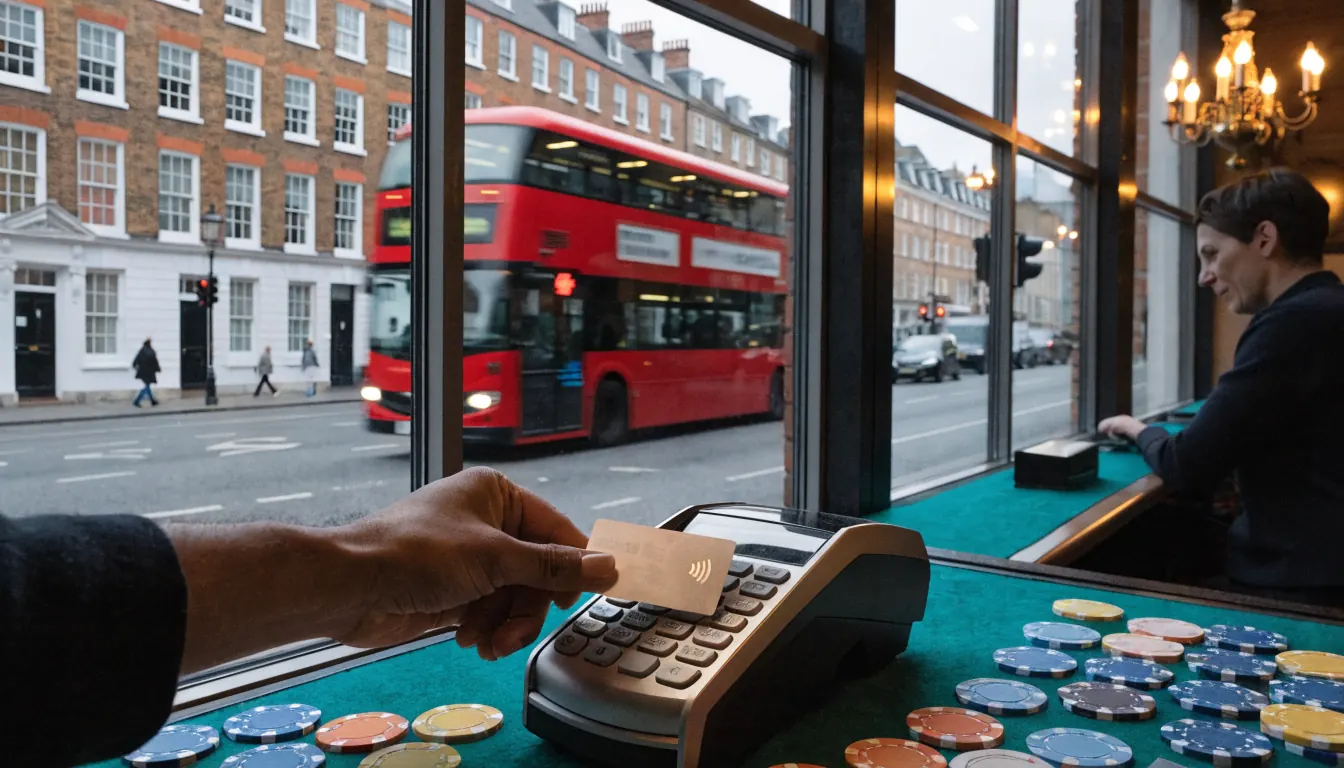
Before funding an account, the cashier should show the accepted card type, any fee, the available limits and the status of Google Pay for that account. If those details are absent, acceptance has not been demonstrated. It has merely been suggested by an interface.
KYC verification before and after payment
UK online casinos must verify identity before allowing deposits and withdrawals. This KYC verification can involve personal details and supporting documents, depending on the operator’s assessment. A successful Google Pay authorisation does not replace it. Payment approval answers whether the transaction can be processed; identity verification answers whether the account holder is permitted to use the service.
The same separation matters when promotional funds are involved. A casino may require payment-method verification before winnings connected with bonus funds can be withdrawn. The Google Pay transaction may therefore be traceable to a debit card without being sufficient evidence on its own for the operator’s compliance file.
Promotional wording also needs restraint. Searches for no-deposit bonuses, free spins and no-wagering offers attach those benefits to casinos that accept Google Pay, but payment acceptance does not create an offer. Bonus eligibility, wagering conditions and verification rules belong to the operator’s terms. If no qualifying promotion is published, the payment method cannot be used as a substitute for one.
The practical test is simple: an accepted debit card, a displayed Google Pay option, disclosed limits and completed KYC verification must all align. Miss one, and the deposit journey stops.
Mobile Context
Google Pay facilitates mobile transactions on Android devices, but it does not change the underlying mechanics of the casino slot or the operator’s terms.
Google Pay on Mobile Casino Slots
Mobile casino play is often described as though the payment button and the slot itself belong to one seamless product. They do not. Google Pay is a funding route; the slot runs inside the casino’s mobile website or application. The connection between the two is practical rather than mystical: a compatible payment screen can make it possible to move from an Android device to the games without opening a separate banking session.
That convenience depends first on the operator. A casino may offer a mobile-optimised lobby while leaving Google Pay out of its cashier. A specialist payment review notes that operators select their preferred payment channels, so the absence of Google Pay is not evidence that the phone, the slot software or the player’s bank has failed. It is a commercial decision made somewhere behind the cashier button. Glamour rarely survives contact with a payment menu.
How the mobile route works
On a compatible Android device, Google Pay can present an eligible card already stored in the wallet. The casino still controls whether that route appears, while the payment provider and the card issuer may apply their own requirements. The visible result is simple: the deposit page either offers Google Pay or it does not.

The slot lobby is a separate layer. Games may be delivered through a mobile browser, and their layout can adapt to a smaller screen. That does not turn every title into a distinct “Google Pay slot”. There is no special class of machine whose reels are powered by Google Pay. The payment method funds the casino balance; the game uses that balance under the operator’s terms.
Mobile users also encounter a less theatrical but more important distinction between an instant deposit and uninterrupted play. Most payment options provide instant deposits, yet a successful payment does not guarantee that the game lobby will load perfectly on every device. Browser settings, connection quality, software compatibility and the operator’s mobile design can all affect the experience. Google Pay cannot repair a badly built casino website.
Android access and casino design
The strongest mobile experience is therefore a combination of three separate permissions:
- the casino accepts Google Pay;
- the device and card support the wallet transaction;
- the casino’s games are available through its mobile interface.
Removing any one of these leaves the player with a partial route. A Google Pay wallet may work in shops but remain absent from a particular casino cashier. A casino may accept the wallet on one interface while presenting different payment options elsewhere. Transaction limits also differ between payment methods, so the amount available through a mobile checkout is not necessarily identical to every other route.
The familiarity of cards explains why they remain popular in online gambling, even when a wallet offers a quicker mobile handoff. Cards are understood by players and widely accepted, while Google Pay adds a device-based layer around an eligible card. Neither arrangement changes the underlying requirement to use a payment method permitted by the operator and applicable UK rules.
Searches for free slots can blur the issue further. A free-play mode does not require a Google Pay deposit because no real-money funding is involved; it is a different activity from playing for cash. Once real money enters the balance, the payment method, casino terms and mobile access must be considered together. The screen may be small. The conditions are not.
Playing Real-Money Slots After a Google Pay Deposit
A Google Pay deposit is a funding event, not a special category of gambling. Once the casino has credited the balance, the real-money activity is governed by the operator’s account terms, game rules and applicable regulation. The payment wallet does not turn an ordinary slot into a separate “Google Pay slot”, nor does it create a distinct class of machines available only through an app.
Real-Money Readiness
- Verify the casino holds a valid UKGC licence.
- Check that Google Pay is visible in the cashier.
- Confirm your linked debit card meets the operator’s minimum deposit limit.
- Review the terms for any transaction fees or wagering requirements.
That distinction matters because search language often blends several different things: a casino site, a mobile application, a payment route and the games themselves. A title such as “Google Pay slots app” may describe a casino app that accepts Google Pay, a mobile browser session funded through Google Pay, or simply a search for slots playable after a wallet deposit. Those are different arrangements. The reels do not care which button supplied the balance.
Real-money play on mobile
After an accepted deposit, slot play takes place inside the casino account. The available games, stake controls, session records and account balance belong to the operator’s platform rather than to Google Pay. A mobile site may provide access through a browser, while an operator may also offer an app, but the payment method alone does not establish that an app exists or that every game is included in it.
No verified catalogue of particular Google Pay slot games, machines or apps is available for this section. It would therefore be misleading to present a named list or imply that one title is officially designed for the wallet. The sensible question is whether the casino makes the chosen game available on the device and whether the account is permitted to play for money.

The word “free” creates another small trap. Free-play modes, where offered, do not mean that a Google Pay balance is being used, and a real-money balance does not make a promotional game free. A deposit may be credited instantly because many payment options provide instant deposits, but the game remains a real-money product once wagers are made from that balance. Different matter.
Regulation behind the screen
For customers in Great Britain, a business providing remote gambling facilities generally needs an operating licence from the Gambling Commission, including when advertising to British consumers. The Commission licenses operators and enforces rules covering advertising, game integrity and financial transactions. The legal status of the casino is therefore more important than the payment logo displayed at checkout.
Payment-method availability, fees and withdrawal requirements vary by operator. Google Pay may appear on the deposit screen while the casino’s game access, account controls or later transaction rules follow separate conditions. A successful deposit is not evidence that every part of the service has identical terms.
That is why a review of real-money slots should separate three questions: whether the casino is authorised for the relevant British market, whether the selected game is available on the chosen device, and what account terms apply after funds are used. Calling a site a “Google Pay slots site” answers none of these by itself. The wallet opens the door to funding; it does not write the house rules.
Can I use a credit card with Google Pay at UK casinos?
No, UKGC-licensed operators are prohibited from accepting credit card transactions for gambling.
Are Google Pay deposits instant?
Most payment options, including Google Pay, provide instant deposits, though the actual availability depends on the operator’s cashier.
Why can’t I withdraw to my Google Pay wallet?
Google Pay is primarily a deposit interface. Many casinos require withdrawals to be sent via a different verified route, such as a direct debit card or bank transfer.
Deposits, Withdrawals and the Limits of Google Pay Casinos
A Google Pay deposit answers only one question: how money reaches the casino balance. It does not settle how winnings will leave it. The crucial distinction is between the wallet used to fund a transaction and the underlying debit card or bank account connected to that wallet. A casino may record the deposit as coming through Google Pay while its withdrawal rules require another route, further checks, or repayment through the original payment method.
That is why searches for direct withdrawals can create the wrong expectation. Google Pay is primarily a payment interface, not a universal cash-out channel. Whether it appears in the withdrawal menu depends on the operator, the payment service provider and the casino’s internal controls. Payment-method availability, fees and withdrawal requirements vary by operator. The logo at the cashier is not a promise.
How withdrawal timing differs
A payment comparison needs to include the journey out, not merely the attractive speed of the deposit.
A specialist payment review gives the following timings for withdrawals after the operator’s internal review:
- E-wallet withdrawals: within 24 hours.
- Debit-card withdrawals: one to three business days.
- Bank transfers: three to five business days.
- Cryptocurrency withdrawals: under an hour.
The last category does not describe a compliant route for UK Gambling Commission-licensed casinos, which cannot accept cryptocurrency deposits. It may appear in discussions of other regulatory settings, but it should not be treated as part of the standard UKGC casino payment cycle.
Bank timing also has a second clock. The same specialist review states that a withdrawal can take up to five business days to appear in a bank balance. The casino may mark the transaction as processed before the receiving bank has made the funds available. A fast approval is therefore not identical to instant access.
Why the deposit route may not return the winnings
A casino can require KYC verification before deposits and withdrawals, and payment-method checks can affect the release of winnings. Bonus-funded activity may bring additional verification of the payment method before withdrawal. None of this is unique to Google Pay; it is the consequence of separating a gambling account from a payment account.
A Google Pay casino may therefore approve a deposit via a linked debit card but offer withdrawal to that card, an e-wallet or a bank account instead. The route can also be constrained by fees, operator policy and the provider’s technical support. This is less glamorous than “instant banking”. It is also the part that determines whether the money actually arrives.
The practical test is simple: inspect the cashier’s withdrawal options and the terms before depositing. A payment method that accepts money but cannot return it is not a complete solution. It is only an entrance.
Bonuses Attached to Google Pay Casino Payments
A Google Pay welcome bonus is not created by the wallet itself. It is an offer attached to a casino account, with Google Pay serving only as one possible funding route. That distinction matters because a casino may accept a deposit through Google Pay while excluding that transaction from a promotion. Payment-method availability, fees and withdrawal requirements vary by operator, and promotional terms can vary with them.

The first detail to inspect is the eligibility clause. Some offers require a qualifying deposit through a listed method; others exclude particular wallets, prepaid routes or transactions identified as promotional abuse. A Google Pay deposit may therefore count, count only when funded by an eligible debit card, or fail to qualify altogether. The payment button is not the contract. The bonus terms are.
Welcome offers and real-money play
Searches for Google Pay casinos with real-money slots often combine two separate decisions: how the account is funded and how the bonus can be used. A welcome offer may restrict eligible games, require the bonus to be activated before play, or impose a deadline. None of those conditions follows automatically from Google Pay acceptance.
The same caution applies to a bonus code. If an operator requires a code, entering it at registration or before the qualifying deposit may be part of the offer conditions. If no code is required, inventing one is not a shortcut; it simply leaves the account outside the stated promotion.
No-deposit offers deserve sharper scrutiny. A single affiliate review reports wagering requirements of 30x to 50x the bonus amount for such promotions; that is a figure from one specialist review, not a verified market-wide rule. The relevant terms may also specify which games contribute to wagering and whether a deposit is needed before any withdrawal can be processed. “Free” remains a remarkably elastic word.
Verification before withdrawal
Bonus funds do not remove KYC verification. Operators must require identity verification before allowing deposits and withdrawals, while payment-method verification can also be required before winnings from bonus funds are released. A casino may request documents, confirmation of the funding source, or evidence that the Google Pay-linked card belongs to the account holder.
The regulatory backdrop is less decorative than promotional banners suggest. The requirement applies across remote casino, bingo and betting operating licences, apart from ancillary, host and remote betting intermediary licences limited to a trading room. In practice, the offer, the payment route and the withdrawal review belong to one chain.
Before accepting a “Google Pay slots no-deposit bonus”, the sensible record is therefore brief: eligible payment method, activation rule, wagering clause, expiry condition and verification requirements. If one is missing, the promotion is not necessarily invalid—but its price is still unclear.

Can Google Pay Be Used for a Small UK Casino Deposit?
A small deposit through Google Pay sounds straightforward: select the wallet, choose an amount, confirm it on a mobile device, and carry on. In practice, the requested amount must fit three separate arrangements: the casino’s cashier settings, Google Pay’s available funding card, and the payment controls applied to gambling transactions.
That is why a search for a £5 Google Pay casino deposit may produce no useful universal answer. The figure is not established as a market-wide minimum. Debit-card deposits at UK online casinos typically start at £10 to £20, and a Google Pay transaction may still be governed by the underlying card and the operator’s own cashier rules. A casino can therefore accept Google Pay while declining a particular low-value request.
Why a Small Amount May Be Rejected
Payment methods have different minimum and maximum transaction limits, according to a specialist payment review. Those limits are not interchangeable. A casino may display Google Pay on its payment page but impose a separate threshold for that route, while another operator may omit the method entirely because it has selected different payment channels.
Fees matter as well. Payment-method availability, charges and withdrawal requirements vary by operator. A small deposit can become impractical if a fee applies, although debit-card deposits generally have no casino fee. The cashier should state the relevant amount before confirmation rather than leaving the customer to discover a restriction after a failed transaction.
Mobile use does not remove these controls. Google Pay can make authorisation feel immediate, but the casino still receives a payment request through its approved payment-service arrangements. Instant confirmation is not a promise that every amount will be accepted.
What to Check Before Confirming
The sensible sequence is brief:
- Check that Google Pay is shown in the casino cashier.
- Look for the displayed minimum and maximum for that method.
- Confirm which debit card is funding the wallet.
- Check whether the requested amount is accepted before authorising.
- Keep the payment record for later account checks.
A £5 request may therefore work at one operator and fail at another, without either result proving that Google Pay itself is unavailable. The distinction is useful: payment acceptance and low-value acceptance are separate questions. Small sums expose the machinery.
When Google Pay Is Unavailable: Sensible UK Alternatives
Google Pay is not a universal payment rail for British online casinos. Its absence does not necessarily mean that deposits are impossible; it means the operator has chosen a different set of payment service providers, or that the available route is not supported on a particular account or device. A sensible alternative therefore has to be judged by the whole deposit-to-withdrawal journey, not merely by how quickly money reaches the casino.
Paysafecard: simple deposits, awkward exits
Paysafecard is commonly accepted for deposits. It uses a PIN code and limits spending to the voucher value without sharing personal financial information with the casino. That can make it attractive when Google Pay is unavailable, especially for a tightly controlled gambling budget.
The weakness is on the way back. Withdrawals to Paysafecard are rarely supported, so winnings may require another route and additional verification. Convenient at the entrance, less so at the exit.
Skrill and Neteller: stronger for the complete journey
Skrill and Neteller are e-wallet alternatives with a more balanced deposit-and-withdrawal profile. Their deposits are instant, while withdrawals typically clear within 24 hours. A specialist gambling-payment review also reports that e-wallet transactions can appear within hours, faster than traditional card methods.
That speed comes with a practical condition: the wallet account and the casino account may both need to pass KYC verification before funds are released. The payment method is not a magic cloak for identity checks. Finance rarely rewards theatrical mystery.

Trustly: bank access without a separate wallet
Trustly connects the casino with the player’s bank account through online banking. It redirects the payer to the bank’s portal, pre-fills the transaction details and confirms the transfer using the bank’s normal security measures. No separate wallet or card details are required.
A specialist payment-method review describes Trustly deposits as typically instant and withdrawals as often processed within the same day. Availability still depends on the operator and the participating bank.
Bank transfers: familiar, but not built for urgency
A direct bank transfer remains a fallback when wallets and mobile payment options are missing. It may suit larger, planned transactions, but it is less immediate: a specialist review gives three to five business days for deposits and withdrawals. The casino’s own terms should take priority, since processing arrangements differ.
There is no single best Google Pay alternative for every UK casino. Paysafecard prioritises spending control, Skrill and Neteller support a faster two-way route, Trustly links payment directly to banking, and ordinary transfers favour familiarity over speed. The useful comparison is not the name on the button. It is what happens after the money goes in.
Google Pay and Non-GamStop Casinos: A Different Regulatory Route
A search for casinos not connected to GAMSTOP that accept Google Pay sits between two separate questions: whether the payment route is available, and which regulator stands behind the gambling service. Google Pay is only a funding interface. It does not make a casino part of the UK regulatory system, and it does not determine whether an operator participates in GAMSTOP.
For gambling businesses providing remote services to customers in Great Britain, a Gambling Commission operating licence is generally required, including where the business advertises to British consumers. A Non GamStop casino may instead operate under an overseas licence rather than a UK Gambling Commission licence. That is not a minor administrative distinction. UKGC oversight brings the protections and enforcement structure associated with Great Britain; an overseas licence belongs to another legal route, with different supervision and recourse.
The phrase “Non GamStop” describes the relationship with the self-exclusion system, not a universal payment standard. An operator outside that system may advertise Google Pay, yet the option can depend on the casino’s payment-service arrangements, the player’s device, and the card or bank account linked to the wallet. A Google Pay deposit, where offered, therefore says little about the operator’s licensing position.
A profile review of Non GamStop casinos identifies a wider payment mix among such operators, including cryptocurrencies, credit and debit cards, bank transfers, Skrill and Neteller. That list should not be read as a promise that every site supports every route. Payment-method availability is chosen at operator level, and the legal position of a payment provider matters as well.
There is a further British constraint. Credit-card gambling transactions are prohibited for UKGC-licensed operators, while UK-facing payment arrangements must comply with the applicable payment-services rules. An overseas casino may present a different menu, but the existence of a button is not proof of equivalent protection.
The sensible distinction is plain: Google Pay concerns the transaction interface; GAMSTOP concerns self-exclusion; licensing concerns regulatory accountability. Three systems. One deposit screen.
Do non-GamStop UK casinos accept Paysafecard?
Yes, Paysafecard is commonly accepted for deposits at non-GamStop casinos. Withdrawals to Paysafecard are rarely supported.
Are there UK casinos that still accept credit cards?
No, UKGC-licensed operators cannot accept credit card gambling transactions. Credit cards may be supported by some non-GamStop casinos operating under overseas licences.
What is the fastest withdrawal method at new UK casino sites?
Cryptocurrency withdrawals are typically the fastest, often settling within an hour. E-wallet withdrawals generally process within 24 hours after internal review.
How do casino payment methods work?
Casinos offer different routes, including cards, e-wallets, vouchers, bank transfers and sometimes cryptocurrency. Each method has its own limits, fees, availability and withdrawal rules, which should be checked in the cashier and payment terms.
What is the fastest payment method for withdrawals?
Cryptocurrency withdrawals typically settle within an hour. E-wallet withdrawals usually process within 24 hours after internal review.
Can a casino ask for verification before paying a withdrawal?
Yes, a casino can carry out an internal review before processing a withdrawal. E-wallet withdrawals, for example, are typically processed within 24 hours after that review.
Do non-GamStop casinos require identity verification?
Non-GamStop casinos may require account checks before processing payments, including withdrawals. The specific requirements depend on the operator and its payment and risk controls.
Created by the ”Hub Casinouk Gb” editorial team.