Crazy Time Live Casino Game Show in the UK
 Available in GB
Explore the live studio setup, wheel mechanics and practical considerations behind playing Crazy Time through a UK online casino.
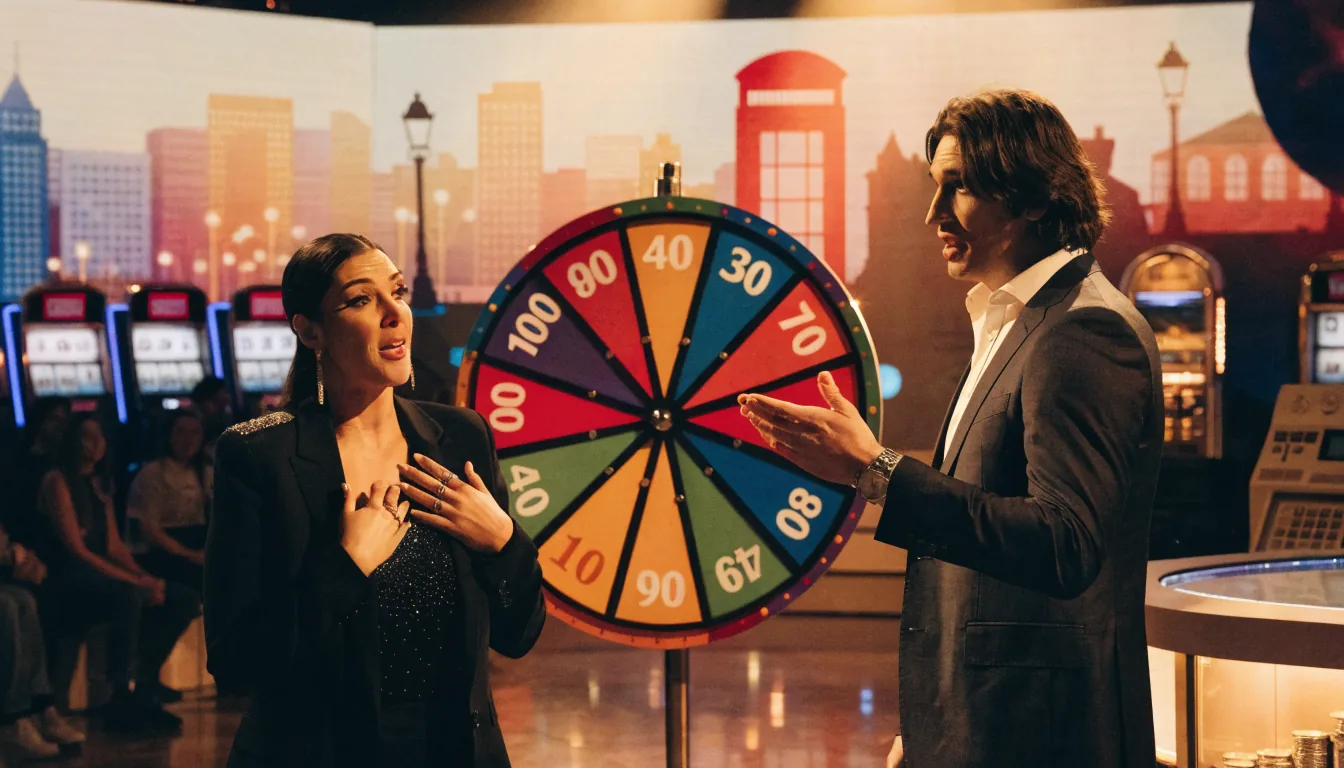
Table of Contents
- How Crazy Time Fits into the UK Live Casino Landscape
- UKGC-Licensed Casinos Offering Crazy Time
- Playing Crazy Time Online in the UK
- Where Crazy Time Sits Among Live Casino Game Shows
- Where to Play Crazy Time Live: A Practical UK Route
- Crazy Time Strategy Without the Casino Folklore
- How to Try Crazy Time Free Before Depositing
- Deposits, Bonuses and the Cost of Playing Live
- Crazy Time Rules, Betting Windows and Multipliers
- Crazy Time Demo: What It Shows and What It Cannot Prove
How Crazy Time Fits into the UK Live Casino Landscape
Crazy Time belongs to the newer generation of Live Game Shows, where casino mechanics are staged as a broadcast rather than presented as a quiet table. Its wheel, host-led presentation and live studio atmosphere place it somewhere between a traditional casino floor and a television game show. That is the appeal of a Crazy Time casino UK audience can recognise immediately: the outcome is produced in a real studio, but participation arrives through a screen.
The defining feature of Crazy Time live casino play is the live dealer format. A real human dealer operates physical casino equipment while cameras stream the action in real time to players’ devices. The wheel is not a decorative animation hiding a software result. It is part of the equipment being used in the studio, with the broadcast carrying the event from the table to the digital interface.
That distinction separates live casino Crazy Time from a standard online casino game. In a conventional software game, a random number generator determines the outcome. In a live casino, real dealers, physical equipment and real-time video form the visible chain of events instead. The technology still matters: the stream must transmit the studio action, and the interface must display the relevant game information. Yet the central spectacle remains physical.
This explains why the format feels more social than an isolated digital game. A live show can accommodate hundreds or thousands of players at the same time, all watching the same host and the same equipment. The room therefore becomes larger than the studio itself. A player in a Crazy Time live casino UK setting is not merely opening a game; the player is entering a broadcast shared by a crowd that may never meet.
The wider UK live casino landscape contains both table games and more theatrical formats. Traditional live blackjack, roulette and baccarat preserve the familiar architecture of the casino table: dealer, equipment, wagers and a comparatively restrained rhythm. Crazy Time and related shows make the host, camera and studio energy part of the product. Neither model replaces the other. One treats the casino as a room; the other treats it as a programme.
That difference also explains the wording used around casino live Crazy Time services. The game may sit in a live casino lobby beside table games, but its character is closer to a televised contest. The dealer becomes a presenter, the physical apparatus becomes a stage prop with a genuine function, and the audience becomes part of the scale of the event. A modestly sized device can open onto a very crowded show.
For the UK market, the phrase crazy time live casino game show uk 2026 therefore points to more than a named title. It describes a meeting of regulated gambling technology, broadcast production and familiar game-show theatre. The screen is digital. The wheel is physical. The crowd is remote. A neat contradiction, and the whole business runs on it.
UKGC-Licensed Casinos Offering Crazy Time
A Crazy Time table is not legally available to British players merely because its title appears in a casino lobby. For play in England, Wales or Scotland, the operator accepting the bet must hold a remote operating licence from the UK Gambling Commission. The rule follows the transaction, not the location of the studio, software company or corporate headquarters.
That distinction matters because live casino brands often sit inside a larger supply chain. A game provider may produce the show, a studio may broadcast it, and a separate operator may provide the account through which a customer deposits and bets. The provider’s reputation does not substitute for the operator’s UKGC licence. Nor does a familiar logo prove that a particular website is authorised for British consumers.
The sensible question is therefore not simply whether a casino advertises Crazy Time. It is whether the named operator is permitted to advertise and accept bets from consumers in Great Britain.
What a UKGC licence establishes
The UK Gambling Commission regulates remote gambling under the Gambling Act 2005, the primary legislation governing gambling in Great Britain. It issues operating, personal and premises licences, with a remote operating licence required for online gambling activities. A casino offering Crazy Time online to British customers falls within that remote framework.
A UKGC licence does not turn a game into a promise of profit. It establishes something narrower and more useful: the operator is subject to the regulatory conditions governing the service. Live casino games on a UKGC-licensed site receive the same regulation and testing framework as the operator’s other casino products. Games are monitored, results are recorded, and independent auditors verify operations.
That oversight is deliberately unglamorous. It concerns records, controls and accountability rather than the theatrical energy of a wheel or presenter. The show may look spontaneous; the regulated service behind it is expected to leave an auditable trail.
How to verify Crazy Time casinos in the UK
The UKGC maintains a public register of current operating and personal licences. It is the appropriate place to check a casino before treating it as one of the legitimate Crazy Time casinos UK players may use.
The verification process is practical:
- Identify the legal operator named in the casino’s terms, footer or licensing information.
- Find that operator name, or its licence number, in the UKGC public register.
- Confirm that the listed domain matches the website offering the account and the game.
- Check that the permission relates to remote gambling rather than assuming that any licence entry covers every online activity.
- Treat a mismatch between the operator, licence record and domain as a reason to stop.
The domain check is especially important. A licence record attached to one website does not automatically authorise an unrelated address using a similar name. In the online gambling trade, near-identical branding is a poor substitute for legal identity.
A casino’s own licensing page can help locate the operator name or licence number, but it is not the final authority. The public register is the independent reference point. Marketing copy is not evidence merely because it is printed in a confident font.
Legal operation versus a convincing appearance
A website can display familiar game titles, polished streaming pages and customer-service links while still leaving its legal status unclear. The presence of Crazy Time says nothing by itself about whether the operator may take bets from Britain. Nor does a reference to a foreign regulator answer the UK question.
Operators must hold a UKGC licence to advertise or accept bets from consumers in England, Wales or Scotland. Operating without one is a criminal offence. That makes licensing more than a quality badge: it is the boundary between an authorised service and an unlawful one.
The age requirement is equally clear. Live casino gambling is restricted to people aged 18 and over, and real-money play is available only to verified users aged 18 or over. Parental permission does not create an exception. A site that treats age or identity checks as an inconvenience to be bypassed is displaying the wrong kind of flexibility.
Verification also belongs to the operator’s responsibility, not to the player’s ingenuity. A regulated account should connect the customer, the payment activity and the gambling service to a traceable identity. The point is not bureaucratic theatre. It is to prevent anonymous access to a product that British law reserves for adults.
What licensing does not promise
A UKGC-licensed casino is not automatically the best place to play, and a licence does not predict the outcome of a Crazy Time round. It does not guarantee that every promotion will suit every account, that every interface will be pleasant, or that a particular game will be available at every hour. Those are separate questions belonging to product access, terms and play mechanics.
Licensing does, however, provide a necessary legal foundation for Crazy Time online casinos serving Great Britain. Without it, there is no sound basis for treating the operator as authorised, however impressive the broadcast may appear.
The same boundary applies to responsible gambling controls. All remote operators must be members of GAMSTOP, the national online self-exclusion scheme, and operators must prompt players to set a deposit limit before the first deposit. Players must be able to stop playing at any time and retain the remaining deposit and winnings earned from that deposit. These obligations belong to the regulated environment, not to the visual design of the game show.
Credit cards cannot be used for gambling in the UK since 2020. Operators must not accept credit-card deposits, including when a card is used through an e-wallet funded by credit. They must also prevent prohibited credit-card funding through an e-wallet. A payment button is not a loophole.
For anyone affected by gambling harm, support is available through BeGambleAware.org and the National Gambling Helpline. Regulation cannot make a risky activity harmless. It can make the operator answerable. That is the point.
Playing Crazy Time Online in the UK
Opening Crazy Time in a browser is less like loading a conventional casino game and more like joining a television set that happens to accept bets. The dealer, wheel and studio feed appear on screen, while the betting controls sit alongside the live picture. This is the practical meaning of a Crazy Time online casino: the show is streamed to the device, but participation is handled through software.
The first stage is access. On a desktop computer, the game normally occupies a large browser window, with the live video taking the visual lead and the betting panel remaining available beneath or beside it. The same format can be used on smartphones and tablets through a mobile browser, without downloading an app. A smaller screen changes the arrangement rather than the underlying process. Controls may be stacked vertically, and the video may need to be viewed in a more compact layout.

Joining a live round
Once the table has loaded, the interface displays the current round and the available betting areas. The game does not wait indefinitely while someone decides. Live casino games use fixed betting windows, table limits and decision timers, so each round has a defined period in which selections can be made.
This timing gives the experience its slightly theatrical tension. The dealer is visible, the wheel is physical, and the betting panel is digital; yet all three must agree before the round proceeds. A player selects a betting area, chooses a stake permitted by the table, and confirms the bet through the on-screen controls. The action is registered electronically while the betting window remains open.
When the window closes, further bets cannot be added to that round. There is no useful charm in clicking faster, and no hidden advantage in waiting for the last possible moment. The interface is simply enforcing the structure of a live broadcast. Then the wheel takes over.
The visible outcome is produced in the studio, while the player’s chosen position and stake are recorded by the platform. This separation matters. The buttons do not influence the wheel; they only communicate a decision before the timer expires. A polished interface can make that distinction easy to forget. Software is very good at making participation feel like control.
Reading the controls
The betting panel is designed to reduce the distance between watching and acting. It shows the available betting positions, the selected stake and the status of the current betting phase. Depending on the table interface, it may also display recent round information or other players’ activity. Such information belongs to the presentation layer, not to a reliable prediction of what the wheel will do next.
The central controls are functional rather than mysterious:
- betting areas identify where a stake can be placed;
- stake controls determine the amount assigned to a selection;
- confirmation controls submit the decision;
- the timer indicates how long the betting window remains open;
- the game display shows when betting has closed and the result is being settled.
Many live casino games also include dealer or player chat. The chat window creates the social layer that software-only games lack: remarks from the dealer, comments between participants and the small rituals of a shared table. It can be entertaining, but it does not alter the registered bets or the result. Conversation is part of the room, not part of the mathematics.
Keeping the stream usable
Because the game is delivered as live video, the quality of the connection affects more than visual comfort. A stable connection is needed to keep the picture, timer and betting interface sufficiently synchronised. A specialist industry review recommends at least 5 Mbps for smooth HD streaming; that is a source-specific recommendation, not a universal market standard.
A browser can still display a game when the connection is poor, but delays, pauses or reduced picture quality make timed betting less usable. The important point is not cinematic perfection. It is that the live feed and the controls remain clear enough for the betting window to be understood before it closes.
The same practical principle applies on mobile. A phone or tablet can host the session through its browser, but changing network conditions may affect the stream. The screen is smaller, the connection may move between networks, and the player has less room for simultaneous video, chat and controls. The game remains recognisably the same; the margin for distraction is not.
Crazy Time online casino UK play therefore consists of three linked actions: watch the live show, use the digital interface during the permitted window, and wait for the platform to register the studio result. The experience is immediate without being entirely instantaneous. A live table has people, equipment and conversation at one end, and a row of buttons at the other. That distance is the whole point.
Where Crazy Time Sits Among Live Casino Game Shows
This shortlist helps UK players reviewing Crazy Time live casino options in 2026 focus on key practical details before choosing where to play. Use each verdict as a quick reference for the operator’s licensing, welcome offer, payout timing, and minimum deposit.
License: UKGC Operator Licence · Bonus: £200 welcome bonus · Payout speed: Within 48 hours · Min. deposit: £10 32Red holds a UKGC Operator Licence and offers a £200 welcome bonus. Its minimum deposit is £10, with payouts stated as arriving within 48 hours.
License: UKGC Operator Licence · Bonus: £100 bonus · Payout speed: Within 24 hours · Min. deposit: £10 ProgressPlay Limited is listed with a UKGC Operator Licence and a £100 bonus. Players can start with a £10 minimum deposit, while payouts are stated as arriving within 24 hours.
License: UKGC Operator Licence · Bonus: £100 bonus · Payout speed: Within 24 hours · Min. deposit: £10 Genesis Global Limited operates under a UKGC Operator Licence and provides a £100 bonus. The minimum deposit is £10, and payouts are stated as arriving within 24 hours.
License: UKGC Operator Licence · Bonus: £100 bonus · Payout speed: Within 24 hours · Min. deposit: £10 LeoVegas holds a UKGC Operator Licence and offers a £100 bonus. It lists a £10 minimum deposit and payouts within 24 hours.
License: UKGC Operator Licence · Bonus: £20 bonus · Payout speed: Within 48 hours · Min. deposit: £10 Silverbond Enterprises is listed with a UKGC Operator Licence and a £20 bonus. Its minimum deposit is £10, with payouts stated as arriving within 48 hours.
License: UKGC Operator Licence · Bonus: £50 bonus · Payout speed: Within 48 hours · Min. deposit: £10 Platinum Gaming Limited holds a UKGC Operator Licence and offers a £50 bonus. Players can deposit from £10, while payouts are stated as arriving within 48 hours.
Crazy Time belongs to the Live Game Shows branch of live dealer casino, where the table is designed as much for spectacle as for settlement. A studio, trained dealers, cameras and physical equipment create the visible event; a digital interface carries bets, chat and results to a large remote audience. It is less like a solitary software game and more like a televised programme in which the audience happens to have a stake.
That distinction matters when comparing the best-known formats. Traditional live blackjack remains a recognisable table game, and a specialist review describes it as the most popular live casino game in the UK. Crazy Time occupies a different social and visual space. Its appeal is not a quiet contest against a dealer but the shared rhythm of a presenter-led show, where many players can watch the same spin and react to the same outcome.
Different shows, different central ideas
The named alternatives are not interchangeable versions of one product.
- Monopoly Live uses a branded board-game setting, giving the show a familiar property-and-prize vocabulary.
- Dream Catcher is built around a large prize wheel and belongs to the same broad wheel-show family as Crazy Time. Both Crazy Time and Dream Catcher allow bets from as low as £0.10, a detail that places them apart from many conventional live tables.
- Deal or No Deal Live borrows its identity from the television format, making suspense and the host’s presentation central to the experience.
- Funky Time takes the wheel-based game-show approach in a more overtly entertainment-led direction.
- Gonzo’s Treasure Hunt presents a themed hunt rather than a plain table encounter, using character and setting to turn the round into a small piece of theatre.
The labels are useful, but the atmosphere is not merely decoration. A wheel, a board, a host and a themed set change what players are watching between betting decisions. The show becomes a public event rather than a private sequence of software animations.
The social scale is part of the format
Live casino game shows can accommodate hundreds or thousands of players in the same live show. That scale separates them from the image of a crowded physical table, where the number of seats limits the audience. In a streamed game show, the same presenter, wheel or board can serve a far larger online crowd without turning the broadcast into separate isolated sessions.
Live chat reinforces that collective quality. Depending on the game and operator interface, players may communicate with the dealer and with one another while the show continues. The chat is not evidence that outcomes are negotiable; it is the digital equivalent of the room’s murmur, occasionally more theatrical than the wheel itself.
The production still rests on real equipment. Live dealer games are run from broadcast studios with genuine roulette wheels, card shoes and tables staffed by trained dealers. Game shows extend that studio model with larger visual sets and presenter-led pacing. The machinery is physical; the audience is remote.
Crazy Time therefore sits between casino table and television spectacle. Monopoly Live and Deal or No Deal Live lean heavily on recognisable brands, while Dream Catcher and Funky Time foreground the wheel-show structure. Gonzo’s Treasure Hunt adds themed adventure. Crazy Time gathers these tendencies into one brightly staged format: a live event, a communal audience and a result recorded from what happens on the studio floor. No folklore required.
Where to Play Crazy Time Live: A Practical UK Route
Finding a live version of Crazy Time is less mysterious than the name suggests. The practical route begins inside a casino’s live lobby, not in the general games catalogue. Live casino sections are normally separated from slots and software table games, because the product is a broadcast as much as it is a bet. The relevant listing should identify Crazy Time as a live game or Live Game Show and lead to a screen showing a presenter, a physical wheel and a studio environment.
That distinction matters. A tile labelled “Crazy Time” is not, by itself, proof that the game is being streamed from a real table. Standard online casino games use software-based random number generators. A genuine live table uses a real dealer, physical equipment and a real-time video feed. The difference is not decorative; it is the difference between watching an event and receiving a simulated result.
Finding the game in a casino lobby
The shortest route is:
- Open the casino’s live casino section.
- Use its game filters or alphabetical list.
- Look for Crazy Time, rather than a similarly themed wheel game.
- Open the table and check that the screen contains a live studio feed.
- Confirm that the betting interface appears alongside the broadcast, rather than replacing it with a purely animated game screen.
Search within a lobby can help, but the label should still be read carefully. A casino may place game-show titles beside roulette, blackjack and other live tables, while software versions sit elsewhere under casino games. The name is only the first sign. The studio feed is the useful one.
A genuine Crazy Time casino wheel should be presented as a physical wheel filmed by cameras, with the result captured from the table. Live studios use multiple high-definition cameras, so the view may shift between the presenter, the wheel and the betting display. That movement is part of the broadcast architecture, not an ornamental animation. Dry machinery, dressed up as spectacle.
Checking access on a phone or tablet
Crazy Time live casino UK access does not require a special installation when the operator supports mobile play. Live casino games can be played on smartphones and tablets through a mobile browser without downloading an app. The practical check is simple: open the live lobby in the browser, select the game, and see whether the video and betting controls load as a single usable interface.
A small screen may rearrange the layout. The broadcast can occupy the main panel while the betting controls sit below it or behind a compact menu. That is still a live table if the dealer and physical wheel remain visible and the controls respond within the live session.
Streaming quality depends on the connection and the device. A profile industry review recommends a stable connection of at least 5 Mbps for smooth HD streaming; that is a source-specific recommendation, not a universal market standard. If the image repeatedly pauses while the lobby loads normally, the difficulty lies with the stream or connection rather than with the identity of the game.
Recognising how the result is recorded
The physical wheel is not merely filmed for atmosphere. Optical Character Recognition software reads the wheel and chips, converting table events into digital data. Player bets are registered in real time through camera feeds and specialised software that reads the table, allowing the settlement to appear in the online interface.

This creates a useful test when deciding where to play Crazy Time casino: the screen should show a live physical event and a digital record of that event working together. A static animation, a pre-rendered sequence or a result appearing without a visible table does not offer the same format.
For anyone comparing where to find a top Crazy Time online casino, the practical question is therefore modest but decisive: does the listing open a real broadcast, with the Crazy Time wheel and live controls visible in the same session? If not, it is the wrong kind of game.
Crazy Time Strategy Without the Casino Folklore
A sensible Crazy Time casino strategy begins with an unglamorous distinction: managing a stake is not the same as predicting an outcome. The wheel does not become more obedient because a previous round landed on a particular segment, and a tracker cannot turn recorded results into control over the next spin. History may describe what has happened. It does not rewrite probability.
That matters especially in a live show, where the theatrical machinery can make randomness feel personal. A presenter announces the result, the wheel turns in a physical studio, and the interface registers the wager in real time. It looks less abstract than a digital game. It is still not a negotiation.
What a practical strategy can control
The useful part of a Crazy Time live casino strategy concerns decisions made before the betting window closes:
- Set a total gambling budget in advance.
- Decide the size of each stake before the pace of the show encourages improvisation.
- Treat the stake as entertainment expenditure, not as an amount that must be recovered.
- Stop when the planned session ends, whether the balance is higher or lower.
- Avoid increasing bets merely because several rounds have produced an unwanted result.
These are limits on behaviour, not methods for changing the wheel. Fixed betting windows and decision timers make preparation more valuable than elaborate theories. Once the window closes, there is no strategic benefit in arguing with the screen.
The same principle applies to so-called Crazy Time casino trackers. A record of previous outcomes can help organise personal spending or review how often a session continued after losses. It cannot establish that a particular segment is “due”, identify a guaranteed next result, or create a reliable Crazy Time tracker casino system. A spreadsheet is not a crystal ball, however neatly formatted.
Bets, access and table limits
Crazy Time has a notably low entry point: bets can be placed from £0.10. That changes the scale at which a player can observe the show, but not the underlying risk. A smaller minimum may allow more controlled staking; it does not make repeated wagers harmless.
Traditional live tables present a different structure. Standard live blackjack and roulette tables typically begin at £1–£5 minimum bets per round, while VIP and high-roller tables may require £25–£500 or more. Live blackjack tables also usually carry higher limits than digital blackjack tables. In that setting, access is shaped by the table’s minimum and maximum rather than by the game-show format.
This is one reason Crazy Time can feel socially broad. A single live show can accommodate many participants, while each person’s financial exposure remains tied to their own digital selections and stake. The chat may create a shared room, but it does not create shared responsibility. Other players’ confidence, complaints or celebrations are atmosphere, not evidence.

Reading history without inventing folklore
Crazy Time casino history can be useful as a record of sessions, dates and spending decisions. It becomes misleading when it is presented as a forecasting engine. Casino trackers, whether branded as a Crazy Time casino tracker or simply kept as notes, should therefore answer modest questions: how long did play continue, how often were stakes changed, and did the planned limit survive the session?
Those questions belong to bankroll discipline. Claims that patterns control random outcomes belong to folklore. The difference is plain. One examines the player’s conduct; the other pretends to decode the wheel.
How to Try Crazy Time Free Before Depositing
A free version of Crazy Time is useful for learning the shape of the experience without confusing practice with gambling. The screen still presents the colourful wheel, the betting layout and the pace of a live show, but no real-money stake is placed. That makes it a rehearsal, not a harmless version of the regulated product. The distinction matters.
What free play can teach
A Crazy Time free casino game can familiarise players with the interface before money enters the picture. It shows where the available betting options appear, how selections are registered on screen and how quickly a round moves from betting to the physical wheel event. The visual language is part of the attraction: a studio, a host and a wheel make the game feel more like television than a conventional software casino title. The screen remains a screen, however.
Free play can also clarify whether the format suits a particular device. Live casino games can be accessed through a mobile browser on smartphones and tablets without downloading an app. A practice session therefore provides a chance to observe the display, controls and streaming pace on the intended device, without turning technical curiosity into a deposit.

Searches for “Crazy Time casino free spins” often blur two different ideas. Free spins belong to promotional mechanics associated with casino products; they do not transform a live game-show round into free gambling. A no-stake mode and a promotional offer are separate things, with separate conditions.
What free play cannot show
A free session cannot establish future results, reveal a winning pattern or prove that a particular Crazy Time casino review is accurate. It also says nothing about how real-money terms would apply at a licensed operator. Those questions belong to the regulated gambling environment and its conditions, not to a demonstration screen.
Real-money live casino gambling in the UK is restricted to people aged 18 and over. A practice interface should not be treated as a loophole around that boundary: free access may explain the product, but it does not make underage gambling lawful. The same sober distinction applies to claims about a safe Crazy Time casino UK experience. Safety depends on the operator and the regulated setting, not on the word “demo”.
For anyone assessing the game before depositing, the sensible use of free play is modest: learn the layout, watch the rhythm, and decide whether the format is worth further attention. No mythology required.
Deposits, Bonuses and the Cost of Playing Live
The cost of Crazy Time begins with the stake selected for a round, not with the promotional banner beside the game. Crazy Time accepts bets from as low as £0.10, giving it a lower entry point than standard live blackjack or roulette, where minimum bets typically start at £1–£5 per round. VIP and high-roller tables can require £25–£500 or more. The contrast matters: a live game-show format may look extravagant on screen while remaining accessible at a modest stake level.
A deposit is still required for real-money play, and the available payment method affects what can legally be used in Great Britain. Credit cards cannot be used for gambling in the UK, a restriction in force since 2020. That also covers credit-card funding routed through an e-wallet. A deposit bonus therefore has to be assessed by its payment conditions, not merely by the headline attached to a Crazy Time casino welcome offer.
Bonuses and wagering requirements
A Crazy Time casino bonus is a promotion offered by the operator, not a feature of the game itself. The same distinction applies to a Crazy Time deposit bonus, a no-deposit promotion, or any offer described as a bonus game casino deal. Each has its own eligibility rules, qualifying deposits, expiry conditions and wagering requirement.
Live casino bets may contribute at a reduced rate or be excluded entirely from bonus wagering requirements. Consequently, a promotion that appears suitable for a Crazy Time session may provide less usable bonus value than its title suggests. The relevant wording is the game contribution table and the withdrawal conditions, rather than the advertising label. Promotional terms do not alter the rules, stake limits or settlement of Crazy Time.
Any real-money offer is restricted to verified users aged 18 or over. A search for a “Crazy Time casino not on GamStop” does not change that boundary or create a legitimate alternative to the UK framework. Remote operators must be members of GAMSTOP, and responsible gambling information is available through BeGambleAware.org. A bonus is a contract with conditions. It is not free money.
Crazy Time Rules, Betting Windows and Multipliers
Crazy Time casino rules are built around a sequence that is easy to watch but strict to read. A live dealer presents a physical wheel, while the digital interface records where money has been placed before the round begins. The result comes from the wheel event, not from a software random number generator.
How a round is recorded
The betting phase opens for a fixed period. During that window, players select the available betting positions and confirm their stakes on screen. Table limits apply, and the interface may also impose a decision timer. When betting closes, no further stake can be registered for that round. The pause is part of the rule, not a technical inconvenience.
The physical wheel then determines the winning position. A Game Control Unit (GCU) and related table technology convert the event into digital settlement data. Optical Character Recognition reads the relevant physical information and transmits it to the player’s screen. In practical terms, the casino scores Crazy Time from the recorded table event: the winning segment is identified, bets are matched to that result, and any applicable multiplier is applied according to the game’s rules.
Reading multipliers and scores
A multiplier is not a prediction of the next result. It is a settlement feature attached to a qualifying outcome. The displayed Crazy Time casino scores therefore show what has been registered for the current round, rather than evidence that a particular segment is becoming more likely.
This distinction matters when comparing live casino scores with ordinary table-game notation. The screen may show the winning position, the settlement status and the relevant multiplier, but it does not turn a random wheel into a pattern that can be controlled. The dealer operates the equipment; the system records it; the result is settled after the event.
The same framework applies whether the show is viewed on a trusted Crazy Time casino UK platform or elsewhere: betting closes first, the physical outcome follows, and digital data completes the settlement. A polished broadcast changes the presentation, not the rules.
Crazy Time Demo: What It Shows and What It Cannot Prove
A Crazy Time casino demo is best treated as a rehearsal for the screen, not a forecast of the wheel. It can show how the live interface is arranged: where the betting controls appear, how the studio feed is presented, and how a round moves from the physical set to the result displayed online. That makes a Crazy Time live casino demo useful for understanding the rhythm of the product before real-money play.
The camera-led presentation is part of the point. Live casino studios use multiple high-definition cameras, so a demo can reveal the changing views of the wheel, host and table. The video feed typically has latency under two seconds, a small delay that matters when a show is built around visible, timed action. It is still a broadcast, not a private window into probability.
Behind the spectacle, Optical Character Recognition software reads the physical wheel and chips, converting table events into digital data that settles bets instantly. A Crazy Time casino demo UK visitors see should therefore be understood as a demonstration of interface and settlement flow, not as a separate kind of game.
Searches for a Crazy Time demo slot or Crazy Time slot demo sometimes treat the title like a conventional software slot. That description misses the machinery: this is a streamed live show whose physical events are read and transmitted digitally. A demo can prove that the controls and presentation are intelligible. It cannot prove a future result, a winning pattern or the value of a real-money round. The screen can be rehearsed. Chance cannot.
Prepared by the Hub Casinouk Gb editorial staff.