Top Casinos Accepting Direct Banking in the UK
 Available in GB
Understand Open Banking deposits, payment controls and the differences between direct bank payments, cards, e-wallets and vouchers.

Table of Contents
- What Direct Banking Means at UK Online Casinos
- How Open Banking Casinos Work in the UK
- The UK Rules Behind Open Banking Casino Payments
- Instant Deposits, Bonus Terms and Direct Banking Limits
- How to Judge an Open Banking Casino Without a Pretend Ranking
- Direct Banking and the UK Casino Account
- Open Banking Payment Methods in Context
- Direct Bank Deposits Versus Cards, E-Wallets and Vouchers
- Why Fast Deposits Do Not Guarantee Fast Withdrawals
- What a Casino That Accepts Direct Banking Must Still Provide
What Direct Banking Means at UK Online Casinos
Direct banking is a casino payment route that moves money from a player’s bank account without using a card number or a separate e-wallet balance. In the UK, the phrase generally points to Open Banking payments: the casino’s payment page connects with a bank, sends the customer into the bank’s online portal, and allows the transfer to be authorised there.
The distinction matters because “bank payment” is not one perfectly uniform product. A conventional bank transfer may require the payer to enter account details and arrange the payment through online banking. An Open Banking service creates a more connected route between the casino, the payment service provider and the bank. The payment details are prepared in advance, while the bank retains control over authentication.
Trustly is one named example of this model. It facilitates a direct transfer from the player’s bank account to the online casino, without requiring a separate Trustly account or card details. The player is redirected to the usual banking environment, where the transaction is confirmed through the bank’s own security measures. The casino sees a payment authorised through the banking system rather than a card transaction copied into a form.

That is the practical meaning behind the phrase Open Banking casinos. It does not describe a special kind of gambling product, nor does it guarantee that every bank or every casino will be connected. It describes the payment infrastructure offered at a particular operator. A casino may support Open Banking through one provider, several providers, or none at all.
Bank account rather than card
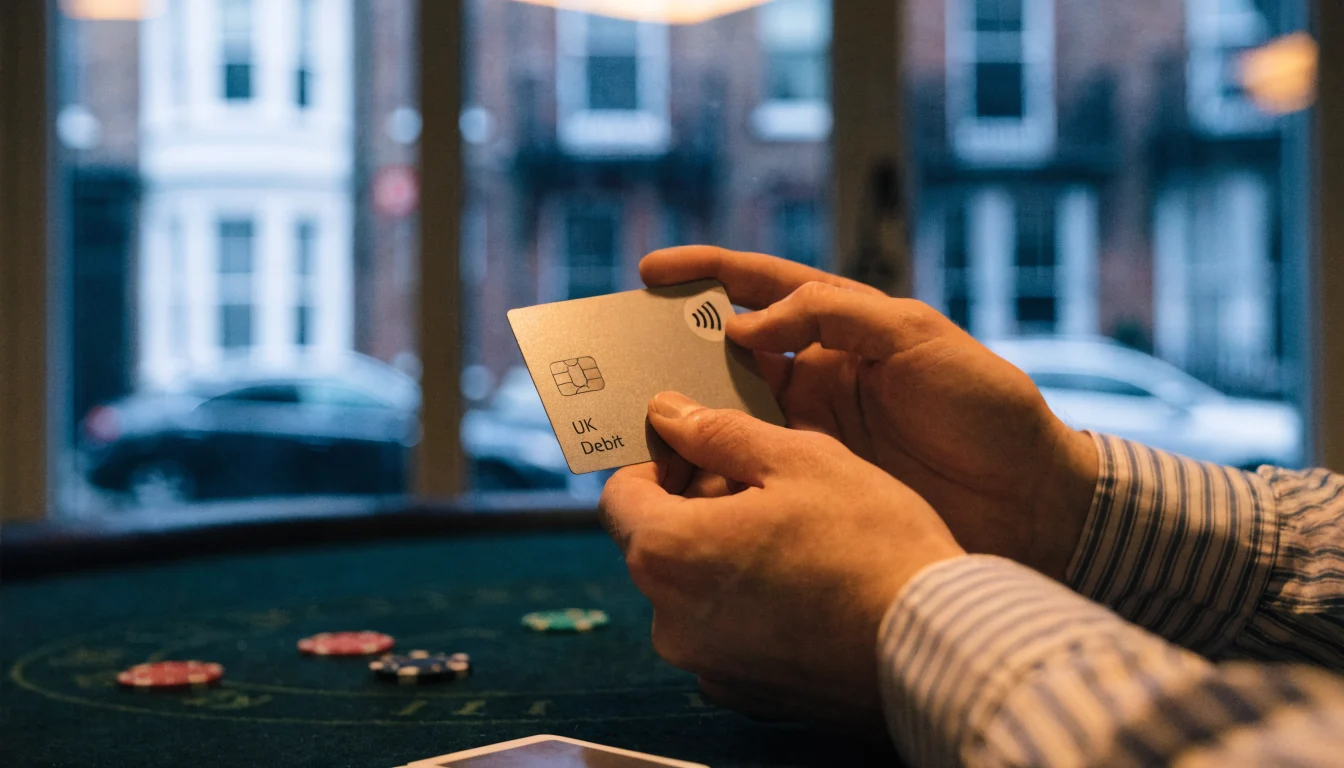
Cards remain familiar because the payment instruction is simple: enter card details, pass the issuer’s checks, and wait for the casino to confirm the deposit. Direct banking removes the card from that chain. There is no card number to enter and no need to depend on a card’s gambling policy, expiry date or available card balance.
The source of funds is still the bank account. That makes direct banking different from an e-wallet, where money may first sit in a separate digital account before reaching the casino. An Open Banking payment instead authorises the movement from the bank account itself. The arrangement can feel more like paying a bill through online banking than buying something with plastic.

This difference also changes where responsibility appears. Card payments involve the card issuer; e-wallet payments involve the wallet provider; direct banking involves the bank and the payment service provider connecting the transaction. Each route has its own checks, interruptions and acceptance rules. There is no universal “best” channel hiding behind the word instant.
Trustly deposits are typically transferred instantly, according to the cited operator-focused review. That describes the transfer route, not a promise that every casino using Open Banking will credit funds in the same way. The casino’s own systems, terms and payment partner still matter. A payment can be technically successful while the operator applies its own account checks before making the balance usable.
Open Banking is not automatic access
Searches for Open Banking casinos UK and UK casinos that accept Open Banking suggest a neat category, as if the country’s operators had agreed on one common banking door. They have not. Payment availability, fees and withdrawal requirements vary by operator. A method may be offered on one casino’s cashier and absent from another because operators choose their preferred payment channels.
That limitation is important when assessing claims about casinos with Open Banking. The presence of the term on a casino page does not establish that every bank is supported, that deposits and withdrawals use the same route, or that the method is available to every account. Payment menus can depend on the player’s location, currency, verification status and the operator’s arrangements with its payment service provider. The verified facts support the broader point: availability is operator-specific.
The same caution applies to the phrase “direct banking”. Some casino pages may use it for Open Banking, while others may use it for a standard bank transfer. Those methods share a bank account as their source, but they need not offer the same payment journey. One may open a banking portal with details already filled in; another may ask the customer to set up a transfer independently.
What the label tells us
A casino that accepts Open Banking offers a route designed to connect the casino cashier with online banking. It does not, by the label alone, reveal the provider, supported banks, fees, withdrawal conditions or the point at which funds become available. Those details belong to the operator’s payment terms.
Availability is operator-specific. A casino may support Open Banking through one provider, several, or none at all.
This is why a page about the top casinos that accept direct banking in 2026 cannot honestly turn a broad payment category into a fixed ranking without verified operator-by-operator evidence. The meaningful question is narrower: which casino currently displays a compatible Open Banking route, and under what conditions? A polished cashier is not evidence of universal access.
The underlying appeal is straightforward. Bank-funded payments avoid separate card details, avoid maintaining an additional wallet balance and place authorisation inside a familiar banking environment. The limitations are equally straightforward. Availability is not guaranteed, providers differ, and the operator controls which payment channels it makes available.
Convenience, with conditions.
How Open Banking Casinos Work in the UK
An Open Banking casino payment follows a different route from typing card numbers into a cashier. The casino begins the transaction, but the player’s bank authorises it. Trustly is one service that facilitates this type of transfer: it connects the casino with the player’s bank account without requiring a separate Trustly account or card details.
The process is less mysterious than the label suggests. It is a bank payment arranged through the casino’s deposit page, with the final authorisation taking place in the customer’s ordinary online banking environment.
Choosing Open Banking at the cashier
The payment journey starts in the casino account. After selecting a deposit option, the player chooses the available Open Banking route rather than Visa, Mastercard, an e-wallet or a voucher. The exact label can differ between online casinos using Open Banking in the UK, because operators choose which payment service providers and bank connections to offer.

The cashier then asks for the amount to be deposited. Payment methods have different minimum and maximum transaction limits, so the available range belongs to the specific casino and method rather than to Open Banking as a single universal product. The relevant limit should be visible before authorisation. A payment option that appears in a menu but cannot accept the intended amount is not much of an option.
The next screen normally presents a list of participating banks. The player selects the bank holding the account from which the money will be sent. This is the important practical distinction between a bank-linked casino deposit and a card payment: the source is selected as a bank account, not entered as a string of card credentials.
The move to online banking
After the bank has been chosen, the payment service redirects the player to the bank’s online banking portal. Trustly’s transaction details are pre-filled during this stage. The amount and recipient are therefore presented as part of the payment request instead of being manually reconstructed from separate casino instructions.
The portal is familiar territory: the same banking environment used for other online payments. The bank’s usual security measures confirm the transaction. Depending on the bank, that may involve its established login and approval process, but the essential point is that authorisation is handled by the bank rather than by the casino.
No card number is needed. No separate payment account is needed. The player does not have to copy an account reference from one screen into another or send a bank transfer independently from a banking app. The service creates the connection between the casino cashier and the selected bank, then leaves the final permission with the bank.
That division of labour matters. A casino can request a deposit, but it does not decide whether the bank account should approve it. The bank verifies the payment through its own security process, while the payment provider passes the transaction between the two sides.
Open Banking Process
Choose the Open Banking route at the casino cashier instead of card or e-wallet options.
Select your specific bank from the list of participating institutions.
Review the pre-filled transaction details in your banking portal and confirm the payment.
Confirming the deposit
Once the bank authorises the payment, the player is returned to the casino or shown a confirmation page. The casino then records the deposit against the gaming account. Trustly deposits are typically transferred instantly, and most payment options provide instant deposits, although the exact display of the balance still depends on the operator’s cashier and the payment connection being used.
“Instant” describes the movement of the deposit, not a promise that every screen will update at precisely the same moment. A bank may show a pending status briefly, or the casino may require a short refresh before the balance appears. The useful distinction is between a payment authorised through the banking portal and a manual bank transfer that requires the player to arrange the transaction separately.
If the authorisation fails, the deposit should not be treated as completed merely because the casino page was opened. A rejected bank approval, an interrupted redirect or an amount outside the method’s limits can prevent the balance from being funded. The casino cashier and the bank statement are the two practical places where the status becomes clear.
What the player is and is not entering
Open Banking removes several familiar fields from the deposit form. There is no need to provide separate card details, including a card number, expiry date or security code. There is also no requirement for a separate account with the payment service when using Trustly.

That does not make the payment anonymous. The bank knows which account is authorising the transaction, and the casino maintains its own account records and verification procedures. Open Banking changes the route of authorisation; it does not erase the relationship between the player, the bank and the casino.
It also does not make every casino compatible with every bank. A casino that accepts Open Banking may display only the institutions connected to its chosen provider. Another operator may use a different provider or omit the method entirely. Availability is therefore a feature of the particular cashier, not a guaranteed property of every UK casino that advertises bank payments.
A short operational checklist
The deposit journey can be reduced to a clear sequence:
- Open the casino cashier and select the available Open Banking method.
- Enter an amount within the method’s stated limits.
- Choose the bank account to fund the payment.
- Follow the redirect to the bank’s online banking portal.
- Review the pre-filled transaction details.
- Confirm the payment using the bank’s usual security measures.
- Return to the casino and check that the balance has been updated.
The elegance lies in what is absent: no card details, no separate payment account and no manually arranged transfer. The bank still has the last word.
The UK Rules Behind Open Banking Casino Payments
An Open Banking casino in the UK sits between two systems of rules. One governs gambling; the other governs the payment service used to move money from a bank account. The method may look like a simple alternative to a card, but its legality depends on the operator, the payment provider and the transaction itself. A familiar logo does not turn an unsuitable arrangement into a lawful one.
Gambling licensing comes first
Businesses providing remote gambling facilities to customers in Great Britain generally need an operating licence from the Gambling Commission. This applies even when the business is based elsewhere, and it also matters when services are advertised to consumers in Great Britain. The requirement covers remote casino, bingo and betting operating licences, with exceptions for ancillary, host and remote betting intermediary licences limited to trading-room activity.
Licensing Requirement
Operating without a Gambling Commission licence is illegal for services targeting Great Britain. Ensure your operator is properly licensed.
That makes the licence more than a badge placed beside a casino name. The Gambling Commission licenses operators and enforces rules concerning advertising, game integrity and financial transactions. Direct banking therefore cannot be assessed separately from the business receiving the deposit. A payment route may be technically available while the casino itself remains outside the framework expected for services offered in Great Britain.
The regulator’s role is deliberately broad. It is not limited to checking whether games function or advertisements appear in the right places. Financial transactions form part of the same oversight, because the route by which money enters and leaves a gambling account affects transparency, fraud controls and the protection of customers.
Why the payment provider matters
An Open Banking casino generally relies on a payment service provider to connect the gambling account with the player’s bank. That provider is not merely an invisible technical courier. The payment arrangement must operate within the applicable payment-services framework, and a provider’s status can affect whether the method is suitable for a British gambling transaction.
This is why the phrase “casino with Open Banking” does not identify one uniform product. Operators choose their preferred payment channels. Some may offer a bank-account route through one provider, while others may omit it, restrict it or present a different set of banking options. Availability, fees and withdrawal requirements vary by operator.
The distinction is important because Open Banking is often treated as though it were a universal switch built into every UK casino. It is not. A payment method can be recognised in the market and still be unavailable at a particular site. Commercial choice, technical integration and compliance arrangements all influence what appears at the cashier.

The credit-card boundary
The clearest restriction concerns credit. The Gambling Commission banned credit-card gambling transactions in April 2020 for UKGC-licensed operators. The prohibition applies to gambling payments made directly by credit card and also addresses arrangements designed to let credit-card funds reach gambling activity through payment services.
A bank-account payment must therefore not be judged only by its label. The relevant question is whether the money and the payment route comply with the rules applying to gambling transactions. A direct bank transfer is not automatically a permitted substitute for every prohibited funding path. The underlying source of funds and the provider’s role still matter.
That rule reflects a broader regulatory preference: gambling should not be financed through borrowed money presented as ordinary account funding. The interface may be smooth; the boundary is not.
Restrictions are part of the offer
A UK Open Banking casino may impose its own conditions around payment availability, fees and withdrawals, provided those terms are presented transparently and operate within the applicable rules. The same method can therefore have a different practical status from one operator to another.
The result is less glamorous than the language of instant banking suggests. Legality comes from the licensed gambling framework and the compliant payment arrangement, not from the speed or appearance of the checkout page. Availability is a commercial decision constrained by regulation. Restrictions are not a footnote. They are the method’s real terms.
Credit Restriction
Attention Credit-card gambling transactions are banned for UKGC-licensed operators in Great Britain.
Instant Deposits, Bonus Terms and Direct Banking Limits
An Open Banking deposit can feel almost uneventful: the casino records the payment, the bank confirms it, and the balance becomes available without entering card details. Trustly deposits are typically transferred instantly, while most payment options provide instant deposits. That speed explains the appeal of a casino that accepts direct banking deposits in the UK, particularly when the purpose is to fund play without adding a separate wallet or card route.
But an instant deposit is not the same thing as instant value. It describes the movement of funds into the casino account, not the quality of a promotion attached to that movement. Banking is quick. Bonus language is where the furniture becomes harder to navigate.
The deposit and the bonus are separate decisions
A direct-bank casino may display a welcome offer, a reload promotion or a no-deposit bonus alongside its payment options. The fact that the account accepts a bank-funded deposit does not mean that every promotion applies to that payment method. Availability, fees and withdrawal requirements vary by operator, so the offer terms need to be read independently from the banking screen.

This distinction matters because promotional wording can make a simple deposit look more generous than it is. A no-deposit bonus may require wagering before any associated winnings can be withdrawn. According to a specialist review, no-deposit bonuses are described with wagering requirements ranging from 30x to 50x the bonus amount. That is a source-specific observation, not a universal UK rule, and the operator’s own terms remain decisive.
The number is only one part of the condition. Other restrictions may govern eligible games, maximum winnings, expiry, payment methods and whether a player must complete KYC verification before a withdrawal is approved. A bonus can therefore change the deposit-to-withdrawal journey even when the initial bank payment was immediate.
Why “no deposit” needs careful reading
“No deposit” does not necessarily mean “no conditions”. It may mean that the promotional credit is offered without a fresh cash deposit, while the resulting balance remains locked behind wagering or verification requirements. The phrase has marketing charm. The terms have the keys.
For an Open Banking casino no deposit bonus in the UK, the sensible comparison is not the headline value but the rules attached to it. A promotion should be assessed against:
- the stated wagering requirement;
- the games or stakes that count towards it;
- any expiry condition;
- the maximum amount that may be withdrawn;
- the payment and identity checks required before release.
Where the terms do not clearly explain these points, the apparent convenience of the offer is difficult to measure. A casino that accepts direct banking deposits may still impose separate bonus rules, and those rules can affect withdrawals even though the deposit itself arrived instantly.
Limits still apply to fast banking
Speed also says nothing about transaction size. Payment methods have different minimum and maximum transaction limits, and these limits can be set by the operator, the payment service or both. A bank-funded route may therefore be available in principle but unsuitable for a particular deposit because the requested amount falls outside the permitted range.
The same caution applies to fees and withdrawal conditions. Payment-method availability, fees and withdrawal requirements vary by operator. A payment button labelled as direct banking is not a promise that every bank, account type or transaction size will be accepted.
That is why the attractive phrase “instant deposit” should remain in its proper place: it describes funding speed. It does not certify a bonus, remove KYC verification, or guarantee that winnings will be released without further conditions. The payment is fast. The contract is longer.
Deposit vs Bonus
Instant deposits do not guarantee instant access to bonus funds or promotional winnings.
How to Judge an Open Banking Casino Without a Pretend Ranking
A serious comparison of Open Banking casinos starts with a refusal to manufacture a podium. The available evidence does not support naming particular operators as the best Open Banking online casinos, nor does it establish a reliable list of new Open Banking online casinos. What it does support is a method for judging whether a casino’s banking route deserves attention.
The first test is simple: is the method actually available? A casino may mention bank payments somewhere in its general information while showing no Open Banking option at the cashier. Payment channels are chosen by operators, so availability can differ between otherwise similar sites. A useful comparison therefore checks the deposit page after registration, not merely a promotional headline. If the route disappears at the point of payment, it is not an Open Banking deposit casino in any practical sense.
A comparison framework that survives scrutiny
| Criterion | What to examine |
|---|---|
| Availability | Whether the bank-payment method appears in the cashier for the relevant account |
| Fees | Whether the casino or payment provider discloses processing charges |
| Limits | The stated minimum and maximum for deposits and withdrawals |
| Licensing | Whether the operator holds the required Gambling Commission licence |
| Withdrawal rules | The conditions attached to withdrawing through the bank-payment route |
Fees deserve their own line rather than being buried beneath cheerful language about convenience. Payment-method availability, fees and withdrawal requirements vary by operator. A payment that appears cost-free at the casino may still involve conditions stated by the provider or bank. If the terms do not explain who charges what, the missing information is itself part of the comparison.
Limits matter for a less glamorous reason: a payment route can be technically available yet unsuitable for the intended transaction. Payment methods have different minimum and maximum transaction limits, according to a specialist industry review. Those limits should be read alongside the casino’s own cashier terms, because a method’s existence says little about whether its permitted range fits the account.
The licensing check is not decorative. Businesses providing remote gambling facilities to customers in Great Britain generally need an operating licence from the Gambling Commission, including when advertising to GB consumers. The Commission licenses operators and enforces rules covering advertising, game integrity and financial transactions. A casino claiming to serve British customers should therefore be checked against the regulator’s public register, with the listed domain matching the site being used. A logo is not evidence. A register entry is.
Judging withdrawal claims
The phrase “fast withdrawal Open Banking casino” is particularly easy to misuse. A deposit route and a withdrawal route are not automatically identical, and a banner promising instant banking says nothing by itself about the later payment journey. The withdrawal section should state whether bank payments are supported, which conditions apply, and whether the operator reserves the right to request further verification before releasing funds.
The same discipline applies to claims about “safe Open Banking casinos”. Safety is not created by a payment button. It depends on lawful operation, transparent financial terms and a payment service provider operating within the applicable framework. It also depends on whether the casino explains failed payments, reversals, fees and limits without turning the important clauses into legal wallpaper.
- Check the cashier for Open Banking availability
- Verify the operator’s Gambling Commission licence
- Read specific bonus wagering requirements
- Assume all banks are supported by every casino
- Assume instant deposits equal instant bonus availability
- Rely on marketing labels without checking terms
This is why a comparison of Open Banking deposit casinos UK readers might consider should rank evidence, not brands. The strongest candidate is not the site with the loudest “instant” label. It is the one whose method is present, whose charges and limits are visible, whose licence can be checked, and whose withdrawal rules are written plainly. No invented top ten is needed. Just fewer surprises.
Direct Banking and the UK Casino Account
A direct banking casino in the UK connects the payment journey to a player’s bank account rather than treating a card as the main bridge. That distinction matters because the casino account remains the centre of the transaction: it records the deposit, applies any relevant terms and controls the withdrawal request, while the bank supplies the funds.
The arrangement does not mean that a casino can simply draw money from an account whenever it chooses. A payment must be authorised through the available banking route, and the casino must still identify the person holding the gambling account. Convenience is not a substitute for ownership.
One casino account, one verified customer
A UK casino account is more than a username and password. It is the operator’s record of who is gambling, which payment methods are being used and where withdrawals are intended to go. That is why KYC verification is part of the account relationship rather than an optional administrative chore.
Operators providing remote gambling facilities to customers in Great Britain generally need an operating licence from the Gambling Commission. The regulator licenses operators and enforces requirements connected with financial transactions, advertising and game integrity. In practical terms, a casino with direct banking UK customers can expect the operator to link payment activity with the verified account holder.

The bank account itself may therefore become part of the evidence surrounding a transaction. The name on the casino account, the authorised payment route and the destination for funds may need to make sense together. Where they do not, a withdrawal can be held for review. That is less dramatic than it sounds, but rarely as quick as a marketing banner suggests.
Availability belongs to the operator
Not every UK casino site with direct banking offers the same route, and a payment method may be absent even where the casino otherwise accepts bank-funded deposits. Availability, fees and withdrawal requirements vary by operator. The label alone proves very little.
A useful account-level check is therefore narrow: whether direct banking is displayed inside the cashier for the relevant account, which conditions accompany it, and whether the withdrawal rules are stated with equal clarity. A casino may support direct banking for deposits while applying different arrangements to withdrawals.
This is the point at which “best direct banking casino UK” becomes an unstable description. There is no universal account experience hidden behind the phrase. The meaningful question is whether the operator’s licensed service, verification process and payment terms fit together without leaving the customer to interpret the gaps.
Open Banking Payment Methods in Context
An Open Banking casino payment method belongs to the bank-funded side of the landscape. It connects the casino with a player’s bank account through a payment service provider, rather than asking for card credentials or requiring a separate wallet balance. That makes it distinct from the familiar categories surrounding it, even when the practical purpose is the same: moving funds into a gambling account.
The main payment categories are easier to understand when separated by what holds the money and who authorises the transaction.
Direct, account-based flows via Open Banking or traditional instructions.
Familiar debit/credit options (note: credit cards are banned in the UK).
Digital accounts like Skrill or Neteller providing separation from bank accounts.
Bank payments
Open Banking and traditional bank transfers both draw on a bank account, but they are not identical routes. Open Banking is presented as a direct, account-based payment flow, while a conventional transfer is arranged through ordinary banking instructions. The first is designed around an online banking authorisation; the second belongs to the broader transfer category. Calling both “banking” is accurate but not especially illuminating.
This is why an Open Banking instant deposit casino can feel different from a casino that merely lists bank transfer among its methods. The label describes the route, not a promise that every operator offers the same service.
Cards
Visa and Mastercard debit cards remain familiar because they are widely used beyond gambling. Debit card deposits typically carry minimums of £10 to £20 and usually have no casino fee. They use card details rather than a direct bank-authorisation journey, so the account holder’s experience is shaped by the card issuer as well as the casino.
Credit cards are not an acceptable gambling route in Great Britain. A tidy payment menu should reflect that reality, not preserve every method that once appeared in older casino copy.
E-wallets
Skrill and Neteller hold funds in separate digital accounts. Deposits are instant, while withdrawals typically clear within 24 hours. This can make an e-wallet attractive when speed and separation from the main bank account matter, although availability remains operator-specific.
Vouchers and cryptocurrency
Paysafecard is a voucher category: its PIN limits spending to the voucher value without sharing personal financial information with the casino. It is not a bank payment and does not create a direct link to a current account.
Cryptocurrency forms the most different category. Deposits are near-instant, and withdrawals typically settle within an hour. Yet the speed reflects a different financial system, not an improved version of Open Banking. Direct bank payments remain identifiable account transactions; crypto payments rely on digital assets and their own risks.

Different rails. Different compromises.
Direct Bank Deposits Versus Cards, E-Wallets and Vouchers
A direct banking casino deposit moves money from a bank account rather than from a card balance or a stored wallet. That distinction matters because each route leaves a different trail, imposes different conditions and suits a different sort of impatience.
Debit cards remain familiar because they are widely accepted and simple to understand. Their practical drawback is the entry threshold: deposits typically start at £10 to £20. They usually carry no casino fee, but the casino’s own limits and withdrawal rules still apply. A card is convenient, not magically uncomplicated.
A bank-funded route can look cleaner. It does not require card details, and the payment is authorised through the bank rather than typed into the casino cashier. That makes a casino with direct banking distinct from a card-led site, even when both appear beside one another in the deposit menu. Availability is not universal; operators choose which channels to support.
E-wallets occupy a different middle ground. Skrill and Neteller deposits are instant, which explains their persistent place in casino banking guides. They separate the casino from the bank account and can make the deposit stage feel almost frictionless. Their withdrawals typically clear within 24 hours, according to a profile review, although the casino’s internal checks remain part of the process. Speed, as ever, is a feature of the route—not a promise about every stage of the account.
Vouchers take privacy in another direction. Paysafecard deposits use a PIN and limit spending to the voucher’s value without sharing personal financial information with the casino. The trade-off is severe at the other end: Paysafecard is commonly accepted for deposits, while withdrawals to it are rarely supported. It is therefore a funding instrument, not a complete deposit-to-withdrawal journey.
Are Open Banking deposits instant?
Yes, deposits are typically transferred instantly once authorised by your bank.
Can I use a credit card for gambling in the UK?
No, the Gambling Commission has banned credit-card gambling transactions for UKGC-licensed operators.
The phrase “instant banking” can make a payment method sound like a racehorse. In practice, it describes the funding experience, not the whole relationship between a casino and a bank balance. The sensible comparison is therefore less theatrical: cards offer familiarity, e-wallets offer rapid wallet movement, vouchers restrict exposure, and direct banking connects the casino payment to the bank itself. Different doors. Different hinges.
Why Fast Deposits Do Not Guarantee Fast Withdrawals
A direct banking casino can make the first half of the transaction feel almost instantaneous. Money leaves the bank account, the casino balance updates, and play can begin without entering card details. The journey in the opposite direction is less theatrical. A withdrawal must pass through the casino’s internal review, follow the permitted payment route, and then reach the destination bank.
That is why a fast withdrawal through Open Banking should not be confused with an instant banking withdrawal. The deposit concerns funding the account; the withdrawal concerns releasing winnings. They are related transactions, not mirror images.
A specialist gambling-payment review gives the following timing guide after internal checks:
- E-wallet withdrawals, including Skrill and Neteller, process within 24 hours.
- Cryptocurrency withdrawals can take under an hour.
- Debit card withdrawals take one to three business days.
- Bank-transfer withdrawals take three to five business days.
The same review states that a withdrawal can take up to five business days to appear in a bank balance. The distinction matters for a direct banking casino withdrawal UK customers may regard as immediate: approval by the operator is not the same as cleared funds at the bank.
Bank transfers therefore offer a direct route without promising instant access to winnings. Open Banking can make the deposit side feel modern and frictionless, while the withdrawal side remains governed by review and banking settlement. A casino may display a completed request before the money is visible in the account. Paperwork has a long afterlife.
Cards occupy a middle position, while e-wallets and cryptocurrency may appear faster once the casino releases the funds. Yet speed is only one part of the deposit-to-withdrawal journey. The available method, the casino’s withdrawal policy and the required checks determine what “fast” means in practice. A direct banking casino fast withdrawal is consequently a question of the whole route, not the opening click.
What a Casino That Accepts Direct Banking Must Still Provide
This page highlights UKGC-licensed operators for players exploring casinos that accept direct banking in 2026. Use the key details to assess welcome bonuses, minimum deposits and stated payout times.
License: UKGC Operator Licence · Bonus: £200 welcome bonus · Payout speed: Within 48 hours · Min. deposit: £10 32Red holds a UKGC Operator Licence and offers a £200 welcome bonus. Its minimum deposit is £10, with payouts stated as arriving within 48 hours.
License: UKGC Operator Licence · Bonus: £100 bonus · Payout speed: Within 24 hours · Min. deposit: £10 ProgressPlay Limited is a UKGC-licensed operator offering a £100 bonus. It has a £10 minimum deposit and states that payouts are made within 24 hours.
License: UKGC Operator Licence · Bonus: £100 bonus · Payout speed: Within 24 hours · Min. deposit: £10 Genesis Global Limited holds a UKGC Operator Licence and offers a £100 bonus. The minimum deposit is £10, while stated payouts are within 24 hours.
License: UKGC Operator Licence · Bonus: £100 bonus · Payout speed: Within 24 hours · Min. deposit: £10 LeoVegas is licensed by the UKGC and offers a £100 bonus. Players can deposit a minimum of £10, with payouts stated as arriving within 24 hours.
License: UKGC Operator Licence · Bonus: £20 bonus · Payout speed: Within 48 hours · Min. deposit: £10 Silverbond Enterprises holds a UKGC Operator Licence and offers a £20 bonus. Its minimum deposit is £10, with payouts stated as arriving within 48 hours.
License: UKGC Operator Licence · Bonus: £50 bonus · Payout speed: Within 48 hours · Min. deposit: £10 Platinum Gaming Limited is a UKGC-licensed operator offering a £50 bonus. It has a £10 minimum deposit and states that payouts are made within 48 hours.
A casino that accepts direct banking is not defined by the payment button alone. The essential test is whether the operator can provide a lawful, transparent and workable account for customers in Great Britain. A polished banking route cannot repair an operator’s missing licence. Dry detail, but important detail.
The final checklist
-
A Gambling Commission operating licence. Businesses providing remote gambling facilities to customers in Great Britain generally need an operating licence from the Gambling Commission, including when advertising to GB consumers. This is the first condition behind any credible claim to be a suitable online casino accepting instant banking.
-
Visible payment availability. Direct banking must actually be available to the relevant customer, not merely displayed in a generic payments list. Operators choose their payment channels, and availability may differ between accounts, banks and locations.
-
KYC verification. A casino must verify the customer’s identity before allowing deposits and withdrawals. The payment method does not remove that obligation; a bank-funded transaction is not a substitute for KYC verification.
-
Clear costs and limits. Deposit and withdrawal limits, processing fees and applicable requirements should be stated before the transaction is made. Payment-method availability, fees and withdrawal requirements vary by operator, so the wording matters more than a broad claim of “instant” access.
-
A consistent deposit-to-withdrawal journey. The same payment route may not perform identically at every stage. A casino that accepts direct banking deposits should explain what happens when funds are withdrawn, rather than treating the deposit label as the whole service.
That is the useful meaning of “best”: not a decorative ranking, but a licensed operator with available banking, completed verification and terms that disclose the financial edges plainly.
Are there UK casinos that still accept credit cards?
No, UK Gambling Commission-licensed casinos cannot accept credit card gambling transactions. Non-GamStop casinos operating under an overseas licence may support credit cards, but they are not UKGC-licensed operators.
How do casino payment methods work?
Payment methods move funds from a bank account, card, e-wallet, voucher or cryptocurrency wallet to the casino. Open Banking services such as Trustly redirect you to your bank, where the payment details are pre-filled and confirmed using the bank’s usual security measures.
What is the closest equivalent to a credit card at a UK casino?
A debit card is the closest standard alternative, while Open Banking provides another bank-funded option without entering card details. Debit card deposits typically start at £10 to £20 and usually have no casino fee.
What happens if an offshore casino accepts my credit card?
The payment may be processed if the offshore casino supports credit cards, but the operator may be under an overseas licence rather than a UK Gambling Commission licence. Its available payment methods, fees and withdrawal requirements can differ from those of UK-licensed casinos.
Why did the UK ban credit card gambling?
The UK Gambling Commission banned credit card gambling transactions to prevent customers from using borrowed money for gambling. The ban applies to UKGC remote casino, bingo and betting operating licences, with specified licence exceptions.
Can I use a credit card to deposit at a UK gambling site?
No, credit card deposits are not permitted at UK Gambling Commission-licensed gambling sites. You can use alternatives such as debit cards, Open Banking, e-wallets or Paysafecard where the operator offers them.
Can you use a credit card at an online casino in Great Britain?
No, online casinos serving Great Britain under a UK Gambling Commission operating licence cannot accept credit card gambling transactions. An offshore casino may accept credit cards, but it may operate under an overseas licence instead.
Written by the editors at Hub Casinouk Gb.