
Casinos That Accept E-Wallets in the UK
 Available in GB
A practical look at operator licensing, accepted wallets, deposits, withdrawals and payment routes available to UK players.

Table of Contents
- How E-Wallet Casino Payments Fit the UK Rules
- Which E-Wallets UK Online Casinos Commonly Accept
- Choosing an E-Wallet Casino Site Without the Sales Pitch
- Making E-Wallet Deposits at Online Casinos
- The Payment Details That Matter Before Depositing
- Why Some E-Wallet Casino Options Are More Useful Than Others
- E-Wallet Casinos for Players in the UK
- When an E-Wallet Deposit Does Not Mean an Easy Withdrawal
- What “3-E-Wallet Casino” Usually Signals
- Online Casino E-Wallets, Including the Routes That Are Not Available
How E-Wallet Casino Payments Fit the UK Rules
Using an e-wallet at an online casino is not, by itself, outside the UK framework. The important question is whether the gambling operator and the payment arrangement meet the rules applying in Great Britain.
The Gambling Act 2005 is the primary legislation governing gambling in Great Britain, while the Gambling Commission regulates operators and enforces requirements covering financial transactions, advertising and game integrity. A business providing remote gambling facilities to customers in Great Britain generally needs an operating licence from the Commission. That expectation also applies when the business advertises gambling services to people in Great Britain.
This makes the operator’s status more important than the wallet’s branding. An e-wallet may be a familiar payment service, but it does not turn an unlicensed casino into a lawful UK-facing operator. The licence belongs to the gambling business, not to the payment button. Dry distinction. Necessary one.
A separate boundary concerns credit. Since April 2020, UKGC-licensed operators have been prohibited from accepting credit-card gambling transactions. The restriction also reaches e-wallet arrangements where credit-card funds can be used for gambling. Consequently, an e-wallet cannot be treated as a loophole simply because the card is hidden behind another payment interface.
This page helps you assess UK casinos that accept eWallets in 2026 by focusing on key practical details such as licensing, welcome offers, payout times, and minimum deposits. Use the entries below as a quick reference when reviewing your options.
License: UKGC Operator Licence · Bonus: £200 welcome bonus · Payout speed: Within 48 hours · Min. deposit: £10 32Red holds a UKGC Operator Licence and offers a £200 welcome bonus. Its minimum deposit is £10, with payouts stated as being available within 48 hours.
License: UKGC Operator Licence · Bonus: £100 bonus · Payout speed: Within 24 hours · Min. deposit: £10 ProgressPlay Limited is listed with a UKGC Operator Licence and provides a £100 bonus. It has a £10 minimum deposit and payouts within 24 hours.
License: UKGC Operator Licence · Bonus: £100 bonus · Payout speed: Within 24 hours · Min. deposit: £10 Genesis Global Limited operates under a UKGC Operator Licence and offers a £100 bonus. The minimum deposit is £10, while payouts are stated as being within 24 hours.
License: UKGC Operator Licence · Bonus: £100 bonus · Payout speed: Within 24 hours · Min. deposit: £10 LeoVegas holds a UKGC Operator Licence and offers a £100 bonus. It has a £10 minimum deposit and stated payout times within 24 hours.
License: UKGC Operator Licence · Bonus: £20 bonus · Payout speed: Within 48 hours · Min. deposit: £10 Silverbond Enterprises is listed with a UKGC Operator Licence and offers a £20 bonus. Its minimum deposit is £10, with payouts stated as being within 48 hours.
License: UKGC Operator Licence · Bonus: £50 bonus · Payout speed: Within 48 hours · Min. deposit: £10 Platinum Gaming Limited operates under a UKGC Operator Licence and offers a £50 bonus. It has a £10 minimum deposit and stated payout times within 48 hours.
Payment services have their own regulatory requirement. UK gambling operators may accept customer payments through a payment service only where the provider is authorised as a payment service provider under the Payment Services Regulations 2017 or an equivalent framework. The rule concerns the service behind the transaction, not merely the casino’s list of logos.
So, can e-wallets be used for online casinos in the UK? They can be available at a UK-facing casino when the operator holds the appropriate Gambling Commission licence, the payment provider satisfies the relevant payment-services requirement, and the funds are not credit-funded. Availability is therefore a legal and operational question, not simply a matter of choosing a wallet.
Which E-Wallets UK Online Casinos Commonly Accept
E-wallet availability at UK-facing online casinos is less uniform than the phrase “casinos that accept ewallets uk 2026” suggests. A payment logo may appear in a cashier at one operator and be absent at another. The difference is not necessarily technical. Operators choose which channels to support, while each method can carry its own limits, fees and withdrawal conditions.
The useful distinction is between wallets that mainly fund an account and wallets that can also receive winnings. Those are not the same thing.
Skrill and Neteller
Skrill and Neteller are the clearest examples of e-wallets used for both sides of the casino transaction. Deposits through either service are instant, while withdrawals typically clear within 24 hours. That makes them relevant to online casinos with e-wallets in the UK where the payment method is enabled for deposits and withdrawals rather than merely displayed as a funding option.
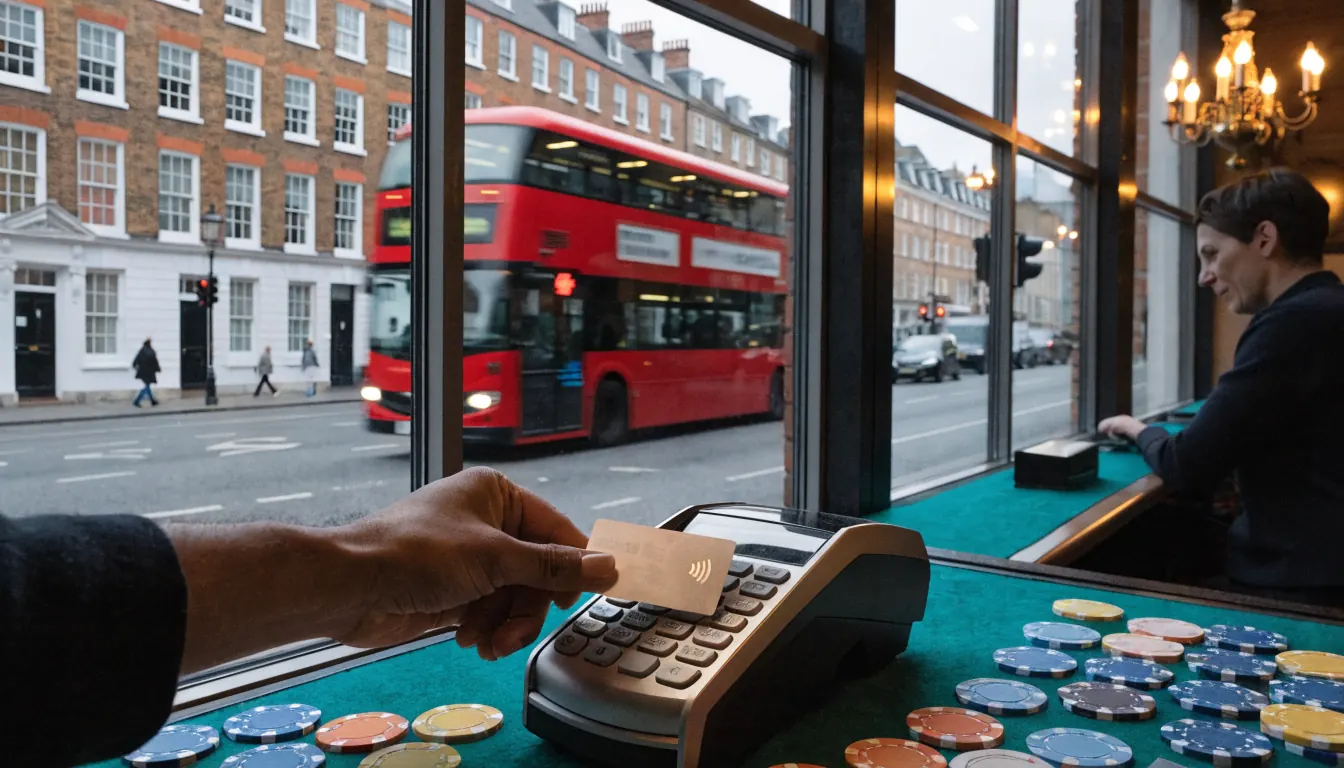
The speed still belongs to the payment route, not to every stage of the transaction. A casino may need to review a withdrawal before releasing it, and its own terms can determine whether Skrill or Neteller is available for a particular account. A fast wallet does not remove those conditions.
Skrill and Neteller also illustrate why payment availability should be checked inside the cashier. A casino may accept one wallet but not the other, or accept both for deposits while applying different withdrawal requirements. The names are familiar; the rules attached to them are not interchangeable.
Paysafecard
Paysafecard occupies a different position. It is commonly accepted for deposits, but withdrawals to Paysafecard are rarely supported. Its principal function is therefore to move money into a casino account, not to provide a reliable route for taking winnings out.
The method uses a unique PIN code. Spending is limited to the voucher value, and the casino does not receive personal financial information through the payment itself. That separation can appeal to players who prefer voucher-based funding, although it also makes the deposit-to-withdrawal journey less symmetrical than it is with Skrill or Neteller.
For UK casinos that accept e-wallets, Paysafecard should therefore be read as a deposit option first. Its presence in a cashier says little about how winnings will be paid. The withdrawal menu is the more revealing part.
Trustly and bank-linked payment routes
Trustly is often grouped with e-wallets because it appears alongside digital payment methods, but its mechanism is different. It facilitates a direct bank transfer from the player’s bank account to the casino without requiring a separate wallet account or card details.
Trustly facilitates direct bank transfers from a player’s bank account to the casino without requiring a separate wallet account or card details.
The payment redirects the player to an online banking portal. Transaction details are pre-filled, and confirmation uses the bank’s usual security measures. Trustly deposits are typically transferred instantly, while Trustly withdrawals are often processed within the same day, according to a profile review. That description concerns the route’s stated processing pattern; the operator’s own review and payment terms still matter.
This distinction explains why a search for online casino sites that accept e-wallets uk can produce a mixed collection of methods. Some are stored-value wallets, some are voucher services, and some connect directly to a bank. They may share a digital cashier, but they do not provide the same account structure or withdrawal experience.
Crypto wallets are a separate category
Bitcoin, Ethereum, Tether and USDT may appear in payment discussions, but they should not be treated as ordinary e-wallet options for UKGC-licensed casinos. Cryptocurrency deposits are not accepted at those casinos under the stated UK market restrictions. Their presence at a non-GamStop casino may reflect a different licensing arrangement rather than a normal UKGC payment route.
A profile review states that non-GamStop casinos may support cryptocurrencies alongside cards, bank transfers, Skrill and Neteller. That is a description of those operators, not evidence that every casino serving British consumers offers the same channels. The regulatory setting matters more than the attractive neatness of a payment logo.
Crypto transactions also have features that distinguish them sharply from conventional e-wallets. Deposits can be fast, but transactions are generally irreversible, and the value of some coins can change quickly. Fees vary with transaction size and current network volume, according to a profile review. Convenience has a habit of arriving with footnotes.

Why the same wallet list keeps changing
There is no permanent master list of UK casinos accepting e-wallets. Payment methods can be unavailable because operators select their preferred channels, and availability, fees and withdrawal requirements vary by operator. Even a widely recognised wallet may be limited by account status, transaction direction or the conditions attached to a particular promotion.
Minimum and maximum transaction limits also differ between payment methods, according to a profile review. A cashier that accepts Skrill, Neteller and Paysafecard may therefore present three separate sets of conditions. One may support withdrawals, another may be deposit-only, and a third may apply its own limits.
That is why terms such as “best online casinos that accept e-wallets uk” conceal the important comparison. The meaningful question is not how many logos appear on the page. It is whether the chosen method is available for the intended transaction, whether its limits are disclosed, and whether the withdrawal route matches the way the account was funded. Availability is the beginning of the comparison, not its conclusion.
Choosing an E-Wallet Casino Site Without the Sales Pitch
An e-wallet online casino in the UK is not judged by the wallet logo alone. A familiar payment button can sit inside an arrangement with unclear licensing, restrictive limits or withdrawal terms that appear only after the account is opened. The sensible test is less glamorous: whether the operator explains the payment setup before money is committed.

Start with the licence, not the payment menu
A business providing remote gambling facilities to customers in Great Britain generally needs an operating licence from the Gambling Commission, including when it advertises to consumers in Great Britain. The regulator licenses operators and enforces rules covering advertising, game integrity and financial transactions. That makes the licence the first filter for any list of e-wallet casino sites in the UK.
The Gambling Commission keeps a public register of current operating and personal licences. A casino’s operator name or licence number can be checked against that register, along with the domain listed there. This matters because a polished payment page proves very little about the business behind it. A wallet service can be legitimate while the gambling site using it is unsuitable for the intended market.
The domain check is the unromantic part. It is also the part least improved by glossy banners.
Treat payment availability as operator-specific
The phrase “accepts e-wallets” describes a possibility, not a complete payment policy. Payment-method availability varies by operator. One site may show a wallet for deposits but not withdrawals; another may make a method available only after account verification. A third may display a familiar brand in promotional material while leaving the actual cashier menu narrower.
This is why a supposed best e-wallet online casino cannot be selected from a brand list alone. The relevant question is whether the exact operator, account and transaction route are covered by the stated terms. The payment page should identify:
- whether the wallet is available for deposits, withdrawals or both;
- whether the account must be verified before a withdrawal can be requested;
- whether the operator applies an original payment method policy;
- whether fees are charged by the casino;
- whether the wallet provider may impose separate charges.
These details belong together. Separating them produces the familiar sales trick in which the deposit is advertised and the withdrawal is left in the footnotes.
Compare limits before comparing speed
Payment methods have different minimum and maximum transaction limits, according to a specialist review source. Those limits can also be set by the operator rather than being an inherent feature of the wallet itself. A payment method that appears quick may therefore be impractical if its permitted range does not suit the intended transaction.
The minimum deposit is worth checking even when the site promotes a wallet as flexible. The maximum matters for withdrawals, particularly where a casino sets a separate ceiling for each request or method. Terms may also distinguish between daily, weekly and account-level restrictions; where such categories exist, they should be stated clearly rather than inferred from a payment icon.
A useful comparison records the conditions beside the method:
| Point to check | Why it matters |
|---|---|
| Deposit minimum | Determines whether the wallet can be used for the intended opening payment |
| Deposit maximum | Shows whether the route is suitable for larger funding |
| Withdrawal minimum | May leave a balance that cannot be withdrawn through that route |
| Withdrawal maximum | Can affect how winnings are received |
| Casino fee | Changes the stated cost of the transaction |
| Provider fee | May be separate from the casino’s terms |
No universal limit should be assumed. Availability, fees and withdrawal requirements vary by operator.
Read verification as part of the payment design
KYC verification is not an ornamental account step. It can determine whether a payment route remains usable after the deposit. A site should explain what verification is required, when it may be requested and whether withdrawals are held until the review is complete.
The relevant wording should be found in the cashier, withdrawal policy or account terms, not merely in a banner promising swift transactions. If the operator says that payment-method verification is required before winnings from bonus funds can be withdrawn, that condition belongs in the decision. So does any request to confirm ownership of the e-wallet.
This is also where the deposit-to-withdrawal journey becomes more informative than the first transaction. A fast deposit says that funds entered the account. It does not establish that the same route will be available when funds leave it.
Judge the withdrawal promise carefully
A specialist review source states that e-wallet deposits and withdrawals are typically processed faster than traditional card methods, often appearing within hours. That is a comparison, not a guarantee. Internal review, KYC verification and the operator’s own processing schedule can still affect the result.
Trustly illustrates why the wording matters. A specialist review source reports that Trustly withdrawals are often processed within the same day. “Processed” may refer to the casino approving the request, rather than the final appearance of funds in a bank account. The cashier terms should make that distinction clear.
The strongest e-wallet online casino sites in the UK are therefore not necessarily those making the largest speed claims. They are the ones that disclose the complete route: who processes the payment, what the casino controls, which checks can intervene and what happens if the preferred wallet is unavailable.
That is the useful shortlist. Not the loudest one.

Making E-Wallet Deposits at Online Casinos
An e-wallet deposit begins before the payment screen appears. The first question is not which wallet looks familiar, but which one the casino has chosen to support. Payment channels are operator decisions, so a wallet available at one UK-facing site may be absent at another. A logo elsewhere proves nothing. The cashier is the relevant list.
Select the available wallet
After opening the cashier, the deposit section normally displays the payment methods currently enabled for the account. Select the wallet that is listed there, rather than attempting to force a transaction through an external app. Availability, fees and transaction conditions vary by operator; a casino that accepts Skrill, Neteller or Paysafecard in one setting may present a different selection elsewhere.
This is where the distinction between a wallet account and a voucher matters. Skrill and Neteller require the relevant wallet account and its authorisation process. Paysafecard deposits use a unique PIN code instead. The voucher limits spending to its value and does not require personal financial information to be shared with the casino. A small bureaucratic difference, but one that changes the character of the payment.
Check the deposit conditions
Before entering an amount, inspect the terms shown beside the chosen method. Payment methods have different minimum and maximum transaction limits, and the operator’s cashier is the place where those limits apply. Fees also vary by operator. If a charge is disclosed, it should be visible before confirmation rather than appearing as an unpleasant footnote afterwards.
The amount entered must fit the method’s permitted range. A failed deposit may have nothing to do with the wallet itself: the amount can be below the minimum, above the maximum, or incompatible with a limit attached to the casino account. The sensible sequence is therefore simple:
- Confirm that the wallet is listed.
- Read the displayed minimum and maximum.
- Check any stated fee.
- Enter an amount within those conditions.
- Continue to authorisation.
The available evidence does not establish one universal limit for UK e-wallet casino deposits. Operators set their own payment arrangements. That makes the cashier’s wording more useful than a generic promise attached to a payment-method logo.
Authorise the payment
Selecting a wallet usually transfers the transaction to the wallet provider’s secure authorisation page or app. The casino creates the payment request; the provider confirms that the account holder has approved it. The exact screen depends on the wallet, but the principle remains the same: the deposit is not complete merely because the casino page has opened.
Trustly follows a related route through online banking rather than a separate wallet balance. It redirects the player to the bank’s online portal, where the transaction details are pre-filled and the payment is confirmed using the bank’s usual security measures. Trustly deposits are typically transferred instantly.
For Paysafecard, the relevant step is entering the voucher’s PIN in the casino’s payment window. The value is limited to the voucher, so the payment does not quietly become a route to additional credit. That boundary is part of the method, not a technical inconvenience.
Making a deposit
Open the cashier and select the wallet listed in the available payment methods.
Input an amount that falls within the minimum and maximum limits displayed for that specific method.
Complete the payment through the provider’s secure authorisation page or app.
Return to the casino cashier to verify that the balance has been updated.
Wait for confirmation
Most payment options provide instant deposits, but the casino account remains the final record of whether funds arrived. Once authorisation is complete, return to the cashier or account balance and look for the credited amount and transaction status. An external confirmation from the wallet is useful, but it does not replace the operator’s account record.
If the balance does not update, avoid immediately repeating the payment. A second attempt can create a duplicate authorisation while the first transaction is still being processed. The safer response is to check the wallet activity, the casino transaction history and any message displayed by the cashier. The operator’s support route can then investigate a specific transaction rather than two uncertain ones.
A successful deposit also creates a record of the chosen payment route, amount and time. Keeping that information matters when the account later needs to explain a transaction or complete KYC verification. The deposit journey is therefore less glamorous than a promotional banner suggests: select, inspect, authorise, confirm. Four steps. No magic.
The Payment Details That Matter Before Depositing
An e-wallet can look convenient in a casino cashier because the payment appears quickly and the wallet is familiar. That impression is incomplete. The useful question is not simply whether a site accepts a particular wallet, but what happens to the money between authorisation, casino crediting and any later withdrawal. Payment-method availability, fees and withdrawal requirements vary by operator. The small print is doing the serious work.
Speed Is Only One Part of the Timing
A specialist payment review reports that e-wallet deposits and withdrawals are processed faster than traditional card methods, with transactions often appearing within hours. That is a description of the payment route, not a promise that every casino will release funds on the same timetable. The casino may still apply internal checks, and the wallet provider may have its own processing stage.

This distinction matters because a deposit can be credited quickly while a withdrawal remains subject to separate conditions. The cashier may display an e-wallet logo without explaining whether the method is available for both directions. A payment route can therefore be fast at the point of entry and less useful when money is leaving the account.
Cards remain familiar and widely accepted, but familiarity is not the same as speed. An e-wallet may remove some of the steps associated with card processing; it does not remove the operator’s responsibility to apply its own payment terms.
Fees May Sit Outside the Casino Screen
A casino may show no separate deposit charge while another cost arises through the payment provider. Currency conversion, account terms or transaction handling can affect the amount that finally reaches the casino balance. The relevant fee disclosure should therefore be read alongside the wallet’s own conditions, not treated as a decorative line in the cashier.
Cryptocurrency illustrates the point more sharply. A specialist payment review states that cryptocurrency payment fees vary with transaction size and current network volume. That observation belongs to the crypto payment process rather than to e-wallet deposits as such, but it shows why a headline claim about “low-cost payments” is too broad. A charge can depend on the route and the moment, not merely on the casino’s preferred method.
Limits Shape the Practical Choice
Payment methods have different minimum and maximum transaction limits, according to a specialist payment review. The figures are not uniform across operators, so a wallet accepted by one casino may not support the same deposit pattern at another. A minimum can make a small intended deposit impossible; a maximum can require several transactions, if the operator permits them at all.
The cashier should disclose the applicable limits before authorisation. If the information is absent, the apparent availability of the method says very little. “Accepted” can mean only that the logo is present.

Limits also affect how a payment record is understood. A player may see the wallet as a single account, while the casino treats deposits and withdrawals according to separate thresholds. That difference is unglamorous but decisive.
The Provider Still Matters
The wallet is not merely a button between a bank account and a casino. It is a payment service provider with its own account controls, verification procedures and transaction conditions. The casino’s terms govern the gambling account; the provider’s terms govern the wallet. Both can affect the final result.
For that reason, the most useful comparison among e-wallet payment casinos is not a vague ranking of “top” sites. It is a close look at the displayed fee, the applicable minimum and maximum, the stated processing time and the withdrawal requirements. If those details are missing, convenience has been advertised while its price remains unwritten. A familiar trick.
Why Some E-Wallet Casino Options Are More Useful Than Others
The “best e-wallet casino UK” is not a single category in practical terms. An e-wallet earns its place by doing a particular job well: funding an account immediately, returning winnings without much delay, or keeping payment details separate from the casino. Those are different advantages, and treating them as one neat league table would be more advertising than analysis.
Best for quick deposits and withdrawals
Skrill and Neteller are the clearest all-round options among the routes covered here. Deposits are instant, while withdrawals typically clear within 24 hours. That makes them useful where the same wallet is intended to serve both sides of the deposit-to-withdrawal journey, rather than merely getting money into a casino account.
The timing still has a condition attached. An e-wallet withdrawal is processed after the casino’s internal review, so the wallet itself does not remove the operator’s checks. A payment method can be technically fast and still wait for approval. Glamour has never been a recognised KYC shortcut.

A specialist payment review gives the following comparison for other withdrawal routes: cryptocurrency withdrawals can take under an hour, debit card withdrawals one to three business days, and bank transfers three to five business days. These timings describe that review’s comparison, not a universal promise for every operator or account. Cryptocurrency also sits outside the ordinary UK-licensed casino route, so speed alone does not make it a suitable choice for British play.
Best when spending control matters
Paysafecard serves a different purpose. It is commonly accepted for deposits, but withdrawals to Paysafecard are rarely supported. Its value is therefore not as a complete cash-in and cash-out channel. It is a prepaid boundary around the deposit.
The payment uses a unique PIN code and limits spending to the voucher value. Personal financial information is not shared with the casino through the voucher payment. For someone who prefers a defined amount and less direct exposure of financial details, that distinction can matter more than withdrawal speed.
The trade-off is plain: Paysafecard may be useful for entering funds, but another permitted route may be needed to receive winnings. The casino’s available withdrawal methods and its payment terms remain decisive.
Why “best” depends on the job
Among the e-wallet casino sites UK players may encounter, the more useful option depends on the intended task:
- Skrill or Neteller: suited to instant deposits and withdrawals that, according to the stated payment comparison, typically clear within 24 hours after review.
- Paysafecard: suited to voucher-based deposits with spending limited to the voucher value, but rarely suited to withdrawals.
- A bank transfer: potentially relevant for receiving funds where an operator does not return money to the wallet, although the cited comparison places bank-transfer withdrawals at three to five business days.
This is why a list of the “best e-wallet casinos UK” can conceal the important distinction. The casino may display several payment logos, yet each route can have its own withdrawal availability and processing conditions. The useful question is not which wallet looks most impressive beside the deposit button. It is which one still fits the intended journey after the money leaves the account.
E-Wallet Casinos for Players in the UK
For players in Great Britain, an e-wallet being visible in a casino’s cashier does not settle whether the casino may lawfully provide gambling services. Payment access and market access are separate questions. A wallet can be technically supported by an operator that is not permitted to serve customers in the intended jurisdiction.
A business providing remote gambling facilities to customers in Great Britain generally needs an operating licence from the Gambling Commission. That expectation also matters when a business advertises to GB consumers, rather than merely waiting for customers to find its website. The regulator licenses operators and enforces rules covering advertising, game integrity and financial transactions. The payment button is only one small part of that arrangement.
What UK players need to establish
The relevant question is not simply whether Skrill, Neteller, PayPal or another wallet appears among the available deposit methods. The operator itself must have the right to offer remote gambling to customers in Great Britain. A payment service may process a transaction without turning the casino into a UK-licensed business. Money can travel perfectly well across a legal boundary. It does not erase the boundary.
Crucial Distinction
Payment availability and market access are separate; a supported wallet does not guarantee a casino is licensed for UK players.
A UK-facing casino should therefore be assessed as a gambling operator first and a payment destination second. The Gambling Commission’s public register allows the operator name or licence number to be checked, together with the domain listed for that licence. This matters because a familiar brand name, a polished cashier and a UK currency option are not substitutes for regulatory status.
Identity controls form another part of lawful access. UK operators require KYC verification, so the ability to open an account or select an e-wallet does not mean that deposits and withdrawals will proceed without checks. The operator must establish who is using the account and may need to verify the payment arrangement as part of its financial controls.
Availability is not permission
Payment-method availability, fees and withdrawal requirements vary by operator. One casino may support an e-wallet while another omits it; a method displayed for deposits may have different conditions elsewhere in the account. Those differences describe the operator’s setup, not a general permission for every casino using the same wallet.
That distinction is particularly important for e-wallet casinos for UK players. The method may be familiar, the transaction may be technically possible, and the site may use British language throughout. None of those details independently confirms that the intended market is being served lawfully. Licensing first. Payment mechanics second.
When an E-Wallet Deposit Does Not Mean an Easy Withdrawal
An e-wallet deposit can arrive quickly while the return journey remains subject to checks. That difference matters when comparing UK casino sites that accept e-wallet deposits: the payment button describes how money enters the account, not necessarily how winnings leave it.
Before approving a withdrawal, the operator may complete an internal review. This can include KYC verification, confirmation of the payment method and checks connected with bonus funds. A successful deposit therefore proves only that the account was funded. It does not remove the conditions attached to withdrawing.

The original payment method matters
At non-GAMSTOP casinos, the original-payment-method policy applies to withdrawals up to the deposited amount. In practical terms, the route used to fund the account can affect where that portion of the money must be sent. The available withdrawal menu may therefore be narrower than the deposit menu.
This is where the cheerful simplicity of a wallet icon ends. Payment-method availability, fees and withdrawal requirements vary by operator. A wallet accepted for deposits may not support withdrawals at that casino, while a different route may be offered for the balance after the deposited amount has been returned.
Timelines are not interchangeable
A single promotional phrase such as “fast withdrawals” hides several different clocks. According to a specialist payment review, e-wallet withdrawals process within 24 hours after internal review. The same source gives cryptocurrency withdrawals a time of under an hour, debit-card withdrawals a period of one to three business days, and bank transfers a period of three to five business days.
These are not promises for every operator. Review time comes first, and the receiving provider may add another delay. A bank balance can take up to five business days to show a withdrawal, according to that specialist payment review. The calendar begins to feel less like technology and more like administration.
For anyone assessing the best casino sites that accept e-wallet deposits in the UK, the useful comparison is therefore not deposit speed alone. The relevant questions are whether the wallet can receive funds, whether the original-payment-method policy applies, whether fees are disclosed, and when the operator starts counting the processing period.
A withdrawal page that answers those questions is more informative than a row of payment logos. Logos accept deposits. Terms explain exits.
What “3-E-Wallet Casino” Usually Signals
The phrase “3-e-wallet casino UK” tends to describe a payment setup rather than a defined type of operator. It suggests that a casino offers three wallet channels, but it does not identify which three, whether all are available to every player, or whether each can be used for both deposits and withdrawals.
That distinction matters because payment methods are chosen by individual operators. A wallet may appear in a casino’s general payments menu yet be unavailable in a particular account, currency, jurisdiction, or transaction direction. The number three therefore says very little about the practical value of the arrangement.
Nor does it establish equal conditions. Each wallet can have its own minimum and maximum transaction limits, fees, verification steps and withdrawal requirements. One may be intended mainly for deposits, while another may support withdrawals after internal checks. A third may be displayed because the operator’s payment provider offers it, not because it is the most useful route for every player.
A sensible reading of the label is narrower: the site claims to provide three e-wallet channels, subject to its published terms. The claim is not a guarantee of three equivalent options, nor evidence that all three are supported by every casino serving the UK.
A profile review notes that payment-method availability can differ between operators, since casinos select their preferred channels. That is why the wallet logos alone are poor evidence. The relevant details sit in the cashier and payment terms: availability, charges, transaction limits and withdrawal conditions.
In practice, the phrase is best treated as a prompt for comparison, not a ready-made shortlist. Without a verified operator list and current cashier information, naming three supposedly standard wallets would create precision where the available evidence offers none. Three channels. Different rules.
Online Casino E-Wallets, Including the Routes That Are Not Available
E-wallets can make casino deposits feel pleasantly detached from the banking system. That convenience has boundaries in the UK. A wallet is not automatically suitable merely because its logo appears in a payment menu, and the route used to fund the wallet matters as much as the wallet itself.
The credit-funded wallet problem
UKGC-licensed operators have been prohibited from accepting gambling transactions funded by credit cards since April 2020. The restriction also reaches e-wallet arrangements where credit-card funds can be used for gambling. In other words, moving borrowed money through an intermediary does not turn it into acceptable gambling money. A wallet is a payment method, not a legal disguise.
This distinction matters when an e-wallet allows several funding sources. A deposit may look like a normal wallet transaction at the casino while remaining connected to a prohibited credit-funded route. The relevant question is therefore not simply whether the casino accepts the wallet, but whether the funds entering it are permitted for gambling.
Paysafecard: useful for deposits, limited beyond them
Paysafecard occupies a different position. It is commonly accepted for casino deposits and uses a voucher PIN, allowing spending to remain limited to the voucher value without sharing personal financial information with the casino. That can make it attractive for controlled funding.
The limitation appears later in the deposit-to-withdrawal journey. Withdrawals to Paysafecard are rarely supported, so a successful deposit should not be mistaken for proof that the same route will carry winnings back. The payment page and withdrawal terms remain separate pieces of information.
Cryptocurrency is outside the UKGC route
Cryptocurrency is another boundary rather than a standard option at UKGC-licensed casinos. Such operators must not accept cryptocurrency deposits. Crypto gambling sites may exist elsewhere, but a different regulatory arrangement does not make them UKGC casinos, nor does it place their payment route inside the British licensed framework.
The sensible dividing line is plain: accepted e-wallets must be funded through a permitted route, while credit-funded wallets and cryptocurrency fall outside the available UKGC payment model. Less glamour. More accuracy.
Why can casino withdrawals take longer than deposits?
Withdrawals can require an internal casino review before release, while most deposits are processed instantly. After approval, timing also depends on the payment route: e-wallet withdrawals typically take up to 24 hours, debit card withdrawals one to three business days, and bank transfers three to five business days.
How fast are deposits and withdrawals for UK iGaming players?
Most deposits are instant. E-wallet withdrawals typically clear within 24 hours, cryptocurrency withdrawals can take under an hour, debit card withdrawals take one to three business days, and bank transfers take three to five business days.
What payment methods work best for iGaming UK operators?
Skrill and Neteller are strong options when both deposits and withdrawals are supported, with instant deposits and withdrawals typically within 24 hours. Trustly can provide instant deposits and often same-day withdrawals, while Paysafecard is mainly suitable for deposits because withdrawals are rarely supported.
Has the Gambling Commission offered guidance to UK bookmakers from January 2026 to date that gambling winnings inside bookmakers do not attract taxes in the UK?
No answer can be provided from the available information.
Can you use a credit card at an online casino in Great Britain?
No. UK Gambling Commission-licensed operators have been prohibited from accepting credit-card gambling transactions since April 2020, including credit-funded payments made through an e-wallet.
What is a UK gambling licence?
A UK gambling licence is an operating authorisation issued by the Gambling Commission to businesses providing remote gambling facilities to customers in Great Britain. It covers compliance areas including financial transactions, advertising and game integrity.
Prepared by the Hub Casinouk Gb editorial staff.