
Non-UK Registered Casinos: What British Players Should Know
 Available in GB
Explore how overseas licensing affects access, safeguards, complaints and the protections available to British players.

Table of Contents
- What Non-UK Registration Actually Means for British Players
- Why Some Online Casinos Sit Outside UK Rules and GamStop
- Casino Sites Beyond the UK Framework: Access, Choice and Risk
- Curaçao Casinos, Gamban and the Limits of a Block
- What a UK-Registered Online Casino Must Do Differently
- When an Overseas Licence Is Trustworthy — and When It Is Not
- Why Gamban Cannot Replace Casino-Level Safeguards
- The Overseas Licence Behind a Non-UK Casino
- The UK-Registered Casino as a Regulatory Baseline
- How a Non-UK Registered Online Casino Changes the Player Experience
What Non-UK Registration Actually Means for British Players
A non-UK registered casino is, in precise terms, an online gambling operator licensed outside the United Kingdom. The phrase describes the casino’s regulatory home, not the nationality of its owners, the location of its website, or the currency shown at the cashier. A site may be available in English and accept British customers while still operating under an overseas licence.
That distinction matters because the place where a licence is issued determines which authority supervises the operator. Non-UK licensed casinos are authorised by regulatory bodies outside the United Kingdom. They are not regulated by the UK Gambling Commission and do not follow UKGC rules. The familiar British regulatory framework therefore stops at the border, even when the website itself appears designed for a British audience.
The difference is institutional rather than cosmetic. A casino registered outside the UK answers to the conditions of its own licensing jurisdiction. Those conditions may concern ownership, technical standards, financial arrangements, complaints, and player protection, but they are not automatically the conditions imposed in Great Britain. One word on a footer cannot make two regulatory systems identical.
This page provides a quick reference for readers exploring non-UK registered casinos in 2026. Use the listed facts to assess each operator’s licensing, bonus, payout timeframe, and minimum deposit information.
License: UKGC Operator Licence · Bonus: £200 welcome bonus · Payout speed: Within 48 hours · Min. deposit: £10 32Red holds a UKGC Operator Licence and offers a £200 welcome bonus. Its stated payout timeframe is within 48 hours, with a £10 minimum deposit.
License: UKGC Operator Licence · Bonus: £100 bonus · Payout speed: Within 24 hours · Min. deposit: £10 ProgressPlay Limited holds a UKGC Operator Licence and provides a £100 bonus. Payouts are stated as being processed within 24 hours, with a £10 minimum deposit.
License: UKGC Operator Licence · Bonus: £100 bonus · Payout speed: Within 24 hours · Min. deposit: £10 Genesis Global Limited is listed with a UKGC Operator Licence and a £100 bonus. It states payouts within 24 hours and has a £10 minimum deposit.
License: UKGC Operator Licence · Bonus: £100 bonus · Payout speed: Within 24 hours · Min. deposit: £10 LeoVegas holds a UKGC Operator Licence and offers a £100 bonus. Its stated payout speed is within 24 hours, and the minimum deposit is £10.
License: UKGC Operator Licence · Bonus: £20 bonus · Payout speed: Within 48 hours · Min. deposit: £10 Silverbond Enterprises holds a UKGC Operator Licence and offers a £20 bonus. Payouts are stated as being completed within 48 hours, with a £10 minimum deposit.
License: UKGC Operator Licence · Bonus: £50 bonus · Payout speed: Within 48 hours · Min. deposit: £10 Platinum Gaming Limited is listed with a UKGC Operator Licence and a £50 bonus. Its stated payout timeframe is within 48 hours, with a £10 minimum deposit.
Registration is about the licence, not the label
The expression “registered casino” can sound simpler than the reality. An operator may have a company registration in one country, a gambling licence in another, and customers in several more. For a British player, the relevant question is which authority issued the gambling licence under which the casino operates.
Non-UK casinos are often licensed in jurisdictions such as Malta, Gibraltar, Curacao, or Cyprus. These locations do not form one uniform regulatory category. Oversight varies substantially between jurisdictions. Malta and Gibraltar, for instance, are associated with rigorous standards, while other authorities may impose less demanding requirements. The phrase “overseas licence” consequently tells only part of the story. It identifies the direction of travel, not the quality of the road.
A valid licence may still provide a route for supervision and complaints, but the available protections depend on the issuing authority and its rules. The authority may have its own processes for checking operators, handling disputes, or responding to misconduct. Those processes should not be assumed to mirror the UK system, and they may be less accessible to someone living in Britain.
What changes outside the UK framework
The central consequence is that UKGC oversight does not apply to the casino. A non-UK licensed operator is not governed by the UK Gambling Commission merely because British residents can open an account or because the site uses pounds sterling. Its obligations come from the overseas jurisdiction named in its licence.

That affects the legal relationship between the player and the operator. Consumer protections available to UK players may not apply because the casino is jurisdictionally independent. If a dispute arises, the route may lead through the casino’s internal complaints process or the licensing body that issued its overseas licence. Escalation to the UK Gambling Commission is not available for a casino that it does not regulate.
This is not the same as saying that every overseas operator is unlawful or that British residents are prohibited from using overseas gambling websites. Current regulations do not prohibit UK residents from using such sites. But lawful access does not turn an overseas casino into a UK-licensed business. The distinction is easy to miss precisely because the account may open from a British address and the interface may look familiar.
Why the wording matters
“Casinos not registered in the UK” is a broad everyday description. The more accurate term is non-UK licensed casinos, because the issue is not whether a website has an office, a domain, or a company entry somewhere. It is whether its gambling activity is licensed by a regulator outside the United Kingdom.
That accuracy becomes especially important when discussing casinos not registered with GamStop. A casino outside the UK framework is not automatically part of, or connected with, British regulatory systems. Its relationship with self-exclusion services must be considered separately rather than inferred from its language, branding, or customer base. A casino can be accessible to British players without being overseen by British authorities.
The same caution applies to descriptions such as “UK casinos not registered with GamStop”. That wording can suggest a special British category, when the underlying issue is usually an overseas operator serving customers from Britain. The casino’s location, licence, and self-exclusion arrangements are separate questions. Conflating them produces a neat phrase and a muddy legal picture.
Associated with rigorous regulatory standards.
May impose less demanding requirements.
Identifies the regulatory direction, not necessarily the quality of oversight.
A boundary, not a quality mark
Non-UK registration is neither a guarantee of safety nor proof of misconduct. It is a boundary around the applicable regulator. Within that boundary, standards can differ sharply. Malta and Gibraltar may maintain rigorous oversight, while other jurisdictions may apply less stringent requirements. The existence of a licence therefore needs to be understood together with the authority behind it and the remedies that authority can provide.
For British players, the practical meaning is straightforward: an overseas casino operates under rules made elsewhere, and UK protections cannot be presumed to follow the account across the border. Any dispute, safeguard, or regulatory remedy may depend on the operator’s licensing body and its internal procedures. Different rulebook. Different recourse.
Why Some Online Casinos Sit Outside UK Rules and GamStop
Online casinos not registered in the UK exist because gambling regulation is organised by jurisdiction. An operator based outside the United Kingdom may obtain permission from an overseas authority and serve markets according to that authority’s rules. That arrangement creates a separate regulatory space rather than an extension of the UK system.
For consumers in Great Britain, the distinction is important. Operators providing online gambling services to them must hold a licence from the UK Gambling Commission, regardless of where the business itself is based. The remote operating licence is the relevant permission for online gambling. Operating without a UKGC licence is a criminal offence, and the Commission’s public register allows a licence and the domains attached to it to be checked.
A site licensed elsewhere is therefore not a UKGC-licensed casino in disguise. It is an overseas operator whose obligations come from its own licensing authority. Some international regulators maintain demanding standards; others may offer less stringent supervision. The label “overseas” says where the framework sits, not whether that framework is strong.

Why GamStop does not follow the player abroad
GamStop is a UK self-exclusion service. Its reach depends on participating operators being connected to the British gambling system. Non-UK casino sites are not affiliated with GamStop and are not required to enforce its self-exclusion programme. A player registered with GamStop may therefore find that an overseas site does not block the account or prevent registration on that basis.
This is the central reason the phrase “online casinos not registered with GamStop” appears as a distinct category. It does not describe a special UK licence, nor does it mean that GamStop has approved an alternative route. It describes an operator outside the service’s participating network.
That difference can sound technical until self-exclusion is involved. GamStop is designed to create distance between a person and gambling accounts covered by the scheme. An overseas site beyond that network removes one of the barriers the exclusion was intended to provide. The geographical separation is administrative; the consequences are personal.
The same applies to live casinos not registered with GamStop. Whether the product is a live table, a digital slot, or another form of online gambling, the relevant question is not the presentation but the operator’s regulatory connection. If the business is outside the UK framework and has no GamStop affiliation, GamStop will not impose the block for it.
Regulatory independence has practical limits
UKGC-licensed casinos operate under UK rules on advertising, bonuses, and self-exclusion. Non-UK casinos are generally not bound by those UKGC restrictions. Their own licensing conditions may address marketing and player protection, but those conditions are not automatically equivalent to British requirements.
UKGC Oversight
UK Gambling Commission regulation does not apply to non-UK licensed operators. Disputes cannot be escalated to the UKGC for these sites.
This independence can produce a different relationship between the operator and the player. UK protections that depend on the UK regulatory framework may not apply to an overseas account. Nor can a complaint against such a casino simply be escalated to the UK Gambling Commission. The Commission regulates its licensees; it is not a universal appeals office for every gambling website available online.
Disputes with a non-UK operator usually depend on the casino’s internal procedure or the licensing body named in its terms. Accessibility may vary for players in Britain. The route can be less familiar, less convenient, or governed by rules written for another jurisdiction. A licence is consequently not just a badge in a footer. It determines who can investigate, what obligations can be enforced, and where a complaint must go when the relationship breaks down.
That is why “safe casinos not registered with GamStop” is an unstable description. A site cannot be treated as safe merely because it accepts British customers while remaining outside GamStop. The relevant questions concern the validity of its international licence, the powers of the issuing authority, and the protections actually available under that licence. “Reputable” is not a regulatory category.
The rules may look different by design
One visible contrast concerns stake controls. A profile review attributes the UK Gambling Commission’s maximum online-slots stake of £2 per spin to the British framework. Non-UK casinos generally do not operate under a universal UK maximum stake limit. That does not establish that every overseas operator permits unrestricted play; it means the British rule cannot be assumed to travel with the player.
The broader point is institutional. UKGC requirements are made for the British market and enforced through a British regulator. An overseas casino may set its conduct according to another authority’s rules, with different expectations around advertising, bonus conditions, self-exclusion, and intervention. The absence of a UK rule is not proof of a better rule. It is simply an absence.

This also explains the language surrounding “best online casinos not registered with GamStop”, “top casinos not registered with GamStop”, and even “new online casinos not registered with GamStop 2026”. Such labels are promotional categories, not findings made by the UK Gambling Commission. Newness does not demonstrate oversight; a high position in a list does not create consumer protection; and being outside GamStop does not make an operator independent in the flattering sense of the word.
For people who have chosen self-exclusion because gambling has become difficult to control, access beyond GamStop carries a serious risk. The fact that an overseas site is technically outside the scheme does not turn that access into a neutral convenience. It means a protective barrier may no longer function. That is the point at which regulatory independence stops being an abstract legal distinction. It becomes a gap.
Casino Sites Beyond the UK Framework: Access, Choice and Risk
A casino site not registered in the UK is experienced less as an abstract legal category than as a different set of choices on the screen. The registration form may be shorter, the lobby may contain games rarely seen on UKGC-licensed casinos, and the promotional page may appear less restrained. Those conveniences are not separate from the regulatory question. They are often its visible consequences.
The central distinction is jurisdiction. A non-UK licensed casino operates under a licence granted outside the United Kingdom, so the rules applied to its games, marketing, account checks and complaints come from another authority. That authority may maintain rigorous standards, as Malta Gaming Authority and Gibraltar authorities are known to do, or it may apply less demanding oversight. The label “international” does not settle the matter. It merely moves the matter elsewhere.
Lobby Variety
Overseas operators may offer a wider selection of niche table games and titles from emerging software studios that are unavailable on UK-regulated platforms.
A broader casino lobby
One practical attraction is selection. Overseas operators may list niche table games, live-dealer experiences and titles from smaller or emerging software studios. For players accustomed to a more carefully bounded UK catalogue, the difference can be obvious: the lobby may feel less standardised, with unfamiliar studios placed beside established names.
That variety can be a genuine feature rather than decorative language. It can also make comparison harder. A game’s presence says little about the quality of the operator hosting it, the terms attached to a promotion or the route available if something goes wrong. Software choice and regulatory confidence are different questions.
The same separation applies to slots. A wider catalogue may include titles unavailable on a UK-registered casino, but availability is not evidence of stronger player protection. A busy lobby can hide a quiet absence: fewer visible tools for setting limits, restricting access or obtaining help. More doors do not mean better architecture.
Registration with less friction
The first contact with an overseas casino is often the account form. A specialist industry review describes some non-UK casinos as using less demanding Know Your Customer processes during initial sign-up. In practical terms, registration may require less documentation at the outset, with fuller checks appearing when a substantial withdrawal is requested.
That sequence can make an account feel unusually easy to open. It can also create an unpleasant surprise later, particularly when funds are already in the balance and identity documents become necessary. A fast sign-up is therefore not the same thing as a completed verification process. It is simply a decision about when the operator collects evidence.

This matters because verification is not only administrative housekeeping. It connects the account to a real person, helps address fraud and determines whether the operator is willing and able to investigate unusual activity. If the process is postponed until withdrawal, the player may discover the casino’s practical rules only when trying to leave.
The contrast with UK registered casino sites is therefore best understood as a difference in regulatory setting, not a promise of convenience. A UKGC-licensed operator works within UK requirements for consumers in Great Britain. An overseas site answers primarily to its own licensing authority and internal procedures.
Promotions without the same boundaries
Marketing can look more expansive outside the UK framework. Non-UK casinos are generally not bound by UKGC advertising restrictions, bonus limitations or self-exclusion guidelines. Promotional pages may consequently present offers in ways that would face different constraints under UK regulation.
That freedom can affect how a player reads the site. A large headline may dominate the conditions beneath it, while wagering rules, withdrawal restrictions or eligibility clauses sit in quieter text. The issue is not that every overseas promotion is misleading. It is that the protections and expectations familiar from the UK framework may not follow the account across the border.
The same caution applies to claims about a “best” casino. A site can have an appealing game range and a generous-looking offer while still providing an uncertain route for complaints. Marketing is the loudest part of the building. It is rarely the part that handles a dispute.
What happens when something goes wrong
Consumer protections available to UK players may not apply to a non-UK licensed casino because the operator is legally independent of the UK framework. A complaint may need to pass through the casino’s own dispute process and then, where available, the licensing body responsible for that jurisdiction. The accessibility and authority of those routes can vary.
Dispute Resolution
When issues arise with a non-UK operator, the resolution process typically depends on the casino’s internal procedures or the specific licensing body of its jurisdiction. These routes may be less accessible or familiar to British players than the UKGC system.
This is where a licence becomes more than a badge in the footer. A regulator with meaningful supervisory powers may investigate conduct, require compliance or take action against an operator. An authority with weaker practical reach may offer a much less useful remedy. Even where a complaint route exists, it may not resemble the familiar UK process or provide an equivalent outcome.
Anjouan Gaming illustrates why the name of the licensing authority deserves attention. It is designated to license and supervise internet gaming operations under Anjouan law, and it can suspend or revoke Internet Gaming Licences. One such licence has been suspended pending investigation. That fact demonstrates enforcement power, but not automatic safety for every operator carrying an Anjouan licence. One action is evidence that oversight can exist; it is not a certificate covering every site.
The safeguards that may be missing
A casino outside UK oversight may lack protections familiar to British players, including deposit limits, self-exclusion tools or access to UK-based support services. The absence may be obvious, or it may emerge only when an account needs restricting or a complaint requires help. Either way, the responsibility does not disappear. It shifts.
This is particularly serious where an account is being opened after a person has already tried to restrict gambling. A site’s ability to accept registration is not proof that continued play is safe. A smoother form, broader game library and fewer visible barriers can combine into a very efficient route back to gambling.
The practical experience is therefore double-edged. Non-UK licensed casinos can offer wider choice and a lighter initial registration process. They can also place more weight on the operator’s overseas rules, the quality of its licence and the player’s ability to understand restrictive terms before depositing. The screen may look freer. The remedy may be farther away.
Curaçao Casinos, Gamban and the Limits of a Block
Curaçao licensing and Gamban blocking belong to different systems. One concerns the authority under which an online casino operates; the other concerns software installed on a device to restrict access to gambling websites. Treating them as interchangeable makes a technical distinction sound like a safety guarantee. It is not one.
A casino licensed in Curaçao remains a non-UK licensed casino. Its regulatory relationship is with the relevant Curaçao authority, not with the UK Gambling Commission. That status says where the operator is supervised; it does not say whether a particular player’s device can reach the site. The same distinction applies to casinos licensed in Malta, Gibraltar, or Cyprus. Jurisdiction and access are separate questions.
Gamban addresses the second question. It is a blocking tool designed to prevent access to gambling websites and related services on devices where it has been installed. Its function is practical and local: it restricts use of the device or connection covered by the software. It does not issue casino licences, inspect operators, enforce bonus terms, or create a self-exclusion relationship with a gambling company.
That is why descriptions such as “online casinos not registered with Gamban” are technically misleading. Gamban is not a licensing register, and casinos do not join it in the way operators participate in GamStop. A Curaçao casino may be inaccessible on a device protected by Gamban, but that does not make the casino part of Gamban. Conversely, a site not blocked by the software has not acquired any special regulatory status.
Gamban
A software tool designed to restrict access to gambling websites and services on specific devices, acting as a local barrier rather than a regulatory authority.
The practical weakness lies in the gap between the two systems. A blocking tool can limit access where it is active, yet it cannot govern an operator outside UK oversight. It cannot determine whether that casino offers meaningful self-exclusion, and it cannot provide UK-based dispute resolution. Those are matters of the operator’s licence and internal controls, not of the software installed at the other end of the connection.
Nor does a block necessarily travel with the person. A different device, an unprotected connection, or a site that has not been identified by the blocking service may change what is reachable. The precise coverage depends on the software and its current site database; the licence remains unchanged.
For people who have chosen gambling blocks because gambling has become difficult to control, this distinction is especially serious. Access that reappears outside the protected environment is not evidence of a safer casino. It is evidence of a limit in the barrier. A Curaçao licence cannot fill that gap. Different tools, different duties.
What a UK-Registered Online Casino Must Do Differently
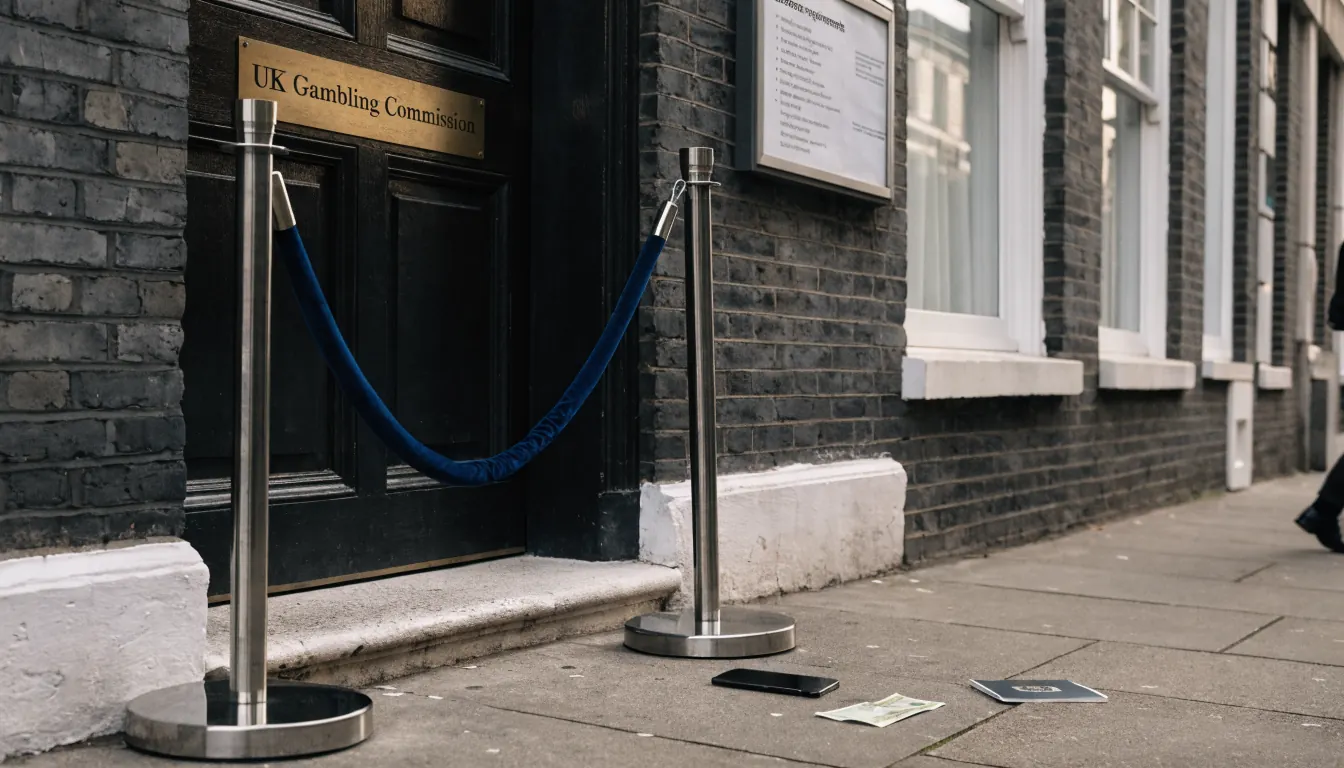
A UK-registered online casino is not simply a site with a British-looking name, prices in pounds, or a Union Jack tucked into its footer. Registration here means holding the appropriate licence from the UK Gambling Commission (UKGC), the regulator created under the Gambling Act 2005. For remote gambling, that licence is not decorative paperwork. It determines which rules govern the operator’s conduct.
That distinction matters because an operator offering online gambling to consumers in Great Britain must hold a UKGC licence, wherever the company itself is based. The Commission assesses matters including identity and ownership, finances, integrity, competence, and criminality. It also keeps a public register of current operating and personal licences. A listed name is useful; a matching domain is essential.
Stakes and payment boundaries
UKGC oversight changes the shape of play itself. A regulatory overview attributes a maximum stake of £2 per spin on online slots to the Commission’s rules. That is a direct limit on the product, not a suggestion placed beside it in small print.
Payment methods reveal the same boundary. Credit-card gambling is banned at UKGC-licensed casinos. Some non-UK licensed casinos may still accept credit cards for deposits, but that difference should not be mistaken for extra convenience. It reflects a different regulatory settlement, one that may place more responsibility on the player at precisely the point where borrowed money becomes part of the transaction.
The rules also reach promotions. A UKGC-licensed operator must work within UK requirements for advertising and bonuses rather than presenting every incentive as an unrestricted invitation. Promotional language, eligibility conditions and withdrawal terms therefore sit inside a framework designed to reduce misleading pressure. The glitter is still permitted. It is simply watched.
Protection is part of the licence
Registration with the UKGC also changes the available route when something goes wrong. The UK framework attaches responsible-gambling duties and consumer protections to the operator’s licence. An overseas casino does not acquire those duties merely by accepting British customers, and a complaint against it cannot be treated as a UKGC matter.
This is why “registered” needs a full noun after it. A casino can be registered somewhere without being registered in the United Kingdom. For British players, the meaningful comparison is between a UKGC-licensed casino and a non-UK licensed casino operating under another authority’s rules. Same screen. Different obligations.
When an Overseas Licence Is Trustworthy — and When It Is Not
Trust is not a logo, a polished lobby, or a phrase such as “internationally regulated”. For a casino outside the UK framework, it begins with a more prosaic question: which authority issued the licence, and what can that authority actually do?
- Identify the specific regulatory authority.
- Confirm the licence is currently valid.
- Check the authority’s power to enforce rules.
- Assume an overseas licence equals UKGC protection.
- Treat a “reputable” label as a formal regulatory category.
- Conflate international availability with UK registration.
International supervision is not uniform. Malta Gaming Authority and Gibraltar authorities are associated with more rigorous standards than jurisdictions where oversight may be less stringent. That difference matters because a licence is useful only when it represents active supervision rather than decorative paperwork. The authority should have a defined role, published rules, and the power to examine an operator’s conduct.
A non-UK licence does not make a casino equivalent to a UKGC-licensed casino. The jurisdiction is different, the regulatory expectations may be different, and the protections available to a player in Great Britain may not follow the account overseas. That is the quiet legal fact beneath the louder advertising.
The dispute route matters
A complaint involving a non-UK licensed casino normally travels through the operator’s internal dispute process or the licensing body named in its terms. Those routes can vary considerably in accessibility for UK players. The language, evidence requirements, response process, and authority available to intervene may not resemble the arrangements attached to a UK-licensed operator.
This is why a licence should be assessed as an enforcement relationship, not a badge of respectability. If a casino withholds a withdrawal or interprets a bonus term narrowly, the practical question is not whether the site displays a seal. It is whether an identifiable body can review the complaint and impose consequences.
That protection may be limited. Consumer safeguards and dispute-resolution processes familiar to UK players may not apply because the operator is governed by another jurisdiction. A complaint can therefore become slower, less accessible, or more dependent on the casino’s own procedure.
Reading “trusted” with care
Searches for trusted casinos not registered with GamStop often compress several separate ideas into one word. A casino may hold a valid international licence, yet still offer a weaker route to redress than a UKGC-licensed site. The absence of GamStop registration is not evidence of dishonesty; nor is an overseas licence evidence of equal protection.
The same caution applies to Curaçao casinos not registered with GamStop. Curaçao is a licensing jurisdiction, not a universal guarantee of identical standards across every operator carrying an overseas licence. The licence, its category, the named authority, and the available complaint route deserve separate attention.
A sensible distinction follows:
- stronger supervision means clearer oversight and a more meaningful enforcement route;
- weaker arrangements may leave greater room for restrictive terms or difficult complaints;
- neither category should be confused with UK regulation.
A licence can establish where authority sits. It cannot, by itself, establish how generously that authority will treat a player. Marketing prefers the shorter version. Regulation does not.
Why Gamban Cannot Replace Casino-Level Safeguards
Gamban is a software barrier, not a gambling regulator. It can block access to gambling websites and applications on devices where it is installed, but it does not change the legal status or conduct of an operator. A casino outside the UK framework remains outside it, whether or not a blocking tool recognises the site.
That distinction matters when a person has already joined GamStop. Non-UK casino sites are not affiliated with GamStop and are not required to prevent access for people registered with the service. The result is a gap between two systems: GamStop records a self-exclusion choice within participating arrangements, while an overseas operator may have no obligation to act on it.
Gamban can reduce accidental access. It cannot create a self-exclusion agreement with a casino that has never joined the relevant UK scheme. Nor can it force an operator to apply deposit limits, pause an account, or refuse promotional messages. Those are casino-level decisions, shaped by the rules of the licence under which the site operates. A download is not a regulator.
Summary
- Non-UK casinos operate under different regulatory frameworks and rules.
- GamStop and UKGC protections do not automatically apply to overseas operators.
- A wider game selection or faster registration does not guarantee higher safety standards.
- Always verify the specific authority behind an international gambling licence.
The practical risk is greatest where blocking software is being used because gambling has already become difficult to control. In that situation, a site not caught by Gamban may appear as an escape route precisely because the barrier is working elsewhere. Non-UK casinos generally do not have to follow UKGC self-exclusion guidelines, and they are not generally bound by the Commission’s advertising restrictions or bonus limitations. Offers can therefore reach a person who intended to step away, while the operator has no UK obligation to treat the self-exclusion as binding.
This does not make every overseas site identical, nor does it prove that every operator will ignore a request for closure. It means that the protection cannot be assumed. Internal account closure may exist, but its availability and enforcement depend on the casino’s own process and the authority supervising it. That is a weaker position than relying on a national self-exclusion arrangement supported by UK rules.
For someone with recognised gambling problems, deliberately seeking casinos that Gamban does not block is therefore not a technical workaround in any neutral sense. It removes one layer of friction at the moment friction may be protective. The sensible response to a failed block is not to treat the unblocked site as available by default, but to reinforce the wider support around self-exclusion, including services such as GamCare, BeGambleAware, or Gamblers Anonymous.
Software can close a door. It cannot decide that the room should remain closed.
The Overseas Licence Behind a Non-UK Casino
The phrase “non-UK registered casino” describes where the operator is licensed, not a special type of gambling product. The decisive question is simple: which authority issued the licence, and what powers does that authority possess?
For an operator serving players under an overseas framework, the licence should be identifiable and connected to a real regulatory body. A badge on a website is not enough. The authority named in the terms, footer, or licence record determines the rules applying to the operator and the route available if something goes wrong.
What Anjouan Gaming Does
Anjouan Gaming is the designated regulatory authority for licensing and supervising internet gaming operations under Anjouan law. Within its jurisdiction, it issues, supervises, and enforces Internet Gaming Licences. Those licences are not merely decorative certificates: the authority has the power to examine compliance and take action against a licensed operator.
That action can include suspending or revoking an Internet Gaming Licence. The distinction matters. A regulator with enforcement powers is materially different from a private organisation that only sells a certification label. Yet enforcement authority alone does not make an overseas licence equivalent to a UK Gambling Commission licence. The legal framework, supervisory practice, complaint routes, and practical access to redress remain tied to the issuing jurisdiction.
A casino operating under an Anjouan licence is therefore outside UKGC oversight. The UK Gambling Commission cannot supervise that licence, restore a suspended account, or decide a dispute under Anjouan law. Any formal regulatory route would depend on the licensing arrangement and the procedures provided by Anjouan Gaming, while some complaints may first be directed through the operator’s own process.
Is an overseas casino illegal for UK players?
No, current regulations do not prohibit UK residents from using such sites, but they operate outside the UKGC framework.
Can I use the UKGC to complain about a non-UK casino?
No, the UK Gambling Commission only regulates its own licensees; it cannot intervene in disputes involving overseas operators.
Does a Curaçao licence mean a site is not blocked by Gamban?
Not necessarily. A casino’s licence and a device’s blocking software are two separate systems; Gamban may still block a Curaçao-licensed site.
That creates a useful test for any non-UK licensed casino: identify the regulator, confirm that the licence is current, and establish what the authority can actually do. Anjouan Gaming can suspend or revoke licences. Whether that protection is sufficient for a particular player is a separate question.
A licence is an authority, not a guarantee.
The UK-Registered Casino as a Regulatory Baseline
A UK-registered casino is measured against the framework of the UK Gambling Commission, not merely against the appearance of a licence badge. Operators providing online gambling to consumers in Great Britain must hold a UKGC licence, wherever the business itself is based. Registration therefore signifies that the operator falls within the British regulatory system and its rules.
That distinction becomes visible in the boundaries placed around gambling products. A UKGC-licensed casino must apply the Commission’s requirements rather than choosing its own limits as a matter of commercial taste. A specialist industry review reports that the UK Gambling Commission imposes a maximum stake of £2 per spin on online slots. The figure is a regulatory boundary, not a decorative responsible-gambling message.
Payment rules provide another clear dividing line. Credit-card gambling is banned at UKGC-licensed casinos. Some non-UK licensed casinos accept credit cards for deposits, which shows why the licensing jurisdiction matters even when the website looks familiar. The payment button can carry a different regulatory philosophy.
The UK model also supplies a recognised route for oversight and consumer recourse. The UK Gambling Commission maintains a public register of current operating and personal licences, allowing the operator name or licence number to be checked against the listed domain. That public record does not turn every dispute into an instant remedy, but it gives the British framework an identifiable supervisory authority.
A non-UK licensed casino sits outside that structure. It is not regulated by the UK Gambling Commission and does not follow UKGC rules; any applicable controls, complaints process, and enforcement route arise from its own licensing jurisdiction instead. For British players, that is the essential baseline comparison.
Different rulebook. Different leverage.

How a Non-UK Registered Online Casino Changes the Player Experience
The difference between a UKGC-licensed casino and a non-UK registered online casino is often noticed first in the account journey, not in the logo at the bottom of the page. Registration may be faster, with fewer documents requested at the initial stage. That convenience does not mean verification has disappeared. A larger withdrawal can still trigger identity checks and a request for supporting documents. The paperwork has merely moved further along the road.
This changes the player’s expectations. An account that opens quickly may not be an account from which money can be withdrawn without further scrutiny. KYC checks can arrive after deposits, gameplay, or a withdrawal request, and the relevant policy may be found in terms that are less prominent than the registration form. Speed at the entrance is not the same thing as certainty at the exit.
Withdrawals can also look different. Non-UK casinos may process them within hours, while cryptocurrency transactions such as Bitcoin transfers may be near-instant once approved. The word “approved” matters. Processing time is not only a technical feature of the payment method; it can also depend on verification, internal checks, and the casino’s withdrawal policy. A fast rail still has a gate.
Currency selection makes the overseas character more visible. Some sites support euros, US dollars, and cryptocurrencies, allowing an account to be funded without converting everything into pounds first. That may suit an international customer base, but it can also make the real cost less obvious. Exchange rates, conversion charges, and the value of a cryptocurrency balance may affect the amount ultimately deposited or withdrawn.
Payment choice may extend beyond familiar bank cards and transfers to Bitcoin and other alternative methods. Yet the presence of a method says little about the conditions attached to it. Deposits and withdrawals may use different channels, and promotional terms can impose restrictions that are easy to miss.
That is particularly relevant where overseas offers advertise large bonuses, free spins, or unusual cashback structures. A profile-based review has reported match percentages ranging from 200% to 500%, but that is a claim from one source, not a universal market rule. Promotional value sits in the small print. There, the welcome ends and the accounting begins.
Written by the editors at Hub Casinouk Gb.