Penny Slot Machines UK: Rules, Stakes and Play
 Available in GB
Explore UK machine categories, low-denomination play, online formats, stakes and prizes without treating “penny” as a legal class.

Table of Contents
- What “Penny” Means in the UK Machine Rules
- How Penny Machines Fit into UK Casinos and Licensed Venues
- The Modern Penny Slot Machine: From Pub Fruit Machine to Online Screen
- How Online Penny Slots Work for UK Players
- Choosing a Way to Play Without Inventing a “Best” List
- Penny Slot Games: Free Play, Real Money and the Small Print of the Word
- Bonus Rounds Are a Feature, Not a Machine Category
- What a Penny Slot Costs—and How Its Stake Works
- Payouts and Jackpots: Why the Penny Label Says Little on Its Own
- Finding a Penny Slot Machine Online in a Regulated UK Market
What “Penny” Means in the UK Machine Rules
A penny slot is not a legal category in the United Kingdom. It is a descriptive phrase, usually suggesting that a game can be played with a very small denomination. The law takes a less romantic route. UK gaming machines are classified by the maximum stake and maximum prize available, not by what a cabinet, screen or advertisement chooses to call itself.
The recognised categories are A, B1, B2, B3, B3A, B4, C and D. That list matters because “penny” can describe a setting or denomination without explaining the machine’s legal position. A low stake does not, by itself, create a separate penny-machine class.
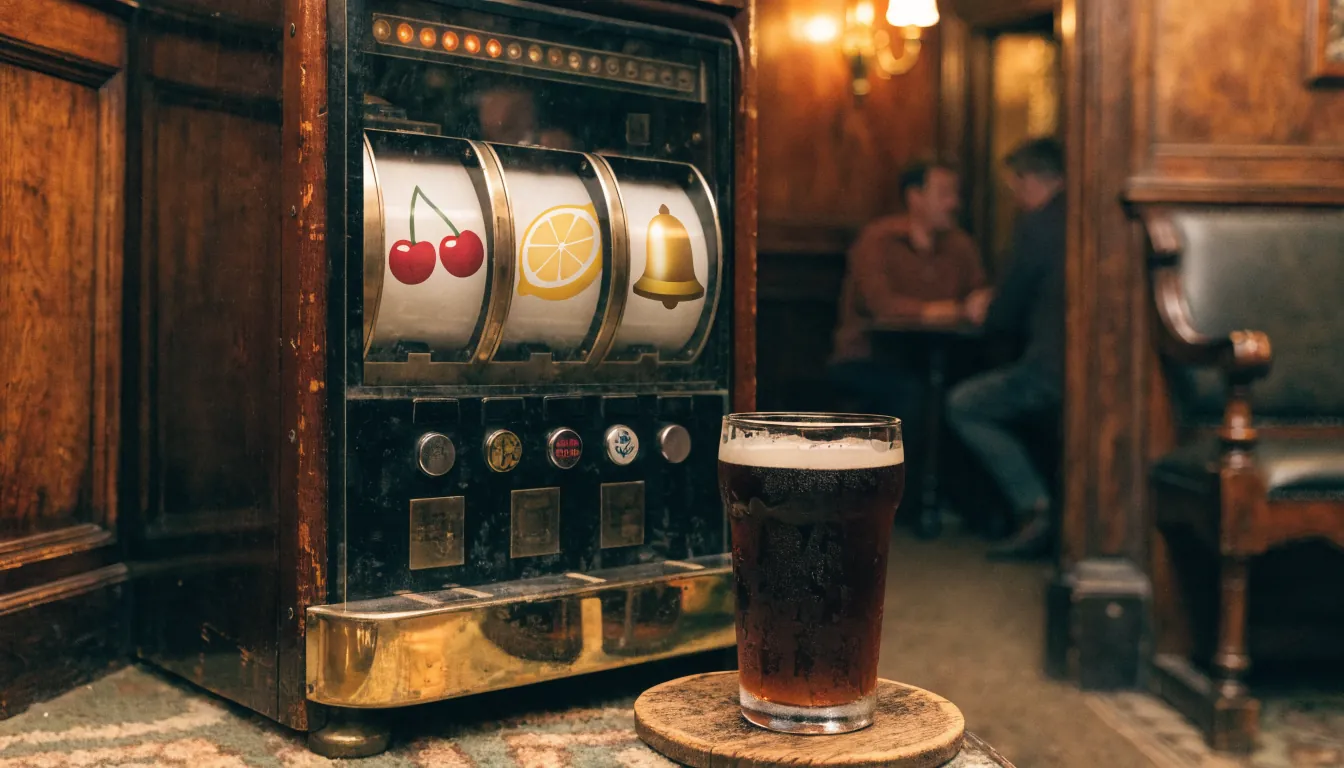
The familiar British pub fruit machine is a Category C gaming machine. Its maximum stake is £1 and its maximum prize is £100. In everyday language, it may be called a fruit machine or a penny machine, particularly when its reels and symbols preserve the old arcade vocabulary. In regulatory language, however, it is Category C. The difference is not pedantry: categories determine the boundaries within which the machine operates.
This list helps UK players reviewing penny slots machines for 2026 focus on practical details such as the available bonus, minimum deposit and stated payout speed. Use these facts as a starting point when assessing which option fits your preferences.
License: UKGC Operator Licence · Bonus: £200 welcome bonus · Payout speed: Within 48 hours · Min. deposit: £10 32Red stands out with a £200 welcome bonus and a £10 minimum deposit. Its stated payout speed is within 48 hours, and it operates under a UKGC Operator Licence.
License: UKGC Operator Licence · Bonus: £100 bonus · Payout speed: Within 24 hours · Min. deposit: £10 ProgressPlay Limited offers a £100 bonus with a £10 minimum deposit. The operator states that payouts are made within 24 hours and holds a UKGC Operator Licence.
License: UKGC Operator Licence · Bonus: £100 bonus · Payout speed: Within 24 hours · Min. deposit: £10 Genesis Global Limited features a £100 bonus and a £10 minimum deposit. Its stated payout speed is within 24 hours, under a UKGC Operator Licence.
License: UKGC Operator Licence · Bonus: £100 bonus · Payout speed: Within 24 hours · Min. deposit: £10 LeoVegas offers a £100 bonus with a £10 minimum deposit. It states that payouts are made within 24 hours and operates under a UKGC Operator Licence.
License: UKGC Operator Licence · Bonus: £20 bonus · Payout speed: Within 48 hours · Min. deposit: £10 Silverbond Enterprises provides a £20 bonus and a £10 minimum deposit. Its stated payout speed is within 48 hours, and it operates under a UKGC Operator Licence.
License: UKGC Operator Licence · Bonus: £50 bonus · Payout speed: Within 48 hours · Min. deposit: £10 Platinum Gaming Limited offers a £50 bonus with a £10 minimum deposit. The stated payout speed is within 48 hours, and the operator holds a UKGC Operator Licence.
Category D machines sit at the more visibly low-stake end of the system. They are generally associated with fruit-machine-style play, coin pushers and crane grabs. Yet even Category D has different combinations of stake and prize. “Low stake” therefore remains a description, not a complete legal answer.
At the other end are the B categories, including B1, B2, B3, B3A and B4. These are not simply “premium penny slots” when their possible stakes and prizes place them elsewhere in the classification system. The word penny cannot erase the category attached to the machine.
So, what is the maximum bet on a penny slot? There is no single UK maximum created by the word “penny”. The answer depends on the gaming machine category and the particular stake available on it. For a Category C pub fruit machine, the maximum stake is £1. That is a rule about Category C, not a universal rule for every product marketed with penny language.
The most useful penny slot machine tip is therefore a deliberately unglamorous one: identify the category before relying on the denomination. Symbols may be bright; the classification is doing the serious work.
How Penny Machines Fit into UK Casinos and Licensed Venues
A penny machine does not belong to one universal class of premises. In Great Britain, where a machine may be offered depends on its legal category and on the permission attached to the venue. The word “penny” may describe the denomination or the way a game is presented; it does not grant entry to a casino, pub or betting shop by itself.
That distinction matters because the same search for casino penny slots UK can conceal several different questions. Is the machine a Category B machine? Is it a Category C machine associated with the traditional British pub setting? Is it a Category D machine, where age restrictions work differently? The venue comes after the category, not before it.
Casinos: several categories, different boundaries
Casinos are among the premises able to host more than one relevant category, but they are not a blank cheque for every machine. Category B1 gaming machines can only be made available in casinos. Category B2 gaming machines may be located in 2005 Act and 1968 Act casinos, as well as betting shops and tracks with pool betting.
Category B3 machines occupy a wider circuit. They may be made available in casinos, betting shops, tracks with pool betting, bingo premises and adult gaming centres. In other words, a casino may contain B1, B2 and B3 machines, but each category arrives with its own legal identity. Calling all of them “penny casino slots” is tidy language and poor classification.
The practical point is that a casino’s permission to offer one category does not automatically transform another category into a casino machine. A penny denomination is not a premises licence.
Betting shops and tracks
Betting shops may offer Category B2 and Category B3 gaming machines. Tracks with pool betting may also offer both categories. Category C machines can appear in betting shops and on tracks with pool betting as well.
This is one reason the phrase penny slot casino UK can be misleading when it is used as a general label for low-stake machine play. A machine encountered in a betting shop may sit within a different category from one found in a casino, even if the display makes the stake look similarly modest. The building tells only part of the story.
Common in British pubs; maximum stake £1 and maximum prize £100.
Low-stake machines like coin pushers or crane grabs; various stake and prize combinations.
Includes B1, B2, and B3; these are higher-tier machines found in casinos, betting shops, or bingo premises.
Bingo premises and adult gaming centres
Bingo premises may offer Category B3 and Category C gaming machines. They may also offer Category B4 machines, although B4 is a separate category rather than a synonym for a penny machine.
Adult Gaming Centres have a particularly broad machine entitlement. An Adult Gaming Centre licence permits unlimited Category B3, C and D machines. That makes the premises relevant to anyone searching for 1p slots UK or comparing the atmosphere of a penny slot casino UK with a dedicated gaming venue. Yet “unlimited” here describes the permitted number of those categories, not an unlimited right to install every kind of gaming machine.
Category D machines also have no age restriction. That rule sets them apart from the adult-only setting associated with many other gambling machines. It does not turn every low-stake machine into Category D; classification remains tied to the machine’s legal characteristics.
Pubs, clubs and family entertainment centres
Category C machines may be made available in pubs, licensed family entertainment centres, clubs, bingo premises, adult gaming centres, betting shops, tracks with pool betting and casinos. The familiar pub machine therefore has a surprisingly wide legal geography, though its cultural home remains the pub: a small glowing cabinet beside the place where conversation was meant to happen.
An alcohol-licensed pub is automatically entitled to up to two Category C or D machines if it notifies the local licensing authority. That entitlement is specific. It does not mean that a pub can place any preferred category on the premises, nor that the venue can expand beyond the stated allowance without the relevant permission.

Clubs also appear in the permitted locations for Category C machines. Licensed family entertainment centres do too, alongside their particular association with leisure rather than casino gambling. The result is a map with overlapping categories, not a simple ladder from “small” venues to “serious” ones.
A venue-first way to read the market
The language of best penny slots UK, popular penny slots UK or a list of penny slots UK suggests that the main task is choosing a game. For physical premises, the prior question is more prosaic: which category is legally available here?
A useful outline looks like this:
- Casinos: Categories B1, B2, B3 and C may be available according to the relevant rules.
- Betting shops: Categories B2, B3 and C may be available.
- Tracks with pool betting: Categories B2, B3 and C may be available.
- Bingo premises: Categories B3, B4 and C may be available.
- Adult Gaming Centres: An Adult Gaming Centre licence permits unlimited Categories B3, C and D.
- Pubs: Category C machines may be available, and an alcohol-licensed pub is automatically entitled to up to two Category C or D machines after notifying the local licensing authority.
- Licensed family entertainment centres: Category C machines may be available.
- Clubs: Category C machines may be available.
This is also why “free penny slots UK” does not describe a separate premises category. Free play may be a presentation choice, but the legal map concerns gaming-machine categories and the permissions attached to the venue.
The British arrangement is less glamorous than a list of best casino penny slots UK, but more revealing. It treats machines as regulated objects whose location matters. The penny label may attract the eye. The premises rules decide where the cabinet is allowed to stand.
The Modern Penny Slot Machine: From Pub Fruit Machine to Online Screen
The phrase “penny slot” sounds older than the screen on which it now appears. It belongs to the same family of language as the pub fruit machine: a small-stake game, familiar symbols, a brief cycle of reels or images, and the quiet promise that modest play can still produce a prize. In the UK, however, the machine itself is not defined by its nickname. The legal structure follows the available stake and prize, while the setting determines where a category may appear.
The term “penny slot” is a descriptive phrase used in marketing and everyday language, rather than an official UK legal gaming category.
That distinction matters because a physical gaming machine and an online slot can look almost identical while belonging to different regulatory arrangements. A row of fruit symbols does not settle the question. Nor does the word “penny” establish a machine category.
The pub machine as the cultural starting point
The classic British pub fruit machine is a Category C gaming machine. It is associated with the licensed pub, but Category C machines may also be made available in licensed family entertainment centres, clubs, bingo premises, adult gaming centres, betting shops, tracks with pool betting and casinos. Its defining limits are a maximum stake of £1 and a maximum prize of £100.
That is the machine many people have in mind when they describe a penny machine, even when the machine offers more than a penny denomination. The cultural image comes from the cabinet: illuminated reels, fruit symbols, a control panel, and the social setting of a pub rather than the private concentration of a casino floor. It is less glamorous than the language of “premium” games, which is perhaps why the phrase has survived. A flashing cabinet in the corner has never needed a marketing department to seem important.
Category D provides another route into the penny-machine idea. These gaming machines are generally low-stake fruit machine style machines, coin pushers or crane grabs. Category D has five different combinations of stake and prize, so the label covers more than one physical experience. A money-prize AWP machine allows a 10p stake and up to a £5 cash prize. A crane grab allows up to a £1 stake and up to a £50 non-monetary prize.
The crane grab is not a fruit machine, yet it belongs to the same broad world of low-stake amusement for many people: a machine that turns a small payment into a short, visible contest. The prize may be cash, a toy or a moment of mechanical suspense. The cabinet changes; the social meaning hardly does.
What carries across to digital play
Online penny slots borrow the visual grammar of these machines. Reels become animated panels. Buttons become touch controls. The familiar fruit-machine vocabulary is joined by themed graphics, sound effects and bonus features. A digital game may therefore be described as a penny slot even though it is not a Category C or Category D gaming machine.
This is where ordinary language and regulatory language part company. “Penny slots UK” can refer to a stake denomination on an online casino screen, a low-stake physical gaming machine, or a search for free play that does not involve a cash stake at all. The phrase is useful for describing the player-facing idea. It is not enough to identify the legal status of the product.
The same applies to “online penny slot machines UK”. The word “machine” is natural because the game imitates a machine, but the online product should not automatically be treated as a physical gaming machine. The relevant question is what kind of gambling product is being offered and under which regulatory arrangement, not whether the screen contains reels.
Understanding the distinction
While online games may use “penny” to describe a low stake, they operate under different regulatory arrangements than physical gaming machines.
A penny denomination can also be presented in different ways. A displayed amount may describe the value of one line, one coin or a complete spin, depending on the game design. That detail belongs to the game’s own instructions rather than to the name “penny slot”. The label is a doorway, not a specification sheet.
Why physical categories still help
The UK categories remain useful because they show how the country has historically separated low-stake amusement from other forms of machine gambling. Category C evokes the pub fruit machine. Category D covers several low-stake formats, including fruit machine style games, coin pushers and crane grabs. Neither category is a synonym for every online slot described as cheap to play.
That framework also prevents a common shortcut: treating every low-cost game as interchangeable. A 10p money-prize AWP and a crane grab may both sit within the Category D description, but their prizes are different. A Category C machine has a different stake-and-prize structure again. The familiar word “penny” smooths over those distinctions. Regulation does not.
The result is a curious split between appearance and classification. The online screen may reproduce the old pub machine’s reels, while the physical categories continue to describe specific machines in specific premises. The image travels easily. The legal meaning does not.
The language of choice
Searches for the best penny slot machines in the UK often combine several expectations: a small denomination, a recognisable machine-like format, an option to play online, and perhaps a free version before any real-money decision. Those are different questions compressed into one phrase. No verified list of named games or providers is available here, so “best” cannot be turned into a defensible ranking.

“New penny slot machines UK” is similarly a description of novelty, not a regulatory category. A new game may imitate a fruit machine, use a more elaborate digital design, or simply offer a low denomination. The adjective says when or how the product is presented; it does not say where the product may legally be offered.
For the same reason, “1 penny slots UK” describes a stake idea rather than a guarantee about the whole play cycle. “Penny slots for real money UK” adds the financial context, while “free penny slot machines UK” removes that context altogether. The visual resemblance can remain. The economic meaning changes.
The modern penny slot is therefore best understood as a bridge between two traditions. One began in the pub, where Category C machines gave the fruit-machine image its British setting and fixed limits. Another appears on an online screen, where “penny” functions as an informal description of denomination and style. Between them stands the same modest fantasy: a small gesture, a brief animation, and the hope that the machine has noticed.
How Online Penny Slots Work for UK Players
Online penny slots are a product description, not a separate category in the UK gaming-machine system. The word penny normally points to the denomination or the smallest advertised stake: a game presented as suitable for one-penny play. It does not, by itself, identify the legal status of the product, determine its prize structure, or make it equivalent to a Category C machine in a pub.
That distinction matters because the language of online casinos borrows freely from the physical machine. A screen may resemble a familiar fruit machine, show reels, symbols and a spin button, and still belong to a different regulatory setting. The visual costume travels easily. The legal category does not.
Regulatory Distinction
Attention An online game described as a penny slot does not automatically fall under the same legal category as a physical Category C or D machine.
A stake label is not a machine category
In a British pub, a Category C machine has a maximum stake of £1 and a maximum prize of £100. It is the classic British pub fruit machine, with all the cultural baggage that phrase carries: flashing cabinets, coins disappearing with surprising dignity, and the faint sense that the machine has been waiting there longer than the furniture.
An online game described as a penny slot may instead advertise a one-penny stake, or allow a player to select a low denomination within its available settings. That wording says something about the game’s stake presentation. It does not turn the online product into a Category C machine.
The same caution applies to phrases such as “online casino penny slots”, “real-money penny slots” and “one-penny slots”. These expressions distinguish paid play from free presentation, or describe the denomination used in the game. They are not official UK machine classifications. A title can be marketed as a penny game without providing the same structure as a physical pub machine.
What happens on the screen
The basic online format is straightforward. A player selects a stake, starts a game round and receives an outcome generated within the product’s software. The game may present reels, paylines, symbols, animations or feature screens. Those elements explain how the product looks and operates; they do not establish whether it is a Category A, B, C or D gaming machine.
This is why “online penny slot games UK” can be a misleadingly tidy phrase. It joins a denomination with a format and a market, but leaves out the legal distinction between an online gambling product and a gaming machine placed at premises. The familiar vocabulary is useful for describing the experience. It is poor shorthand for regulation.

The word penny also says little about the full stake configuration. A game may use a penny denomination while offering different combinations of lines, coins or total stakes. The denomination and the amount committed to a round are related, but they are not automatically identical. A low coin value can make a game look modest while the selected total stake depends on the game’s settings.
That is the small print hidden inside an apparently innocent adjective.
Real money and the meaning of return information
“Online penny slots for real money” refers to the financial context: money is placed into an account and game rounds may affect that balance. It does not promise a particular return, prize or level of risk. Nor does the word penny imply that the game is inexpensive in every practical sense.
For UK players, return information deserves separate attention. B1 machines have no minimum RTP requirement, but the minimum average return must be displayed to the player. That rule belongs to the B1 gaming-machine framework. It should not be casually transferred to every online game merely because an online product uses the same slot vocabulary.
RTP language is therefore not a badge saying that a product is a “good” penny slot. It is information about a mathematical return measure, and its legal presentation depends on the product and regulatory framework concerned. A low denomination does not make the displayed return more favourable, and a high advertised return would not remove the need to understand the stake being selected.
The public appetite for a “best online penny slots UK” list often tries to compress these separate questions into one label: smallest stake, strongest return, most entertaining presentation and safest place to play. The evidence available here does not establish a verified ranking of games or providers. A neat league table would be decoration, not information.
Return Information
For B1 machines, there is no minimum RTP requirement, but the minimum average return must be clearly displayed to the player.
Online play is not lottery vending
Another boundary is easy to miss when products are described by their screens rather than their legal function. A lottery ticket vending machine must not require skill or gameplay, must not determine the lottery outcome, and must not display the result within less than one hour if it is to avoid being classified as a gaming machine.
That rule illustrates why appearance is a weak guide. A machine or screen can sell something connected with a lottery without operating like a gaming machine. Conversely, an online product decorated with reels and fruit symbols is not defined merely by looking like a slot. Function, outcome and regulatory treatment matter more than the artwork.
The same principle applies to newer products. “New penny slots UK” and “new online penny slots UK” describe novelty in presentation, not a new legal category. A fresh interface, an unfamiliar theme or an additional feature may alter the experience while leaving the central question untouched: what kind of gambling product is being offered, and under which rules?
For that reason, the sensible meaning of play penny slots online for real money in the UK is narrower than the phrase suggests. It describes paid online slot-style play using a low denomination. It does not certify a machine category, guarantee a prize pattern or supply a ranking. The penny is a unit of language first. The law remains less decorative.
Choosing a Way to Play Without Inventing a “Best” List
The phrase “best penny slots to play in the UK” sounds as though a settled league table ought to exist. It does not. No verified games, operators or software providers are available for a responsible named ranking here, and the word penny does not identify a particular title. It describes a stake idea, sometimes a machine label, and sometimes merely a piece of online marketing. A list built from guesswork would look useful while doing the opposite.

A more practical comparison starts with the way of playing.
Free play: testing the shape of the game
Free penny slots with no download are best understood as a demonstration format, where available. They can show the layout, reel movement, symbols and the basic rhythm of a game without turning the session into a money decision. That makes them useful for learning how the controls work or deciding whether the presentation is tolerable. The bar is not high, but many machines have never cleared it.
Free play does not establish what would happen with money at stake. It does not turn an unverified game into a recommended one, and it says nothing by itself about a machine’s legal category. It is a way to inspect the format, not evidence of value.
Real-money play: a different decision entirely
Real-money play adds two questions that free play cannot answer: what stake is being made, and what return information is displayed? The distinction matters in the British system because a gaming machine is classified according to its maximum stake and prize, not according to the friendly sound of “penny”.
The clearest physical comparison is a Category C machine, the classic British pub fruit machine. It has a maximum stake of £1 and a maximum prize of £100. An alcohol-licensed pub is automatically entitled to up to two Category C or D machines if it notifies the local licensing authority. That setting explains why the fruit-machine tradition became so familiar: it was folded into ordinary licensed premises rather than left exclusively to casinos.
- Check the legal machine category of the venue.
- Verify the displayed average return information.
- Distinguish between stake denomination and total spin cost.
- Assume a “penny” label guarantees a specific prize structure.
- Treat online games as identical to physical pub machines.
- Rely on marketing terms for legal classification.
For B1 machines, there is no minimum RTP requirement. The minimum average return must nevertheless be displayed to the player. That is a useful corrective to the assumption that a displayed figure is a promise of a favourable outcome. It is information about the machine’s stated return framework, not a verdict that the machine is “worth playing”.
Strategy: control the decision, not the machine
Searches for the best penny slot strategy often imply that a clever sequence can alter a random game. No verified evidence here supports that claim. A strategy can organise behaviour; it cannot turn the label penny into an advantage.
A more honest approach is narrow:
- decide whether the purpose is free inspection or real-money play;
- treat the displayed return information as information, not a guarantee;
- distinguish a legal machine category from an online product description;
- avoid calling an unnamed or unverified game “best”;
- stop treating a small denomination as proof that the overall decision is small.
The last point has always been hiding in plain sight. A penny is an attractive unit because it makes expenditure feel granular. British fruit machines made that feeling part of the pub landscape; online interfaces can make it even less visible by presenting repeated small choices rather than one conspicuous purchase.
Are penny slots worth playing?
That cannot be answered by the denomination alone. Free play may be worthwhile as a low-consequence way to inspect presentation. Real-money play requires attention to the stated return information and the applicable machine category. Neither route produces a universal best way to play.
The sensible comparison is therefore not “which game wins?” but “what is this session meant to do?” Exploration, entertainment and money play are different activities. Calling them all a penny slot strategy merely gives one word too much authority.
Penny Slot Games: Free Play, Real Money and the Small Print of the Word
“Penny slot games” is a flexible phrase, not a legal label. In the UK, it may describe an online game offered with a very small stake, a free-play version that uses no money, or a familiar reel-based design borrowed from the language of physical gaming machines. Those meanings overlap in advertising. They do not create a new category in law.
UK gaming machines are classified according to the maximum stake and prize available. The recognised categories are A, B1, B2, B3, B3A, B4, C and D. A game called a penny slot does not, by that name, become one of them. The title is packaging; the category depends on the machine’s permitted financial limits.
Free play is a different proposition
Free penny slot games are usually presented as demonstrations or entertainment. Their important feature is the absence of a cash stake, not a special regulatory status. A free version can reproduce reels, symbols and the familiar rhythm of a machine while leaving the financial question outside the screen.
That distinction matters because visual similarity is persuasive. A free game may look like a paid product, and a paid product may borrow the appearance of a pub fruit machine. Neither appearance identifies the applicable UK category. A label can describe the mood of a game more accurately than its legal position.
Free play also changes what “cost” means. There is no cash stake in the session, but the format may still be used to show how a game behaves. It should not be treated as proof that a real-money version has the same terms, classification or availability. The pictures may match. The circumstances need not.
Category C
Gaming machines typically found in pubs with a maximum stake of £1 and a maximum prize of £100.
Real money needs clearer language
When “penny slot games online UK” refers to real-money play, “penny” normally describes the denomination or stake language used by the product. It does not promise a particular prize, return or machine category. The relevant classification remains tied to the maximum stake and prize, not to the friendliness of the name.
This is why claims about the “best penny slot games UK” require restraint. There are no verified game names or product measurements in the available evidence, so a ranked list would be decorative rather than informative. A game cannot be called best merely because its title contains penny, nor can a low denomination establish that it is the safest or most suitable choice.
The small print is therefore doing unusually important work. “Free”, “penny” and “slot” belong to different layers: payment status, denomination and game vocabulary. Treating them as one legal description is convenient. It is also wrong.
Bonus Rounds Are a Feature, Not a Machine Category
A bonus round is part of a game’s design, not a separate classification of gaming machine. The distinction matters because “free bonus rounds” sounds like a promise about play, while UK machine categories are defined by the maximum stake and prize available. One describes what may happen during a game; the other describes the regulatory limits surrounding the machine.

That is why a penny-style game may advertise a bonus game without becoming a special kind of penny machine. The bonus might involve extra scenes, a different set of symbols or a separate decision within the same product. None of those labels replaces the relevant category. The paperwork remains less glamorous than the animation.
For physical gaming machines, the UK system uses categories A, B1, B2, B3, B3A, B4, C and D. A bonus feature does not create a ninth category. Nor does the word “free” establish that a game is outside gaming-machine rules. Its meaning depends on what is free: a feature awarded within play, a demonstration mode, or access that carries no monetary stake.
This is particularly important when free penny-style games are presented online. A player may be looking for a low-denomination theme with bonus rounds or bonus games, but the language on a screen is not itself evidence of a UK machine classification. “Penny” can describe the displayed denomination; “bonus” can describe the game’s structure. Neither term, standing alone, states the permitted maximum stake or prize.
The clean reading is therefore simple: bonus language explains the entertainment layer, while category rules govern the machine. Confusing the two turns a playful label into a legal claim. That is a poor bargain.
What a Penny Slot Costs—and How Its Stake Works
A penny denomination describes the unit used in a game, not necessarily the amount required for a complete play. That distinction matters. A machine may display penny values while the total stake depends on the number of lines, reels, or other selected features. The word sounds small; the transaction may not be.
The practical question is therefore not simply how much a penny slot costs, but what the machine counts as one stake. A single penny can be part of the calculation without being the full price of a spin. The controls, paytable and displayed stake are the useful evidence. Marketing language is not.
Reading the UK limits
For physical gaming machines, the legal ceiling is set by category rather than by the machine’s nickname. A Category C machine—the familiar British pub fruit machine—has a maximum stake of £1 and a maximum prize of £100. Its penny setting, if present, sits inside those limits; it does not create a separate legal class.
Category C Max Stake £1
Category C Max Prize £100
Category B1 Max Stake £5
Category B3A Max Stake £2
Category B3A machines have a maximum stake of £2 and a maximum prize of £500. Category B1 machines sit at a different financial scale, with a maximum stake of £5. These figures describe permitted maximums, not a promise that every play reaches them.
That is the slightly unromantic answer to how penny machines work: denomination and stake are related, but they are not synonyms. One describes the unit shown by the game. The other describes the amount committed to the play.
For anyone comparing formats, the displayed total stake is more informative than the word “penny”. A low denomination can make individual symbols appear inexpensive while several selections combine into a larger charge. The machine’s own information should show that commitment before play begins.
Small coin. Larger calculation.
Payouts and Jackpots: Why the Penny Label Says Little on Its Own
A penny denomination describes the unit used for a stake. It does not, by itself, describe the possible prize. That distinction matters because UK gaming-machine categories are defined by maximum stakes and prizes, not by the friendly-sounding label placed on the cabinet or screen.
For penny slot payouts, the relevant question is therefore not simply whether each unit is small. It is which category governs the machine and what prize ceiling applies to that category. A low denomination can sit beside a prize structure whose limits are set by the wider machine rules. The label is modest; the architecture may not be.
Prize ceilings are category matters
Category B1 gaming machines have a maximum prize of £10,000. They may also offer a linked progressive jackpot of up to £20,000 on a premises basis. That jackpot is not a universal feature of penny machines. It is a specific possibility within the B1 framework, subject to the machine and premises arrangements that govern it.
Category B3A machines present a different structure. Their maximum stake is £2 and their maximum prize is £500. B3A games are limited to lottery-style games, and the outcome is predetermined by the virtual lottery ticket selected when the game starts. Calling such a product a penny jackpot game would conceal more than it explained.

The contrast is useful. Two products may use small-denomination language while belonging to different regulatory and prize architectures. One may be associated with a substantial category ceiling; another has a defined lower maximum and a predetermined lottery-style outcome.
A jackpot is not a return promise
A maximum prize states what the rules permit, not what every play produces or what a particular machine will return. A progressive jackpot describes a linked prize mechanism, not a guaranteed result. Nor does the word “penny” establish a particular payout level.
That is why penny slot jackpots should be read through the category, the displayed information and the actual game structure. Small coins do not make identical machines. Dry labels, occasionally, are doing the honest work.
Finding a Penny Slot Machine Online in a Regulated UK Market
An online penny slot is not available in Great Britain merely because its interface displays a small denomination. Availability rests on the operator’s legal position and on the product’s compliance record. Online gambling operators serving consumers in Great Britain must hold a UKGC licence, and remote gambling requires a remote operating licence. The UK Gambling Commission keeps a public register of current operating and personal licences; the listed domain matters as much as the operator name.
The machine itself also needs a regulatory trail. Gaming machines must carry a Technical Standards Certificate before placement, while Category B1, B2, B3 and B3A machines must be tested by an independent test house. The relevant return information must be visible where the rules require it. For B1 machines, there is no minimum RTP requirement, but the minimum average return must be displayed to the player. That is disclosure, not a promise of performance.
Age controls remain part of the same picture. The general legal gambling age in the UK is 18. Physical Category C machines—the classic British pub fruit machine—are restricted to adults aged 18 and over, with a £1 maximum stake and £100 maximum prize. An online product should therefore not be treated as a harmless digital penny toy simply because its label sounds modest.
A licensed domain, tested product, certificate and displayed return are the useful markers. Marketing language is not. Small denomination, large paperwork.
Written by the editors at Hub Casinouk Gb.