
Monopoly Live Casino UK: How the Game Works
 Available in GB
Understand the live studio format, playing options, casino checks and the limits of tracking past results.
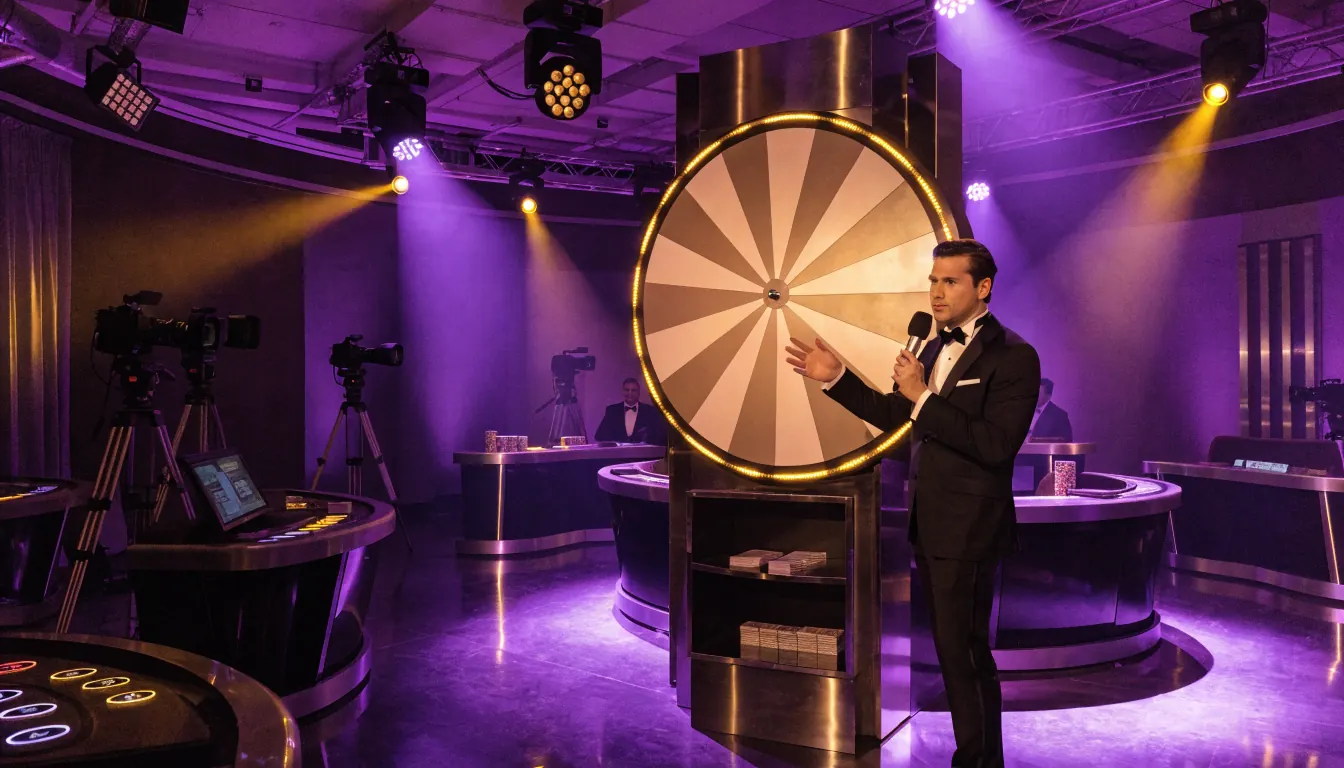
Table of Contents
- Monopoly Live in the UK: What the Game Actually Is
- How to Play Monopoly Live Online Without Losing the Plot
- Casinos with Monopoly Live: What a UK Player Should Check
- Playing Monopoly Live: Real Money, Demo and Free Options
- Finding the Best Monopoly Live Experience in 2026
- The Monopoly Live Game Show, Alongside Its Familiar Rivals
- Monopoly Live Stats, Strategy and the Limits of Tracking Results
- Choosing a Casino Site with Monopoly Live
- Monopoly Live Demo UK: A Low-Stakes Introduction
- A Sober Monopoly Live Review: Entertainment, Limits and Responsibility
Monopoly Live in the UK: What the Game Actually Is
Monopoly Live is a Live Game Show: a casino production built around a physical wheel, a real studio and a human dealer, rather than a purely digital game generated on a screen. The familiar Monopoly theme supplies the setting, but the important distinction is its method of operation. The result comes from equipment in front of a camera, while the dealer manages the show and the broadcast carries the action to players’ devices.
That makes it different from a standard online casino game. In a conventional digital game, software-based random number generators determine outcomes. In a live casino, the wheel, cards or other physical equipment are used in the studio, and the filmed event is transmitted in real time. Monopoly Live belongs to the latter category. It is online in the way it is watched and joined, but physical in the way its central action is produced.
A studio game, not an animated imitation
The set is designed to look less like a quiet casino table and more like a television production. A trained dealer stands beside the wheel, introduces the action and oversees the round. The physical equipment remains visible throughout, which gives the game its particular character: part gambling table, part broadcast set, part brightly coloured board-game memory.
That theatrical quality is not an accidental decoration. Monopoly is one of those cultural objects that has travelled far beyond its original box, carrying with it streets, properties and the promise that someone at the table will become unreasonably invested in rent. The live version turns that shared imagery into a setting for casino play. The theme makes the show recognisable; the live dealer makes it a live casino.
The wheel is the centre of the production. Its movement is captured by cameras, and the outcome is read and recorded as part of the studio process. The game therefore has a visible event at its heart rather than an abstract result appearing after a button is pressed. That difference matters to the experience even when it does not alter the underlying fact that casino outcomes remain outside a player’s control.

How the broadcast reaches the screen
Live casino studios use multiple high-definition cameras. Different views can show the dealer, the wheel and the wider table, allowing the production to move between presentation and close-up detail. The video feed typically has latency under two seconds, so the image is close to the event taking place in the studio rather than a delayed recording.
A Game Control Unit (GCU) forms part of the technical system behind the broadcast. Such equipment helps connect the physical table action with the digital interface through which the game is presented. The studio event must be visible, recorded and translated into information that the online system can recognise. Cameras and specialist software work together so that the result shown on the screen corresponds to the outcome produced by the wheel.
This is why the game can feel immediate without pretending that the player is physically present at the table. The dealer is in a studio; the audience may be distributed across many locations. A single live game show can accommodate hundreds or thousands of players simultaneously. The room is real, but the crowd is digital.

The dealer’s role
The dealer is not merely a voice placed over an animation. The dealer operates within the physical production, presents the round and helps maintain its rhythm. The set betting window, table conditions and game interface give the show its structure, while the dealer supplies the human pacing that software alone does not provide.
Live casino games can also include chat, allowing interaction with the dealer and other players. Chat does not turn the game into a private conversation or give anyone influence over the wheel. Its role is social and presentational. It reminds players that the show is being experienced collectively, even when each person is watching from a separate device.
There is a small social paradox here. The game borrows the intimacy of a table while accommodating a crowd far larger than any physical table could hold. Everyone sees the same dealer and the same wheel, but the communal feeling is manufactured through broadcasting technology. It works. Television has been doing something similar for decades.
What “live” does and does not mean
In Monopoly Live, “live” describes the production and transmission of the game. A real dealer operates physical casino equipment, cameras capture the action, and the feed is streamed to players’ devices in real time. It does not mean that players can alter the outcome, negotiate with the wheel or convert a recognisable theme into a system of control.
Live casino games must operate under a licence issued by the UK Gambling Commission to ensure regulatory oversight and player protection.
The live format can make results easier to follow because the event is shown as it happens. Live casinos operate under regulatory oversight: games are monitored, results are recorded, and independent auditors verify operations. For UK players, live casino games must operate under a licence issued by the UK Gambling Commission. The legal gambling age is 18, and live casino gambling is restricted to players aged 18 and over.
So, a UK-facing Monopoly Live casino is not simply a Monopoly-themed screen game with a dealer-shaped graphic attached. It is a regulated live production built from physical equipment, human presentation, camera coverage and digital delivery. That combination explains its appeal—and its boundaries. The wheel is real. The broadcast is live. Control remains elsewhere.
How to Play Monopoly Live Online Without Losing the Plot
Playing Monopoly Live online is less mysterious than the name suggests. The session takes place through a casino interface that carries the live studio to a phone, tablet or computer screen. The important events still happen at the table; the digital layer records the choices, displays the available bets and tells the player when those choices are accepted.

Joining the live table
A mobile browser is enough to access live casino games on a smartphone or tablet, so downloading an app is not required. The same principle applies on a desktop browser. A stable internet connection matters because the experience depends on a continuous video feed rather than a sequence of static game screens.
A specialist industry review recommends a connection of at least 5 Mbps for smooth HD streaming. That is a recommendation from that type of source, not a universal technical rule. Connection quality, device performance and the way a casino delivers its stream can all affect how comfortably the table is followed.
Once the game loads, the screen normally presents several distinct areas:
- the live video of the studio and dealer;
- the available betting positions;
- the current betting window;
- the balance and stake controls;
- the result and settlement information;
- the chat panel, where available.
This arrangement turns a physical table into a small broadcast interface. It also creates a useful separation between watching and acting. The wheel or board may be visible in one part of the screen, while the betting controls sit elsewhere. Losing track of that distinction is how a simple round acquires unnecessary drama.
What happens during a round
A live round follows a timed sequence. Bets are accepted only during a fixed betting window. The interface indicates when that window is open, and the controls change when it closes. Any decision made after the deadline is not treated as part of that round.
The practical rhythm is therefore:
- the table opens for betting;
- the player selects a position and stake through the digital interface;
- the player confirms or adjusts the selection while betting remains open;
- the betting window closes;
- the live event takes place;
- the result appears and the system settles the accepted bets.
Table limits apply throughout the process. The available stake must fit within the limits displayed by the table, and some live games also use decision timers for choices that occur after the initial bet. A timer is not decoration: it marks the point at which the interface stops accepting that particular decision.
The live feed and the controls may not change at precisely the same visual instant. Streaming has a small delay, while the casino’s betting system records actions through its own interface. The safest way to understand the state of a round is the betting indicator and confirmation shown by the platform, not an attempt to judge timing from the video alone.
Chat and the social layer
Many live casino games include chat for communication with the dealer and other players. It can make the table feel less like a solitary screen and more like a shared room, even when the participants are scattered across different places. Messages may also help explain a visible pause or point to information already shown in the interface.
- Use a stable internet connection (at least 5 Mbps recommended)
- Watch for the betting window opening signal
- Confirm your selection in the interface
- Attempt to judge timing from the video feed alone
- Make decisions after the betting window has closed
- Assume the social chat can influence the wheel
Chat does not alter the betting window, the table limits or the decision timer. It is part of the presentation, not an extra channel for submitting a wager. The dealer’s role is to conduct the live event and respond within the studio’s format; the software remains responsible for registering bets and decisions through the player’s controls.
The clearest way to play Monopoly Live online is to treat the interface as a timetable. Watch for the opening signal, make the required selection before the window closes, check that the bet is confirmed, and then follow the live result. Everything else—the graphics, conversation and spectacle—sits around that sequence.
Casinos with Monopoly Live: What a UK Player Should Check
A casino offering Monopoly Live to people in Great Britain is not merely a website with a colourful table and a conveniently placed deposit button. It is a gambling operator working inside a legal framework. That framework is the first filter, before presentation, promotions or the number of games in the lobby.
Start with the UKGC licence
Monopoly Live casino sites serving consumers in Great Britain must hold a remote operating licence from the UK Gambling Commission. This applies whether the operator is based in Britain or elsewhere. Operating without the required UKGC licence is a criminal offence, so a polished interface is no substitute for legal permission.

The licence should be checked rather than accepted as decoration. The UKGC maintains a public register of current operating and personal licences. A casino’s operator name or licence number can be matched against that register, and the listed domain should correspond with the website being used. A licence belonging to a different company, or a domain that does not appear in the record, is a material warning sign.
A licensed operator is also subject to the same regulation and testing for its live casino games as for the rest of its casino. Live tables operate under oversight: games are monitored, results are recorded, and independent auditors verify operations. The point is not that regulation makes gambling harmless. It makes the operator accountable.
Treat verification as part of the service
Identity checks are not an optional nuisance invented by a particular site. Regulated gambling requires operators to establish who is using the account. Real-money access to Monopoly Live is restricted to verified users aged eighteen or over.
That means account registration and verification should be considered before money is deposited. The operator may need to assess identity, ownership of payment arrangements and other compliance information. A site that explains its verification process clearly is easier to assess than one that hides it behind vague promises of effortless play.
Age matters independently of the marketing tone. The general legal gambling age in the UK is eighteen; parental permission does not override the law. A casino that appears careless about age checks is not offering convenience. It is displaying a compliance problem.
Legal Compliance
Real-money access to Monopoly Live is strictly restricted to verified users aged 18 and over in the UK.
Read the payment rules, not just the buttons
Payment methods deserve the same attention as the game lobby. Operators must not accept payment for gambling by credit card, including credit-card deposits routed through a money service business. They must also prevent credit-funded gambling through an e-wallet. A wallet may be accepted only where its provider can demonstrably block the use of credit cards for online gambling.
This makes a visible payment logo insufficient evidence of what the transaction will allow. The terms should explain which methods are permitted, how withdrawals are handled and whether account verification affects access to funds. Credit cards cannot be used for gambling in the UK since 2020. The rule is blunt, and deliberately so.
Before choosing among casinos with Monopoly Live, it is sensible to examine the cashier and account terms while still comparing sites, rather than after a deposit has created an argument.
Look for practical player controls
A UKGC-regulated remote operator must prompt a player to set a deposit limit before the first deposit. It must also allow play to stop at any time while retaining the remaining deposit and winnings earned from that deposit. These are not glamorous features, but gambling systems are judged by what they permit during an ordinary evening, not by the brightness of the homepage.
All remote operators must be members of GAMSTOP, the national online self-exclusion scheme. Responsible-gambling information should be visible and usable, with routes to BeGambleAware.org or the National Gambling Helpline available for people who need support.

Finally, the technical experience can be checked without treating it as a legal guarantee. Monopoly Live can be played through a mobile browser on smartphones and tablets without downloading an app. That may suit players who prefer a lighter setup, but mobile access should not distract from the more consequential checks: licence, verification, payment controls and the ability to stop. The best Monopoly Live casinos UK are not the loudest ones. They are the ones whose claims survive inspection.
Playing Monopoly Live: Real Money, Demo and Free Options
There are several ways to enter a Monopoly Live session, but they do not offer the same thing. Real-money play places the game inside a regulated gambling account. Demo and free access are more like a rehearsal: useful for seeing the interface, less useful for reproducing the pressure created by an actual stake.
Real-money play in the UK
To play Monopoly Live casino for money in Great Britain, the account must belong to a player aged 18 or over and be verified by the operator. Age is not decorative paperwork. It is a condition of access to regulated gambling, and permission from a parent or another adult cannot replace it.
Verification normally connects the account to the person attempting to use it. Until that process is complete, a site may restrict access to real-money tables or prevent deposits and withdrawals. The point is not to create a small bureaucratic obstacle course for its own sake. A regulated operator has to establish who is gambling and apply the rules to that person.
Once admitted, the player enters through the casino interface rather than a physical board. The available table displays the current betting window, permitted stake limits and any decision timer. Bets are selected digitally, then confirmed before the window closes. When a choice is required during the round, it is made through the same interface. There is no useful version of “I meant to click that” after the timer has expired.
Essential Distinction
While the Monopoly theme is familiar, the live experience is a regulated broadcast production involving physical equipment and real human dealers.
Many live tables also include chat. It can connect players with the dealer and, depending on the game, with other participants. That social layer is part of the live-dealer casino design, although it does not alter the outcome or extend the betting window.
Demo and free access
A Monopoly Live demo is intended to remove the financial consequence while leaving enough of the presentation intact to learn the route through the screen. It can show where the betting controls sit, how the countdown is displayed and how the live feed fits alongside the game information. For someone learning how to play Monopoly Live casino through a browser, that orientation has a practical value.
Free access may mean a formal demo mode, a promotional version or a session made available without a cash stake. The label alone does not establish identical conditions. Some versions may omit account functions, limit the available interface or use a different presentation from the real-money table. The sensible distinction is simple: free play can demonstrate handling, but it cannot demonstrate what it feels like to have money exposed.

Demo mode also does not turn an unlicensed site into a suitable place for gambling. If the session later moves to real money, the relevant operator must hold a verifiable UKGC licence, and the user must complete the required age and identity checks. Free does not cancel regulation when the activity becomes gambling.
Browser, phone and app access
Monopoly Live casino can be played on smartphones and tablets through a mobile browser without downloading an app. That makes browser access the straightforward option where no dedicated application is offered. A stable internet connection of at least 5 Mbps is recommended for smooth HD streaming, according to a specialist industry review; this is a source-specific recommendation, not a universal technical rule.
The practical choice is therefore between three experiences: real-money play for an eligible, verified adult; demo access for learning the controls; and free sessions whose conditions should be read rather than assumed. The screen may look similar in each case. The consequences are not.
Finding the Best Monopoly Live Experience in 2026
This shortlist helps UK players assess Monopoly Live casino options using key practical details such as licensing, welcome bonuses, payout times and minimum deposits. Use the information as a quick reference when considering where to play in 2026.
License: UKGC Operator Licence · Bonus: £200 welcome bonus · Payout speed: Within 48 hours · Min. deposit: £10 32Red holds a UKGC Operator Licence and offers a £200 welcome bonus. Its minimum deposit is £10, with payouts available within 48 hours.
License: UKGC Operator Licence · Bonus: £100 bonus · Payout speed: Within 24 hours · Min. deposit: £10 ProgressPlay Limited is a UKGC-licensed operator offering a £100 bonus. Players can deposit from £10, while payouts are stated as available within 24 hours.
License: UKGC Operator Licence · Bonus: £100 bonus · Payout speed: Within 24 hours · Min. deposit: £10 Genesis Global Limited operates under a UKGC Operator Licence and offers a £100 bonus. The minimum deposit is £10, and payouts are available within 24 hours.
License: UKGC Operator Licence · Bonus: £100 bonus · Payout speed: Within 24 hours · Min. deposit: £10 LeoVegas is listed with a UKGC Operator Licence and a £100 bonus. It accepts minimum deposits of £10 and processes payouts within 24 hours.
License: UKGC Operator Licence · Bonus: £20 bonus · Payout speed: Within 48 hours · Min. deposit: £10 Silverbond Enterprises holds a UKGC Operator Licence and offers a £20 bonus. Its minimum deposit is £10, with payouts available within 48 hours.
License: UKGC Operator Licence · Bonus: £50 bonus · Payout speed: Within 48 hours · Min. deposit: £10 Platinum Gaming Limited is a UKGC-licensed operator offering a £50 bonus. Players can deposit from £10, and payouts are available within 48 hours.
“Best” is a slippery word in live casino writing. It can mean the grandest studio, the widest choice of tables, the smallest opening stake, or simply a session that does not feel like an argument with a badly designed website. For a UK player, a more useful definition is narrower: a suitable table, a dependable broadcast, visible results and a properly regulated operator.
Start with the table, not the slogan
The best Monopoly Live casino experience is not automatically the one carrying the loudest bonus banner. Table conditions matter more. A player looking for modest stakes should not be funnelled towards a VIP environment whose limits make every spin feel unnecessarily consequential. Standard live blackjack and roulette tables typically begin at minimum bets of £1–£5 per round, while VIP and high-roller tables may require £25–£500 or more. Monopoly Live has its own table limits, so the relevant figures should be displayed before betting begins.
That transparency is more valuable than theatrical language about “premium” play. A well-presented table states its limits clearly, keeps the interface readable and leaves no mystery about what a selected stake represents. The casino bonus attached to a welcome offer deserves the same suspicion. Live casino games often contribute at a reduced rate to wagering requirements or are excluded from them entirely. The bonus is therefore a separate contract, not proof that the game itself is better.
A colourful Live Game Show built around a large wheel and theatrical bonus features.
A wheel-based live title presented in a simpler, occasion-driven format.
A game drawing on the tension and structure of the famous television format.
A lively studio style using a wheel-led format and heavy presenter interaction.
Presentation is part of the product
Monopoly Live is a broadcast as much as it is a betting game. Multiple high-definition cameras allow the wheel, presenter and surrounding equipment to be followed from useful angles, while the video feed typically has latency under two seconds. That delay is not a decorative technical detail: a live game needs the digital display, the betting window and the physical action to remain intelligible as one event.
Reliable presentation also means that results are easy to identify after each round. The Monopoly Live result should not be buried beneath promotional panels or presented in a way that makes the previous outcome difficult to distinguish from the current one. Clear history supports ordinary record-keeping; it does not turn previous spins into instructions for the next one. The wheel has no obligation to develop a memory merely because the interface keeps one.
Results should be recorded, not romanticised
A credible live casino operates under regulatory oversight. Games are monitored, results are recorded and independent auditors verify operations. On a site holding a UKGC licence, live casino games are subject to the same regulation and testing as the rest of the casino. This gives the published Monopoly Live results an accountable setting, although it does not make any outcome predictable.
The distinction matters because “transparent” does not mean “favourable”. It means that the game’s operation, displayed outcome and settlement process are not presented as matters of faith. A sound experience makes room for entertainment without dressing randomness up as a personal skill.
Regulation remains the dividing line
For UK play, the operator must hold a verifiable UKGC licence. The licence should be checked against the UK Gambling Commission’s public register, including the listed domain. This is not ceremonial paperwork: operators offering online gambling to consumers in Great Britain must hold the relevant licence, regardless of where the business is based.

A best Monopoly Live casino UK option in 2026 is consequently not a ranking invented from colourful studio photographs. It is a regulated setting where table limits are visible, the stream functions properly, results can be followed and bonus terms do not conceal how live games are treated. The sensible standard is modest.
Clear conditions. Accountable play.
The Monopoly Live Game Show, Alongside Its Familiar Rivals
Monopoly Live belongs to the Live Game Shows category: a form of casino entertainment built less like a quiet table and more like a broadcast programme. Its identity comes from the combination of a recognisable board-game theme, a studio presenter, physical equipment and a shared live feed. The result is not a digital imitation of a casino table. It is a televised gambling format in which the audience happens to place bets through an online interface.
That distinction matters when considering how Monopoly Live works. Live dealer casino games are operated from broadcast studios containing genuine wheels, card shoes and staffed tables. The dealer is a real person, the equipment is physical, and the action is transmitted in real time rather than produced by an RNG alone. Cameras show the relevant movement, while Optical Character Recognition software reads cards, wheel positions and chips, converting what happens on the set into digital data that can settle bets.
The scale is another defining feature. A conventional table suggests a limited group gathered around one surface. A live game show can accommodate hundreds or thousands of players in the same broadcast. They share the presentation and the unfolding result, even though each person participates through an individual screen. It is a curious social arrangement: a crowd without a room, and a spectacle designed to make distance feel briefly communal.
How Data is Captured
Live casino operations use a combination of physical monitoring and specialist software. Cameras capture the studio action, while Optical Character Recognition (OCR) technology reads wheel positions, cards, and chips to convert physical movements into digital data for real-time betting settlement.
Where Monopoly Live sits among game shows
Monopoly Live is best understood beside other wheel-led or entertainment-heavy titles rather than beside standard roulette alone. The neighbouring games share the broad language of live television—studio lighting, presenters, cameras and a public result—but their themes and visual grammar differ.
- Crazy Time — A colourful Live Game Show built around a large wheel and bonus features. Its appeal is openly theatrical, with the studio presentation treated as part of the game rather than decoration.
- Dream Catcher — Another wheel-based live title, presented in a simpler format. The wheel remains the central object, while the broadcast setting supplies the sense of occasion.
- Deal or No Deal Live — Draws on the tension and recognisable structure of the television format. Its identity comes from the relationship between presentation, suspense and the game’s branded show environment.
- Funky Time — Uses a lively studio style and a wheel-led format, placing entertainment and presenter interaction close to the centre of the experience.
- Monopoly Live — Uses the Monopoly setting as its organising idea, combining a physical wheel with a familiar board-game world and live presentation.
These titles are not interchangeable merely because they appear under the same live-casino heading. One borrows the language of a television contest; another makes the wheel the star; another relies on a branded fictional world. The mechanics may be encountered through a similar screen, but the mood is different.
A sensible Monopoly Live game review therefore has to describe more than the name on the wheel. It should recognise the format’s central bargain: the show provides atmosphere and shared attention, while the physical equipment and recorded table events provide the visible basis for each outcome. The spectacle is real. So is the gambling. That is the important distinction.
Monopoly Live Stats, Strategy and the Limits of Tracking Results
Statistics can describe a Monopoly Live session, but they cannot turn it into a controlled experiment. That distinction matters because a wheel, a camera feed and a record of previous outcomes create an impressive surface of information. Data looks authoritative even when it says less than people hope.

A results history may show the outcomes that have already appeared, their order and the time at which they were recorded. It can help reconstruct what happened at the table and make a session easier to review. It cannot establish what the next spin must produce. The past is a record, not a timetable.
What the data actually records
Live casino operations are monitored under regulatory oversight. Results are recorded, and independent auditors verify operational processes. Player bets are registered in real time through camera feeds and specialised software that reads the table. This creates a digital account of a physical event rather than an outcome generated solely inside a conventional software game.
Optical Character Recognition also reads card values and suits where cards are involved, transmitting that information to the player’s screen. In a live game, such technology helps connect what happens at the table with the betting interface. It is useful evidence of timing and settlement. It is not a forecasting engine.
A Monopoly Live tracker can therefore be practical in a narrow sense. It may organise a session’s recorded outcomes, mark when bets were placed and display a sequence more clearly than memory can. That is its honest territory. It should not be treated as a device that identifies a “due” result or reveals a concealed cycle.
Player Safety Checklist
- Verify the operator holds a valid UKGC licence
- Confirm identity and age (18+)
- Set a deposit limit before your first transaction
- Check that your payment method is not a credit card
- Locate the responsible gambling support links
Where strategy reaches its boundary
The phrase Monopoly Live casino strategy tends to suggest a method capable of overcoming uncertainty. In reality, strategy is mainly about controlling participation: deciding which bets fit a chosen limit, avoiding hurried changes and recognising when attention has become another form of expenditure. Those are habits of conduct, not ways to command the wheel.
Fixed betting windows, table limits and decision timers make this especially plain. A player cannot revise a wager indefinitely or wait for perfect information. The interface closes, the table continues and the recorded result becomes history. A strategy that depends on acting after the fact is not a strategy. It is a diary with theatrical ambitions.
Tracking can still expose behaviour. A history may show repeated chasing, escalating choices or long sessions that felt shorter than they were. That is valuable information about the participant, although it says nothing predictive about the next outcome. The most revealing statistic may concern the person watching the screen.
Reading Monopoly Live statistics soberly
Monopoly Live statistics can summarise observed results, but a summary does not become a rule merely because it is arranged in columns. Apparent streaks and clusters are natural features of finite sequences. They may invite interpretation without providing a reliable basis for action.
The sensible use of a tracker is retrospective: checking what was recorded, comparing it with personal notes and noticing whether play remained within the intended boundaries. It should not be used to manufacture certainty, and no history should be presented as proof that one result is more likely simply because another has appeared repeatedly.
A live table supplies visibility, not control. The cameras show the event; the software registers the bet; the records preserve the outcome. None of these changes the basic limit of tracking: it can describe the road already travelled. It cannot place a reliable signpost on the next turn.
Choosing a Casino Site with Monopoly Live
A casino site offering Monopoly Live should be judged by its foundations, not by the brightness of its lobby. The first check is the operator’s UKGC licence. Live casino games offered to people in Great Britain must operate under a licence issued by the UK Gambling Commission. The operator’s name, licence number and domain should match the Commission’s public register. A polished website is not a substitute for that record.
Can I play Monopoly Live for free?
Yes, demo versions or free access modes allow you to learn the interface, see the betting controls, and observe the live feed without using real money.
Can I use a credit card to deposit?
No, in the UK, operators are prohibited from accepting credit cards for gambling purposes.
How do I know if a casino is legal?
Check the operator’s name and licence number against the UK Gambling Commission’s public register to ensure the domain matches the record.
On a UKGC-licensed site, live casino games are subject to the same regulation and testing as the rest of the casino. That matters because Monopoly Live is not merely a video displayed beside a betting form. Its operation sits inside the wider obligations imposed on the licensed business. The licence is the useful dividing line.
A short practical checklist
- Confirm the UKGC licence: check the operator and listed domain against the regulator’s public register.
- Review payment arrangements: credit cards cannot be used for gambling in the UK, including through an e-wallet funded by credit. The payment route should make that restriction clear rather than leaving it buried in dense terms.
- Look for deposit-limit controls: operators must prompt players to set a deposit limit before the first deposit.
- Check self-exclusion access: remote operators must belong to GAMSTOP, the national online self-exclusion scheme.
- Read the bonus terms: live casino games often contribute at a reduced rate or are excluded entirely from bonus wagering requirements.
- Keep support visible: responsible-gambling information should point towards BeGambleAware.org or the National Gambling Helpline.
A credible Monopoly Live casino site therefore reveals more than a game tile and a welcome offer. It shows who holds the licence, how payments are controlled and where gambling limits can be set. Administrative details are less glamorous than the studio wheel. They are also the part that protects the person behind the screen.
Monopoly Live Demo UK: A Low-Stakes Introduction
A Monopoly Live casino demo is best understood as a rehearsal for the interface, not as a forecast of gambling results. It presents the same kind of digital table view in which a player selects betting areas, watches the live feed and follows the wheel or board without placing a cash stake. The attraction is partly practical and partly theatrical: the screen has to make a physical studio feel legible from a phone or computer.
The demonstration reveals the rhythm of a round. Bets are accepted during a fixed betting window, then the window closes and the game proceeds. That pause matters. It is where the interface shows which selections are still available, which have been placed, and when further decisions are no longer possible. Table limits and decision timers may also be displayed, even when the demo itself does not involve a financial balance.
What the demo can show
A free session is useful for checking whether the presentation makes sense at ordinary screen size. It can show:
- how betting sections are arranged;
- where the remaining betting time appears;
- how the result is displayed;
- how the interface signals that a round has ended;
- whether dealer or player chat is visible.
Many live games include chat, so the demonstration may also expose the social layer: dealer commentary, player messages and the small rituals that gather around a shared table. It is not essential to understanding the outcome, but it is part of why a live format feels different from a silent software screen.
A Monopoly Live casino demo cannot reproduce the personal consequences of real-money play. It removes the pressure of a balance, so it should be treated as an introduction to movement and presentation rather than evidence of profitability. The wheel does not become more obliging because the stakes are imaginary. A useful first look, then. Nothing more.
A Sober Monopoly Live Review: Entertainment, Limits and Responsibility
A fair Monopoly Live casino review begins with its setting rather than its promises. The attraction is the live production: a visible studio, a presenter, physical equipment and a stream that gives the game a social surface. Chat may allow interaction with the dealer and other players, which makes the room feel less like a solitary software screen. It is entertainment with a table attached.
That atmosphere has boundaries. Table conditions matter, particularly the minimum stake. Standard live blackjack and roulette tables typically begin at £1–£5 per round, while VIP and high-roller tables may require £25–£500 or more. Monopoly Live is not made safer by its bright graphics or theatrical presentation. A cheerful wheel remains a gambling product. Confetti is not financial advice.

A free version can be useful as an introduction to the interface and live format, but it does not reproduce the consequences of real-money play. The sensible distinction is simple: free access is entertainment and orientation; real-money play is available only to verified users aged 18 or over. Live casino games may also contribute at a reduced rate or be excluded entirely from a bonus wagering requirement, so promotional language deserves a careful reading.
In Great Britain, operators taking bets online must hold a UKGC licence. Credit cards cannot be used for gambling in the UK since 2020, including indirect routes through restricted e-wallet funding. Remote operators must also belong to GAMSTOP, and players should have access to deposit-limit tools before making a first deposit. Self-exclusion is not a dramatic gesture; it is a practical barrier for a situation that has stopped feeling recreational.
Support is available through BeGambleAware.org and the National Gambling Helpline. The point is not to make Monopoly Live solemn. It is to keep the surrounding machinery honest: enjoy the show, set a boundary, and stop when the boundary says so.
Published by the Hub Casinouk Gb team.