French Roulette Online Casino UK: Rules and Tables
 Available in GB
Explore the single-zero wheel, French table conventions, stake levels and the formats used for online casino play.
Table of Contents
- French Roulette: The Single-Zero Table with a Social History
- What UK Casinos with French Roulette Actually Put on the Table
- How to Judge the Best French Roulette Casino in the UK
- Low Stakes, Standard Tables and VIP French Roulette Limits
- Live, Speed and Auto French Roulette: Three Ways to Run a Round
- Inside the Online French Roulette Casino Game
- Finding an Online Casino with French Roulette Without Losing the Small Print
- When French Roulette Becomes a Premium Casino Product
- How to Play French Roulette Online When Bonuses Enter the Room
- French Roulette at a Casino: The Rules Behind the Ritual
French Roulette: The Single-Zero Table with a Social History
French Roulette is often described as a game of numbers, but its character comes from the arrangement around them. The wheel is compact and severe: numbers from 1 to 36, plus a single zero. The table beside it is more expansive, traditionally marked with French terminology and a layout that makes the game look less like a modern betting interface and more like a ritual preserved from an older room.
That distinction matters in an online casino. A digital French Roulette table may be presented through software, yet the identity of the game remains tied to this particular combination of wheel, table and convention. It is not merely roulette with a decorative accent. The single-zero wheel places it alongside European Roulette, while the French layout and French rules give it a separate social history.
One zero, not two
A conventional European roulette wheel has 37 pockets: numbers 1 to 36 and one zero. French Roulette uses this single-zero structure. American Roulette, by contrast, adds a double-zero pocket, creating a different distribution of outcomes and a harsher mathematical profile.
This page provides a concise overview of operators to consider when looking for French roulette online at UK casinos in 2026. Use the listed licence, bonus, payout speed and minimum deposit details as a starting point for your selection.
License: UKGC Operator Licence · Bonus: £200 welcome bonus · Payout speed: Within 48 hours · Min. deposit: £10 32Red holds a UKGC Operator Licence and offers a £200 welcome bonus. Its minimum deposit is £10, with payouts stated as arriving within 48 hours.
License: UKGC Operator Licence · Bonus: £100 bonus · Payout speed: Within 24 hours · Min. deposit: £10 ProgressPlay Limited is listed with a UKGC Operator Licence and a £100 bonus. It has a £10 minimum deposit and payouts stated as arriving within 24 hours.
License: UKGC Operator Licence · Bonus: £100 bonus · Payout speed: Within 24 hours · Min. deposit: £10 Genesis Global Limited holds a UKGC Operator Licence and provides a £100 bonus. The minimum deposit is £10, while payouts are stated as arriving within 24 hours.
License: UKGC Operator Licence · Bonus: £100 bonus · Payout speed: Within 24 hours · Min. deposit: £10 LeoVegas is listed with a UKGC Operator Licence and a £100 bonus. It accepts a minimum deposit of £10, with payouts stated as arriving within 24 hours.
License: UKGC Operator Licence · Bonus: £20 bonus · Payout speed: Within 48 hours · Min. deposit: £10 Silverbond Enterprises holds a UKGC Operator Licence and offers a £20 bonus. Its minimum deposit is £10, with payouts stated as arriving within 48 hours.
License: UKGC Operator Licence · Bonus: £50 bonus · Payout speed: Within 48 hours · Min. deposit: £10 Platinum Gaming Limited is listed with a UKGC Operator Licence and a £50 bonus. It has a £10 minimum deposit and payouts stated as arriving within 48 hours.
The zero is the awkward guest at the table. It is neither red nor black, neither odd nor even, and neither high nor low. Most of the familiar even-money bets depend on those paired categories: red or black, odd or even, and the low or high ranges. When the ball lands on zero, those bets do not win.
French Roulette gives the zero a distinctive place in the rules. Under the traditional French rules, an eligible even-money bet returns half of the stake when zero appears. The other half is not treated as a normal win; it remains outside the player’s immediate return according to the rule applied at the table. The result is less abrupt than losing the entire bet, but it is not a winning spin either.
Half back. Not a miracle.
This arrangement is the feature most closely associated with French Roulette’s reputation. It is also why the game has the lowest house edge of any roulette variant. That phrase describes the mathematical advantage built into the rules over time; it does not turn an individual spin into a favourable event, and it does not make a betting method reliable. Roulette remains a game of independent outcomes, with the zero retaining its quiet power to interrupt the neat promises made by colours and pairs.
A table shaped by language
The traditional French layout is part of the game’s personality. It uses French terminology and presents the betting areas in a form familiar from the classic French table. On an online French Roulette casino interface, this may appear as a digital recreation rather than felt and lacquer, but the vocabulary still gives the table a sense of place.
Language here is not quite ornament. It tells players which culture the game wants to remember. French Roulette belongs to the long tradition of casino rooms in which procedure mattered: the placement of chips, the announcement before the wheel turns, the shared attention fixed on a small ivory ball. Even when the physical room disappears behind a screen, the layout carries traces of that older etiquette.
This helps explain why a French roulette casino feels different from a generic roulette menu, even when the essential wheel is closely related to European Roulette. The distinction is not based on the number of pockets alone. European Roulette and French Roulette both use a single-zero wheel, but French Roulette is commonly associated with its traditional table design and the French rules applied to eligible even-money bets.
The online version of an old custom
An online French Roulette casino translates this inherited structure into a clickable table. The game can be recognised by the single zero, the familiar number field and the French presentation. The screen may be polished, but the underlying promise is old-fashioned: the wheel turns, the ball settles, and the table records a result without negotiating with anyone’s confidence.
That continuity is part of the appeal. Casino games often survive by making chance look orderly. French Roulette does this especially well. Its layout separates numbers, colours and groupings into visible territories, while the zero sits apart as a reminder that the categories are human arrangements, not properties of nature.
For UK players considering a French Roulette online casino in 2026, the important identity markers are therefore straightforward: a single-zero wheel, the traditional French table layout and the French rule that returns half of an eligible even-money bet when zero appears. The game’s lower house edge follows from that structure, but it should not be confused with a promise of profit. A quieter disadvantage is still a disadvantage.
A physical wheel and a human dealer providing a social, performative ritual.
Computer-rendered software focused on privacy and individual functionality.
The history survives in miniature. A wheel, a green pocket, a set of French labels and a rule designed to soften one particular loss. Online, the ceremony has become cleaner and the table easier to reproduce. The old social idea remains: chance is made more acceptable when it is given a language, a layout and a rule that everyone can see.
What UK Casinos with French Roulette Actually Put on the Table
French Roulette does not arrive at a UK online casino as one perfectly uniform product. The label may describe a live table, a digital game, or one option among several roulette rooms presented under the same casino roof. The wheel remains recognisable, but the surrounding experience changes: a dealer may be visible, the pace may differ, and the table may sit beside variants with entirely different visual language.
That variety matters because the phrase “French Roulette casino” can suggest more agreement between operators than actually exists. One site may offer a dealer-led table with a physical wheel; another may place a computer-rendered version among its instant games. Both may be described as online French Roulette, yet they ask for different kinds of attention. One is a small broadcast, the other a compact piece of software. Same family. Different furniture.
Live tables and digital versions
Live roulette uses a physical roulette wheel presented by a dealer. The online system handles the stakes, accepts bets and records winnings, while the wheel and croupier supply the visible ritual. This arrangement preserves the public character of the game: the spin happens in a studio, the number is announced, and the table becomes a shared room rather than merely a private interface.

Live online roulette can be played from anywhere with an internet connection. That geographical freedom is one of the central changes made by online casinos. The table no longer belongs to a particular building in a particular town. It travels through a screen, carrying with it the dealer’s gestures, the wheel’s movement and the familiar moment of “no more bets”.
Digital French Roulette removes the dealer-led setting and usually makes the round feel more self-contained. The essential event remains the same: a wheel is spun and a winning number is determined. Yet the casino environment is quieter. There is no visible table-side personality to distinguish one round from the next, and no studio atmosphere to turn a routine result into a little public ceremony.
Neither format automatically deserves to be called superior. The live table is more social and performative; the digital table is more private and functional. The distinction is less about the mathematics of roulette than about what the casino is selling around it.
What sits beside French Roulette
UK online casinos commonly offer European Roulette or French Roulette, while American Roulette is less commonly spread by UK casinos. That pattern gives the roulette lobby a recognisable local character. The single-zero European and French formats occupy the ordinary territory, while the American version, with its additional double-zero pocket, is less central to the usual UK selection.
Live online roulette can also include related formats such as Double Ball Roulette. It retains the core concept of spinning a roulette wheel and determining a winning number, but its presentation is not simply a French table under another name. The additional feature changes the visual expectation and the way the game is positioned within the casino lobby.
- Verify the UKGC licence on the public register.
- Check that the casino provides deposit and loss limits.
- Read the specific bonus terms regarding live table contributions.
- Play at an operator without a valid UK Gambling Commission licence.
- Rely on a bonus without checking if French Roulette is excluded.
- Assume all roulette variants offer the same mathematical edge.
A related variant can therefore be useful as a point of comparison without being a substitute for French Roulette. The name may sit nearby in the menu, the studio may look similar, and the dealer may follow a familiar routine. The product remains distinct. Casino lobbies are fond of putting cousins in the same photograph.
Why live tables differ from one another
Live roulette tables can vary in features, dealers, game speed and overall experience. A French Roulette table may be formal and restrained, while another uses a brighter studio, a different dealer rotation or a more compressed rhythm. The rules may define the game’s identity, but the casino decides much of the atmosphere around them.
The dealer is not merely a decorative figure. Presentation, speech and table manner affect whether the room feels ceremonial, brisk or almost conversational. The camera arrangement also shapes how clearly the wheel and betting area can be followed. These are practical differences, not just matters of taste: an online table must make the physical action legible while the system processes digital stakes and bet acceptance.
Game speed changes the texture of the session as well. A table with a brisker rhythm leaves less empty space between outcomes; a slower table gives the room more time to breathe. Speed itself does not improve the odds. It changes only how quickly one round follows another, which is precisely why it should be treated as a feature of the environment rather than a promise.
The casino scale behind the table
Live online roulette commonly has lower betting limits than brick-and-mortar casinos. That makes the online setting available to a broader range of players, although the exact table conditions still differ between operators and products. A casino may place several versions of roulette side by side, allowing the lobby to function as a series of rooms rather than a single counter.
This is where French roulette casinos, including UK casinos with French Roulette, reveal their practical differences. The same broad game can appear as a live broadcast, a non-live table, or part of a wider roulette catalogue containing European, American and specialised variants. The important question is not whether a casino uses the word “French”. It is what form the table takes once the lobby opens.
For that reason, online casinos with French Roulette are best understood as environments rather than simple containers. Some emphasise the dealer and the physical wheel; others make the digital round the centre of attention. Some offer French Roulette beside Double Ball Roulette and other live options; others keep the choice narrower. The table name establishes the family resemblance. The surrounding room tells the rest of the story.
How to Judge the Best French Roulette Casino in the UK
The best French Roulette casino is not necessarily the one with the brightest lobby or the most elaborate welcome banner. A sound choice begins with the less decorative question: whether the operator is permitted to serve players in Great Britain. Online gambling operators serving consumers in England, Wales or Scotland must hold a UK Gambling Commission licence. Operating without one is a criminal offence.
The licence is not a ceremonial badge. It is an operating condition, tied to the Gambling Act 2005 and to the regulator’s assessment of identity, ownership, finances, integrity, competence and criminality. A casino claiming to be suitable for the UK should display its UKGC licence number and link it to the Commission’s public register. The operator name and the listed domain should correspond. A polished roulette table cannot repair a doubtful legal foundation.
Legal Compliance
Operating or playing at an unlicensed casino is a criminal offence. Always ensure the operator holds a valid UK Gambling Commission licence.
Start with the table, not the slogan
Once legality is established, the game itself deserves inspection. French Roulette is often grouped with European Roulette because both use a single-zero wheel, but the familiar label does not tell the whole story. French Roulette is associated with French rules, and those rules give eligible even-money bets a different treatment when zero appears. That distinction is central to its appeal and should be visible in the game information, not buried in a help menu written as if every roulette table were interchangeable.
The casino should explain the available version plainly: the wheel, the layout, the treatment of zero and the relevant bet types. If the description relies on vague claims about “better chances” without explaining the rules, the presentation is doing too much work. The lowest house edge among roulette variants is a meaningful feature, but it is not a promise of profit. Roulette remains roulette. A favourable rule is not a lucky charm.
Comparisons also help expose what is absent. American Roulette adds a double-zero pocket and therefore has 38 pockets, rather than the 37 found on a conventional European wheel. Its approximate theoretical loss is £5.26 per £100 wagered, compared with about £2.70 for conventional European Roulette. Eligible French rules applied to even-money bets bring the approximate theoretical loss to £1.35 per £100 wagered. These figures describe mathematical expectation, not a personal forecast. The house keeps its vocabulary; chance keeps the final sentence.
Limits are part of the product
A casino can offer the right game and still be a poor fit if its table limits do not suit the intended scale of play. Limits affect access, the pace at which a balance is exposed and the practical meaning of a session. They should be easy to find before a bet is placed, rather than revealed only after registration or at the point where the table opens.
This is not a request for a grand ranking of operators. It is a test of transparency. A serious French Roulette offer identifies its available tables and makes their limits legible. It does not treat a low-entry table as a favour or a higher-limit table as proof of quality. The next distinction is simple: access and prestige are not the same thing.
Responsible gambling should be visible
A credible UK-facing casino places safer-gambling controls beside the entertainment, not in a corridor marked “legal information”. UKGC-licensed casinos must provide deposit limits, loss limits, reality checks, session time reminders, time-outs and GamStop self-exclusion. Operators must also prompt players to set a deposit limit before the first deposit, and remote operators must belong to GamStop.
These controls matter when comparing the best online French Roulette casino offers because they show whether the operator treats gambling as a regulated activity rather than a frictionless payment funnel. Mandatory hourly reality-check pop-ups in UK apps are part of that framework. The presence of a tool is useful; the clarity of its operation is better. A limit that cannot be found is a decorative limit.
Read the bonus before accepting it
Promotional language is often the most polished part of a casino page, which is precisely why its conditions deserve the least romantic reading. Bonus terms should state wagering requirements, time limits, maximum bets and winnings caps clearly. They should also explain whether French Roulette qualifies and how much any live roulette play contributes towards wagering.
Bonus Terms
Live roulette may be excluded from certain promotions or contribute only a small amount toward wagering requirements.
Live roulette may be excluded from a bonus or contribute only a low amount. If a bonus excludes a live table, playing a spin there while the bonus is active can void both the bonus and the winnings. That is not a minor footnote for a player choosing a roulette-led casino; it changes the economic meaning of the offer.
A useful comparison therefore has five tests: lawful operation, clear French Roulette rules, visible limits, functioning safer-gambling controls and readable bonus conditions. The casino that passes them may deserve consideration. The casino that hides them has already supplied an answer.
Low Stakes, Standard Tables and VIP French Roulette Limits
Betting limits are the quiet architecture of an online French Roulette casino. The wheel may look identical across several rooms, but the permitted stake changes the social meaning of the table. A low-limit game makes the format available without requiring a large bankroll. A standard table creates a more familiar middle ground. A VIP table turns the same green layout into a product of exclusivity, where access matters almost as much as the spin.
The rules do not become more favourable because the limit rises. French Roulette retains the lowest house edge of any roulette variant, but the amount placed on each bet determines how quickly that mathematical advantage becomes visible in a player’s balance. A table is not a financial adviser. It is a table.
Low-limit access
A low-stakes French Roulette casino is chiefly defined by restraint. Lower limits allow smaller individual bets and make it possible to explore the table without committing the scale associated with a high-limit room. That does not remove risk, but it changes the size of each decision and gives a bankroll more room to absorb ordinary variation.
The distinction matters particularly online. Live online roulette commonly has lower betting limits than brick-and-mortar casinos, so a physical casino’s atmosphere is no longer the only route to a dealer-led table. A low-limit live room can preserve the ceremony of the game while keeping entry less imposing. The result is less theatrical than a VIP salon, perhaps, but more socially useful.
French Roulette is often considered attractive because eligible even-money bets receive half back when zero appears. In theoretical terms, an eligible La Partage even-money bet has an approximate loss of £1.35 per £100 wagered, compared with approximately £2.70 per £100 wagered for conventional European Roulette. Those figures describe long-run mathematics, not a promise about an individual session. The zero remains perfectly capable of arriving at an inconvenient moment.
Standard tables
A French Roulette standard-limit casino occupies the broad middle of the market. Stakes are high enough to make the table feel purposeful, but not so high that the room is reserved for a narrow clientele. This is where the practical difference between a table’s minimum and maximum becomes important: the same game can suit cautious play at one limit and a much larger bankroll at another.
The underlying wheel remains the conventional European arrangement, with 37 pockets: numbers 1 to 36 and one zero. Limit changes do not alter the pockets, the French table vocabulary or the operation of the French rules. They alter the scale at which those features are experienced.
For that reason, comparing tables only by their visual presentation is incomplete. Two rooms may offer the same variant while creating very different financial pressure. One may be suitable for modest stakes; another may make each accepted bet feel consequential. The polished interface cannot soften that difference.
Summary of Formats
- Live: Social and dealer-led.
- Speed: Faster rhythm with compressed intervals.
- Auto: Automated wheel without human presence.
VIP and high-limit rooms
A VIP French Roulette limit is less a new game than a gate around an old one. High-limit tables are designed for larger bankrolls and may appeal to players seeking a more exclusive setting, but the elevated threshold does not improve the mathematical expectation of a bet. It simply permits greater exposure on each round.
That distinction is especially important when “VIP” is used as decorative language. A premium label can suggest status, privacy or ceremony, yet none of those qualities changes the house edge. French Roulette’s structural advantage over other roulette variants remains tied to its rules, not to the social rank assigned to the table.
A high-limit French Roulette casino therefore deserves to be judged by access as much as appearance. The relevant question is whether the permitted range matches the intended bankroll, not whether the room looks expensive. A table that requires more than a player can comfortably sustain is not a better table. It is merely a larger obligation.
Limits and bankroll scale
The sensible comparison is between stake range and financial capacity. Low-limit tables reduce the size of each commitment. Standard tables offer a broader middle route. VIP tables accommodate larger wagers while increasing the consequences of every result. Across all three, the same mathematical rules remain in force.
French Roulette is gentler by design, not harmless by reputation. The difference is material, but it is not magical. Limits decide how loudly the mathematics speaks.
Live, Speed and Auto French Roulette: Three Ways to Run a Round
French Roulette can appear online in three noticeably different forms: a dealer-led live table, a faster format, or an automated wheel. The underlying ritual remains recognisable in each case. A wheel turns, a ball settles, and a winning number is determined. What changes is the presence of the dealer, the pace between spins and the amount of machinery visible around the event.
Live French Roulette: the dealer remains part of the game
A live French Roulette table uses a physical roulette wheel presented by a dealer. The online system handles the less theatrical business: stakes, bet acceptance and winnings. This division is important. The wheel and the croupier supply the visible ceremony, while the platform records what happens on the screen.
That arrangement gives a live casino French Roulette table a social quality absent from a purely automated display. The dealer announces the stages of the round, the table closes betting, and the spin becomes a small shared performance rather than a private calculation. Other players may be present in the same digital room, even though everyone is participating from a separate location.
Not every live table feels identical. Tables can differ in their features, dealers, game speed and overall experience. One may feel brisk and functional; another may leave more room for the gestures, announcements and pauses that make a casino table resemble a place rather than a software menu. The wheel is physical in both cases. The atmosphere is not.
For anyone comparing an online live French Roulette casino, the useful distinction is therefore not simply whether the word “live” appears in the title. It is how much of the round is given to the dealer and the table, and how much is compressed into the interface.
The Betting Process
In a digital environment, the interface translates the traditional cloth into clickable areas. The sequence moves from placing virtual stakes to the wheel spin, followed by the system automatically settling bets based on the resulting number.
Speed Roulette: the compressed version
Speed Roulette reduces the time between rounds, allowing games to progress more quickly than traditional live roulette. The difference is one of rhythm. Less time is spent waiting for the next betting window, the next announcement or the next spin. The table becomes a sequence of decisions and results with fewer empty spaces between them.
That can make a live French Roulette casino feel more like a running stream than a room with a clock in it. The dealer-led element may remain, but the presentation is organised around continuity. There is less opportunity for the table to become conversational or ceremonial. The game moves on.
Speed changes the texture of play, not the mathematical character of the wheel. A quicker round does not make an outcome more favourable. It merely allows the game to progress more quickly. A casino has found a way to remove waiting; it has not persuaded probability to hurry.
Auto Roulette: the wheel without the dealer
Auto Roulette uses an automated roulette wheel instead of a dealer physically spinning the wheel. Rounds can therefore continue with minimal interruption. The machine performs the central physical action, while the online system continues to manage stakes, bet acceptance and winnings.
This format suits a different mood. It is less concerned with performance and more with uninterrupted operation. There is no dealer whose manner shapes the table, no human presence to establish a pace, and no small drama in watching a croupier release the ball. The wheel remains, but the social ritual has been reduced to its moving parts.
That makes live auto French Roulette casino offerings a slightly paradoxical category: the game is still presented online as a roulette table, yet its atmosphere is closer to an automated process than a hosted event. For some players, that plainness is the attraction. For others, it removes precisely what makes roulette feel like a casino rather than a mechanism.
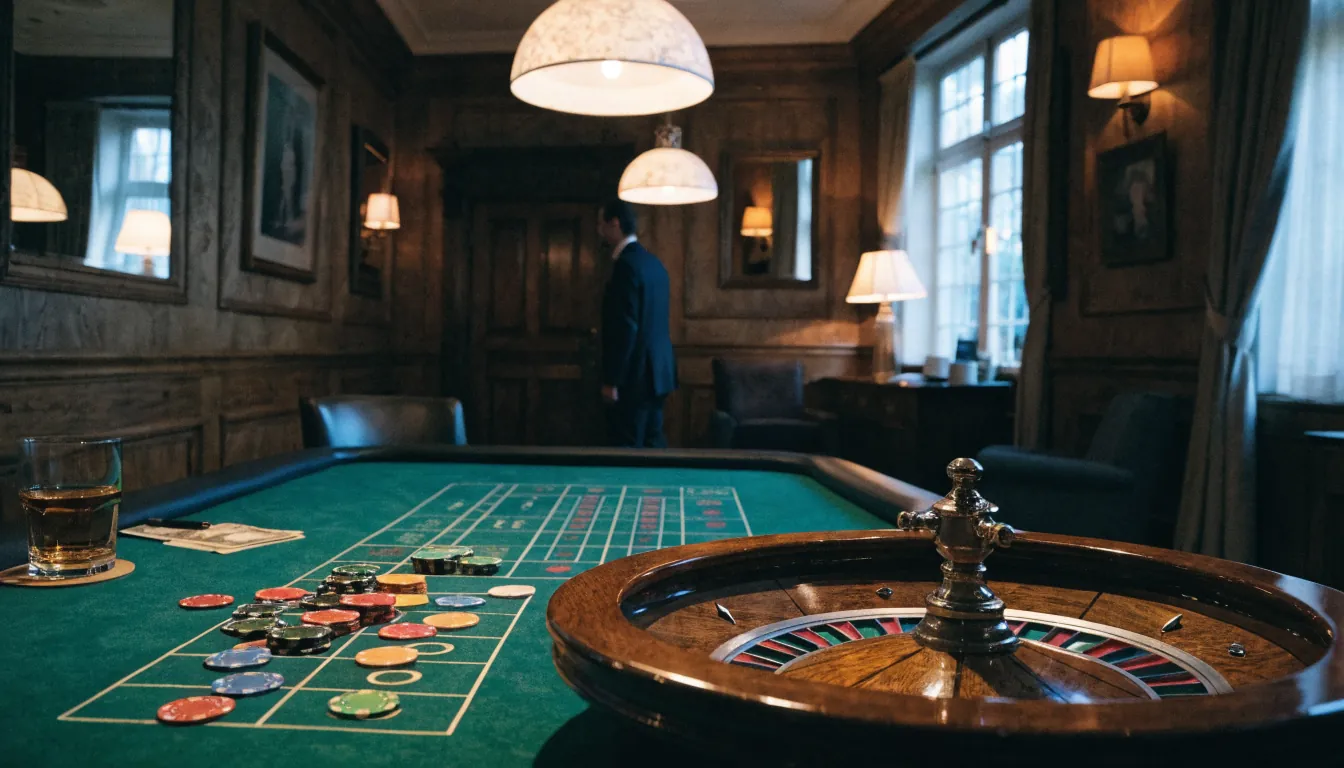
Three formats, then. One foregrounds the dealer, one compresses the pauses, and one removes the dealer from the spin. The number still lands somewhere. The room around it changes.
Inside the Online French Roulette Casino Game
An online French Roulette casino game keeps the old ceremony remarkably intact. A wheel turns, the ball finds its pocket, and one number becomes the centre of attention. The setting is digital, but the essential drama remains physical in conception: motion, pause, then a result that settles the table.
French Roulette and European Roulette both use a single-zero wheel. On screen, that distinction is usually visible in the wheel’s numbered pockets and in the layout of the betting area. The digital table may look polished or restrained, but it still presents the same basic geography: numbers arranged for selection, colour and parity options, and a place for the zero. The interface translates the cloth into clickable areas. Less velvet, more geometry.
From wager to winning number
The round begins at the betting interface. Stakes are placed by selecting positions on the virtual table, with the chosen bets displayed before the wheel spins. In a live presentation, the online system handles the stakes, accepts bets and records winnings while a physical wheel is shown through the stream. The player sees a dealer-led table; the software quietly performs the clerical work behind it.
When betting closes, the wheel determines the winning number. The important event is not the animation itself but the agreement between the physical result and the digital record: the displayed number, the highlighted position on the layout and the settlement of the accepted bets. A well-designed screen makes that sequence legible. There is no need for theatrical fog when a clear result will do.
Immersive Experience
Using multi-camera HD setups like Immersive Roulette allows you to control your viewing angle, turning passive watching into a deliberate, high-definition observation.
The attraction of an online French Roulette game also lies in its availability. Live online roulette can be played from anywhere with an internet connection, placing the table in a room that would never pass for a casino. The screen may show a dealer, a wheel and a stream of other players’ wagers, yet the surrounding silence belongs entirely to the person watching.
A physical casino supplies distance, noise and social observation: chips crossing felt, a croupier announcing the close of betting, strangers reacting to the same pocket. The online version compresses those customs into an interface. What disappears is the room. What remains is the wheel, the winning number and the small ritual of waiting.
Finding an Online Casino with French Roulette Without Losing the Small Print
An online casino with French Roulette is suitable for UK players only when its legal identity is visible, not merely implied by polished graphics. Operators offering online gambling to consumers in Great Britain must hold a UK Gambling Commission licence, regardless of where the business is based. Operating without one is a criminal offence.
The licence number should be displayed clearly and linked to the UKGC public register. That link matters. It allows the operator name, licence number and listed domain to be checked against an independent record rather than accepted as decorative text in a footer. A casino’s legal personality is not improved by gold lettering.
Three checks before the first spin
- UKGC-licensed status: confirm the licence on the UKGC public register and ensure the domain shown there matches the casino site.
- Identity verification: expect identity checks before the first withdrawal. This is part of the regulated process, not an optional inconvenience introduced at the cashier.
- Payment method: credit-card deposits are prohibited for gambling in the UK. A compliant casino should not present them as an available route.
Live online roulette can be played from anywhere with an internet connection, and its betting limits are commonly lower than those found in brick-and-mortar casinos. That convenience does not loosen the operator’s duties. Remote casinos must also prompt players to set a deposit limit before the first deposit and provide deposit limits, loss limits, Reality checks, session time reminders, time-outs and GamStop self-exclusion.
The practical test is therefore quite plain: verify the licence, note the identity requirement, and inspect the available payment methods before money reaches the table. The French layout may carry a long tradition. The compliance page should carry the evidence.
When French Roulette Becomes a Premium Casino Product
A premium French Roulette casino is less about adding noise to the table than removing it. The wheel remains the centre of attention: a physical object, a croupier with a measured ritual, and a camera system that makes the room feel present rather than merely represented on a screen. Polished presentation has its own social history. The casino once sold atmosphere alongside chance; online operators now attempt the same trick in high definition.
The croupier’s interaction matters because it gives each round a visible human sequence. Bets are accepted, the wheel turns, and the table settles around the winning number. The technology should support that ceremony, not compete with it. A premium table therefore earns its description through clarity and composure, not through decorative effects.
Immersive Roulette is a useful example. It uses multi-camera HD, allowing the action to be shown from more than one perspective. Players can choose the viewing angle of the croupier and wheel during the spin, a small control that changes the experience from passive viewing to deliberate observation. Slow-motion replays add another layer, letting the crucial movement of the ball and wheel be seen again rather than vanish into the next round.
There are no multipliers in Immersive Roulette. That absence is significant. The table does not need a flashing side mechanism to manufacture importance; its appeal rests on the wheel, the dealer and the room around them. Premium, in this setting, means attention to the ritual.
No circus required.
How to Play French Roulette Online When Bonuses Enter the Room
A bonus can make a French Roulette table look simpler than its terms really are. The wheel follows its ordinary rules, including the French rule that returns half of an eligible even-money bet when zero appears. The promotion, however, may impose a separate set of conditions around that spin.
Before placing a bonus-funded bet, the relevant terms should be read for four details:
- Wagering requirements: the amount that must be played before bonus funds or related winnings become withdrawable.
- Time limits: the period available for completing those requirements.
- Maximum bets: a ceiling that can apply while the bonus is active, even when the table itself accepts larger stakes.
- Winnings caps: a restriction on how much promotional play can produce for withdrawal.
The quiet complication is eligibility. Live French Roulette may be excluded altogether, or its contribution towards wagering may be low. A table can therefore be available in the casino while remaining practically useless for clearing a particular promotion. Availability is not permission.
That distinction matters because playing a live-table spin while the bonus terms exclude the game can void both the bonus and the winnings associated with it. The polished interface does not soften the clause. It merely hides it more effectively.
French Roulette’s favourable treatment of eligible even-money bets under French rules does not override promotional conditions. The game’s approximate theoretical loss for such a bet is £1.35 per £100 wagered, but that mathematical feature is separate from whether a bonus recognises the wager at all.
Bonus play is consequently a contract before it is entertainment. The table supplies the ritual; the terms decide what counts. Read first. Bet second.
French Roulette at a Casino: The Rules Behind the Ritual
French Roulette belongs to the same family as European Roulette, but the table carries a different social memory. Both use a wheel with a single zero. That matters because the extra pocket found in American Roulette is absent; the odds are not padded with another small green tax. Casinos are very fond of small taxes.
The distinctive feature is what happens when zero appears. An eligible even-money bet—red or black, odd or even, high or low—returns half of the stake rather than losing the whole amount. The bet is not rescued completely. It is merely allowed to leave the room with something.
That rule gives the French table its particular character. Roulette is often presented as ceremony: the croupier, the announced number, the neat division of chips, the brief silence before the result. French rules add a small interruption to the usual verdict. Zero does not simply belong to the house; on qualifying even-money wagers, it shares the loss. A modest concession, but one that changes the mathematical shape of the game.
The contrast with American Roulette is therefore more than a matter of table design. American Roulette adds a double zero, while European Roulette retains a single zero. French Roulette keeps that single-zero structure and adds its own treatment of the green pocket. The ritual looks familiar. The accounting is not.
In a UK casino, whether the table is physical or online, the legal frame is less decorative than the velvet and brass. Online gambling operators serving Great Britain must hold a UK Gambling Commission licence, and the licence should be verifiable through the Commission’s public register. UKGC-licensed casinos must provide safer-gambling controls including deposit and loss limits, reality checks, session reminders, time-outs and GamStop. The boundary is absolute: gambling is for adults aged 18 or over.
A roulette tradition, then, survives under modern supervision. The wheel spins. The paperwork watches.
What is the best live roulette game for UK players?
French Roulette is a strong choice because it uses a single-zero wheel and can return half of an eligible even-money bet when zero appears. It has the lowest house edge of any roulette variant.
Which live roulette game has the best payout?
French Roulette offers the lowest theoretical loss when the La Partage rule applies to eligible even-money bets. Lightning Roulette can offer higher individual payouts, but its multipliers apply only to Straight-Up bets.
How to choose the best UK live roulette site?
Check whether the table uses a physical wheel presented by a dealer, and compare its variant, betting limits, game speed, dealer presentation and available features. UK casinos commonly offer European or French Roulette, while American Roulette is less commonly available.
Which live roulette casino has the best stream quality?
Immersive Roulette offers multi-camera HD, slow-motion replays and a choice of viewing angle for the dealer and wheel. These features make it a suitable option for players prioritising the viewing experience.
Written by the editors at Hub Casinouk Gb.